Your cart is currently empty!
Author: Asrar
-

Cartophily: Cigarette Cards (ft. Nizam, Ottomans, palestine, Jane Austen, Sherlock Holmes… etc.)
by Riasath A,li Asrar
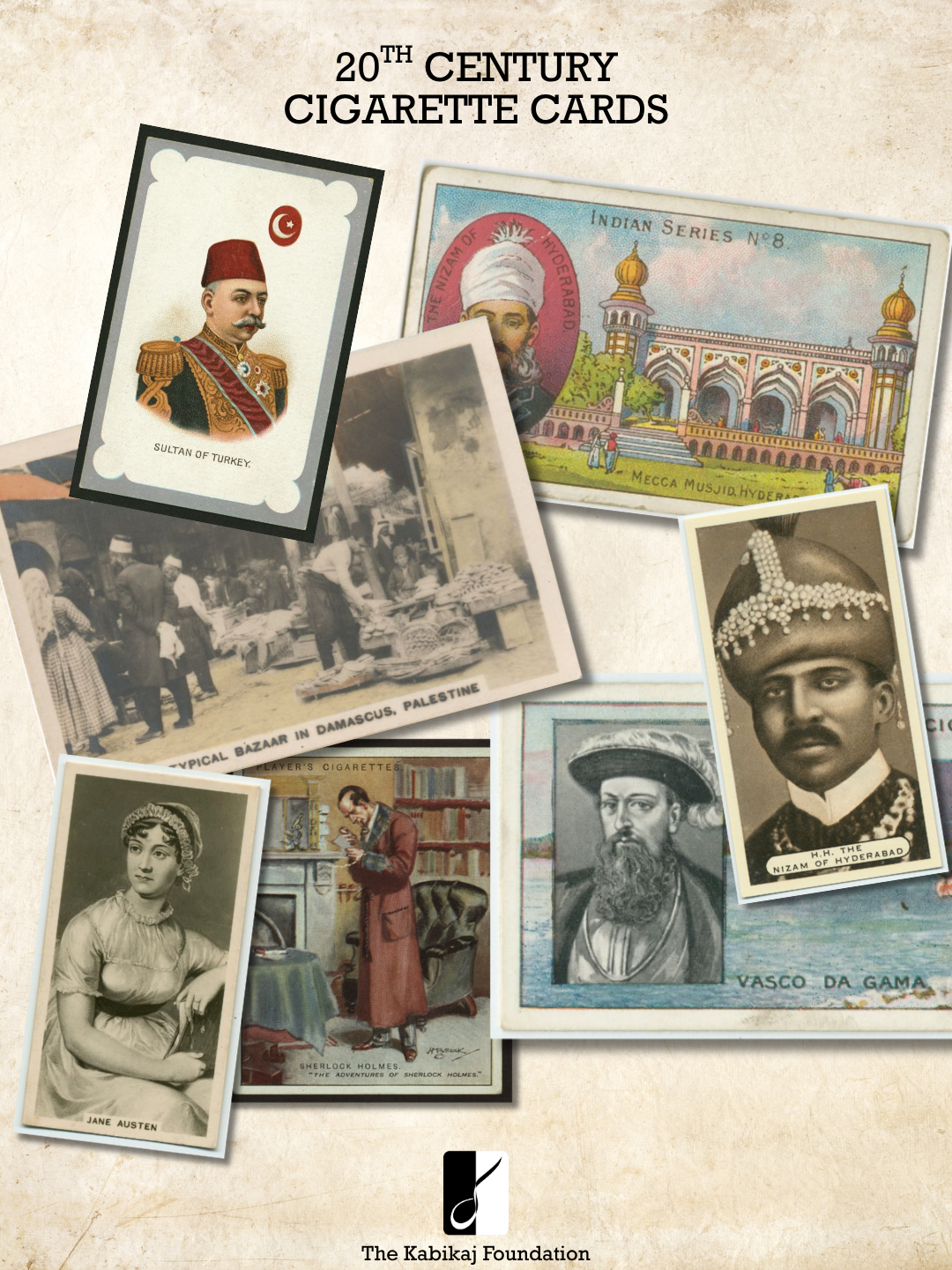
Cigarette cards — tiny artworks tucked inside cigarette packs that once educated, entertained, and connected collectors across the world. From their beginnings as simple packaging stiffeners to their rise as cultural artefacts, cigarette cards offer a fascinating glimpse into the everyday history of the late 19th and early 20th centuries.
In this feature, we’re showcasing a curated selection of cards depicting the last Nizam of Hyderabad, an Ottoman Sultan, scenes from Palestine, and other places, figures, and curiosities that once travelled the world through the smoke trails of history.
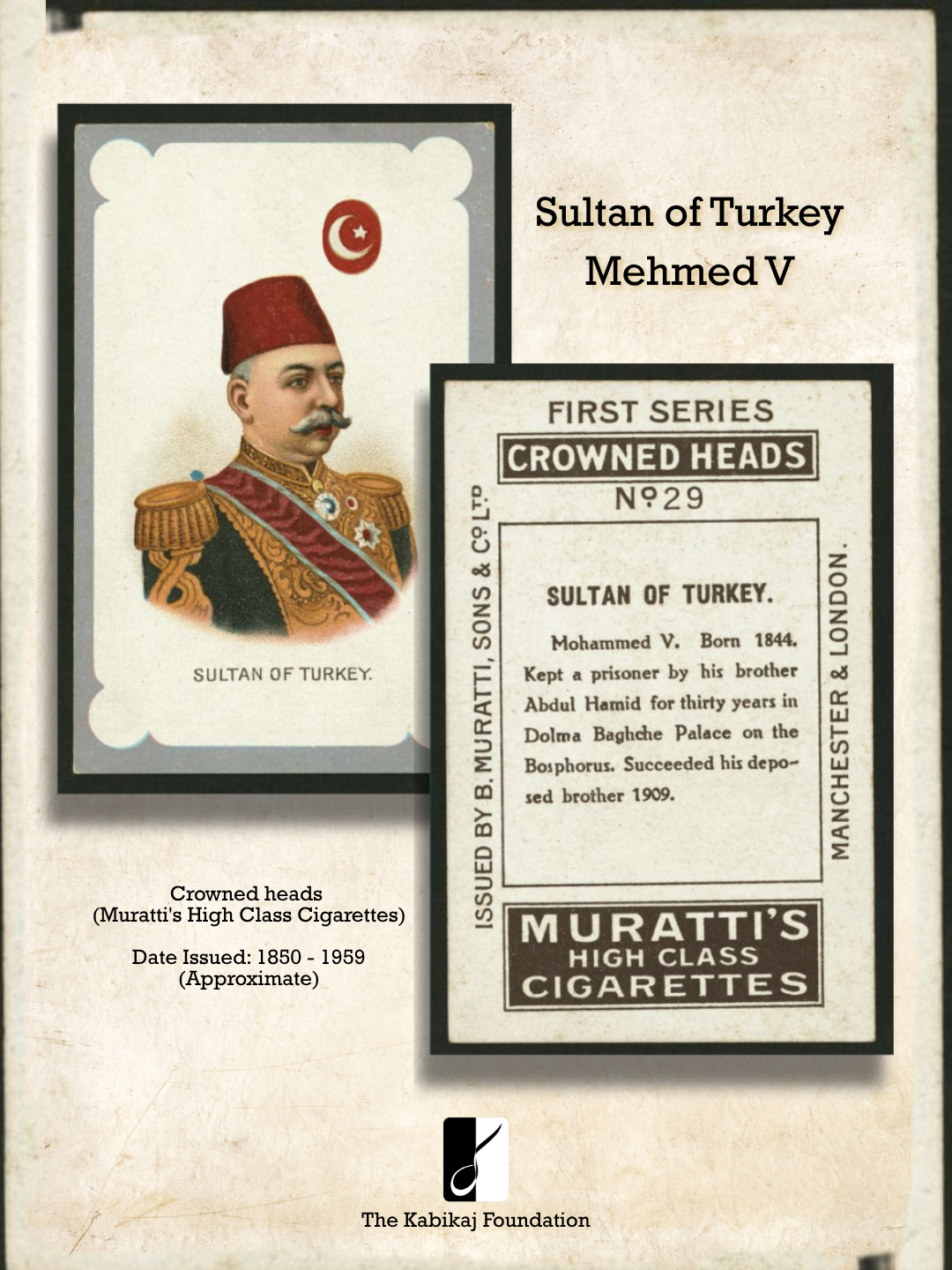
George Arents Collection, The New York Public Library. “Sultan of Turkey.” The New York Public Library Digital Collections. 1850 – 1959. Sultan Mehmed V Reşad, half-brother of Sultan Abdul Hamid II, was known as the “Constitutional Sultan” during the Second Constitutional Era, when the Committee of Union and Progress held significant power. He led the Ottoman Empire into World War I alongside the Central Powers but passed away just months before the war’s end—never witnessing the Empire’s collapse.
Tobacco, introduced to the Ottoman world in the 17th century, had a complex legacy under various sultans—banned by some, embraced by others. Sultan Abdul Hamid II (r. 1876–1909), in particular, was famously fond of cigarettes, cigars and pipes. A 1911 Paris auction of his personal effects featured elaborately designed cigarette cases—some bearing his tughra or initials, others adorned with precious stones, including one depicting the Hejaz-railway map. Tobacco wasn’t just a personal indulgence, it became a royal symbol and a state revenue source under his rule.
Muratti Cigrattes was founded in Istanbul by Greek tobacco trader Basil Muratoglu, in 1821. He moved the company to Western Europe in the 1880s, after the Ottoman Empire monopolized the tobacco industry—in 1885 the company was established in Berlin, Germany, and in 1887 in London, Great Britain. It is currently owned and manufactured by Philip Morris International (which also owns the famous Malboro Cigarettes). Several Muratti variants have been introduced over the years and were also sold as Ambassador, Ariston, Cabinet, Gentry, Iplic, Peer and Regent.
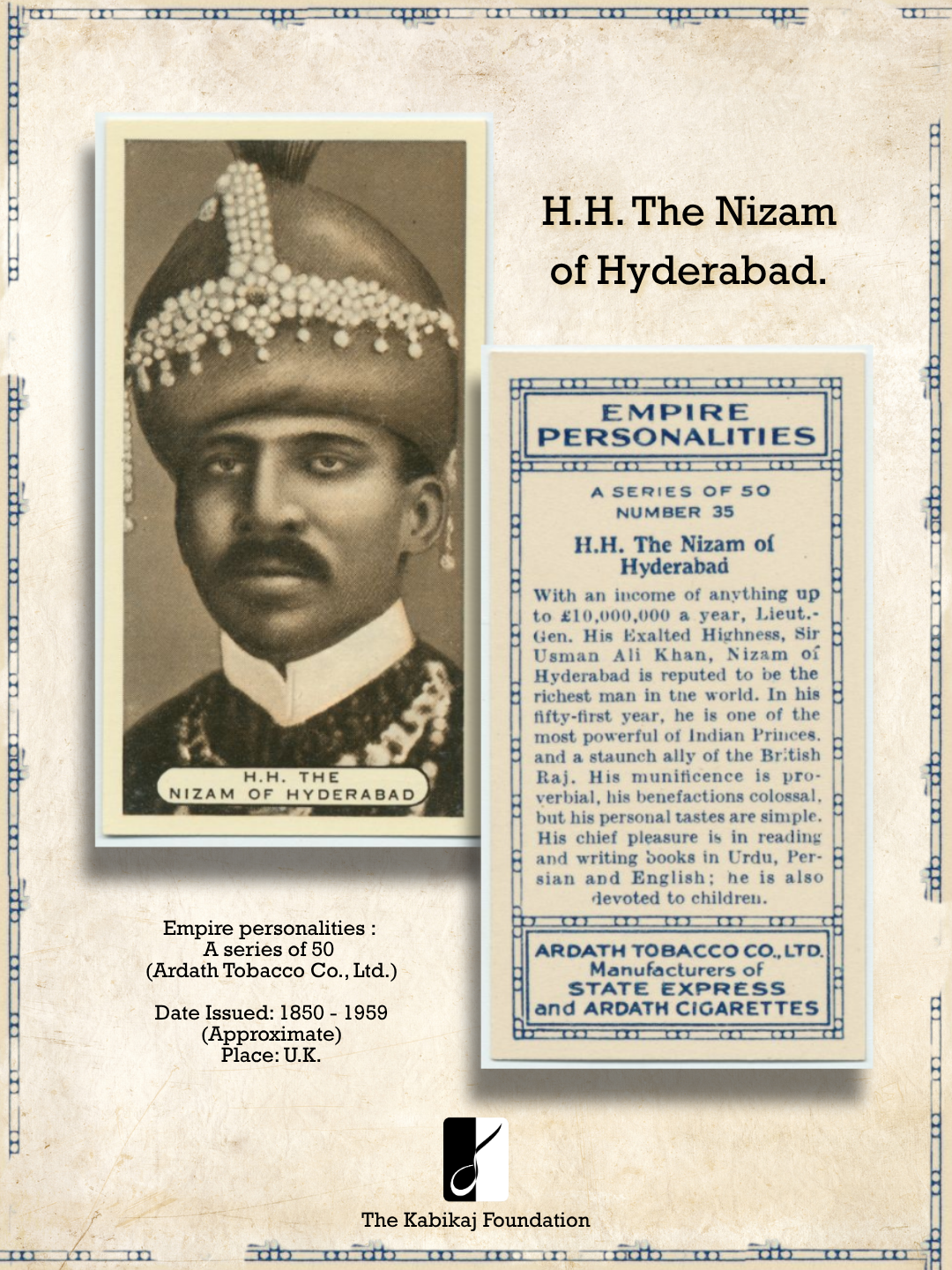
George Arents Collection, The New York Public Library. “H.H. The Nizam of Hyderabad.” The New York Public Library Digital Collections. 1850 – 1959. Mir Osman Ali Khan, the 7th and last Nizam of Hyderabad (1911–1948), was once the richest man in the world. Featured on the cover of Time magazine in 1937, he ruled a state with its own currency — the Hyderabadi rupee — and immense wealth from the Golconda diamond mines, including the famed Jacob Diamond. A visionary modernizer, he introduced electricity, developed railways, roads, and airports, and founded key institutions like Osmania University, Hyderabad High Court, and Begumpet Airport. He also commissioned major infrastructure projects like Osman Sagar and Nizam Sagar to prevent floods.
The Nizam smoked specially rolled “Charminar cigarettes” by Vazir Sultan Tobacco – a company founded in 1916, now known as VST Industries Ltd, with British American Tobacco holding a stake.
State Express 555 (Three-Fives) — a cigarette brand born in Westminster, London, and originally produced by the Ardath Tobacco Company. Acquired internationally by British American Tobacco (BAT) in 1925, 555. With origins dating back to the late 19th century and a name inspired by Marie Corelli’s novel Ardath, the brand earned Royal Warrants from King George VI and Queen Elizabeth II. This particular card is from the series of “Empire Personalities” by the brand which featured Emperors, Rulers, Kings, Sultans etc from all over the world of the 20th century.
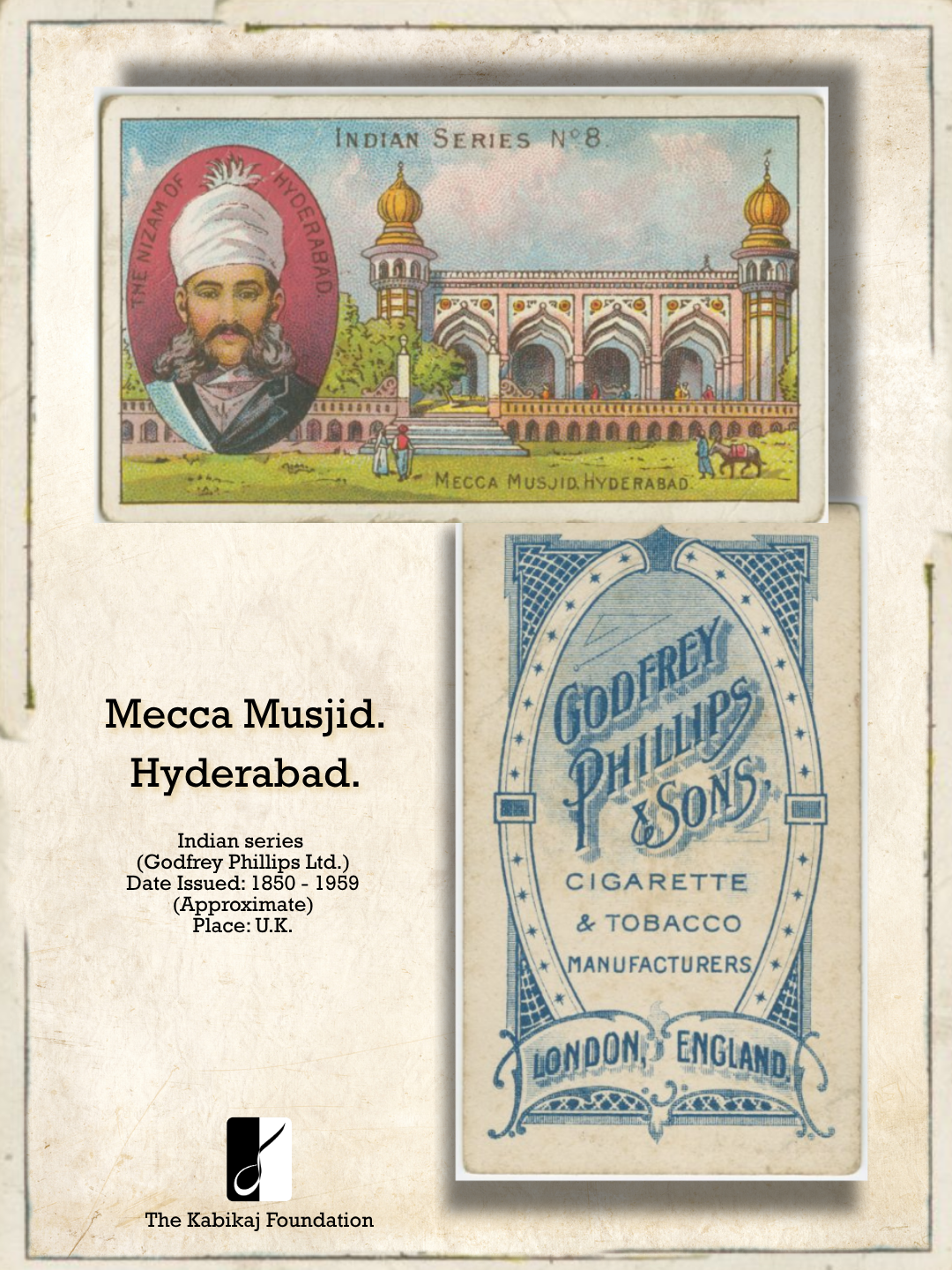
George Arents Collection, The New York Public Library. “Mecca Musjid. Hyderabad.” The New York Public Library Digital Collections. 1850 – 1959. The historic Makkah Masjid of Hyderabad-Deccan. Sultan Muhammad Qutub Shah – sixth ruler of the Qutb Shahi dynasty – commissioned the construction of the mosque in 1617, and was later completed by Sultan Aurangzeib in 1694. Soil was brought from Makkah – Hejaz (present-day, Saudi Arabia) and was used in the construction of the central arch of the mosque, thus giving the mosque its name.
On the left, is the VIth Nizam of Hyderabad – Mir Mahboob Ali Khan (r. 1869-1911).
Godfrey Phillips — established in 1844 in Aldgate, London, by cigar maker Godfrey Phillips, and after his death styled as Godfrey Phillips & Sons. The company expanded into India in 1936 with the formation of Godfrey Phillips (India) Ltd., producing brands like Cavander’s, De Reszke, and Greys. After a 1968 takeover by Philip Morris Inc., the company evolved into a major tobacco player in India, with facilities in Navi Mumbai, Ghaziabad, and Guntur. Today, it produces well-known brands such as Four Square, Red & White, Stellar, North Pole, Tipper, and licenses Marlboro from Philip Morris.
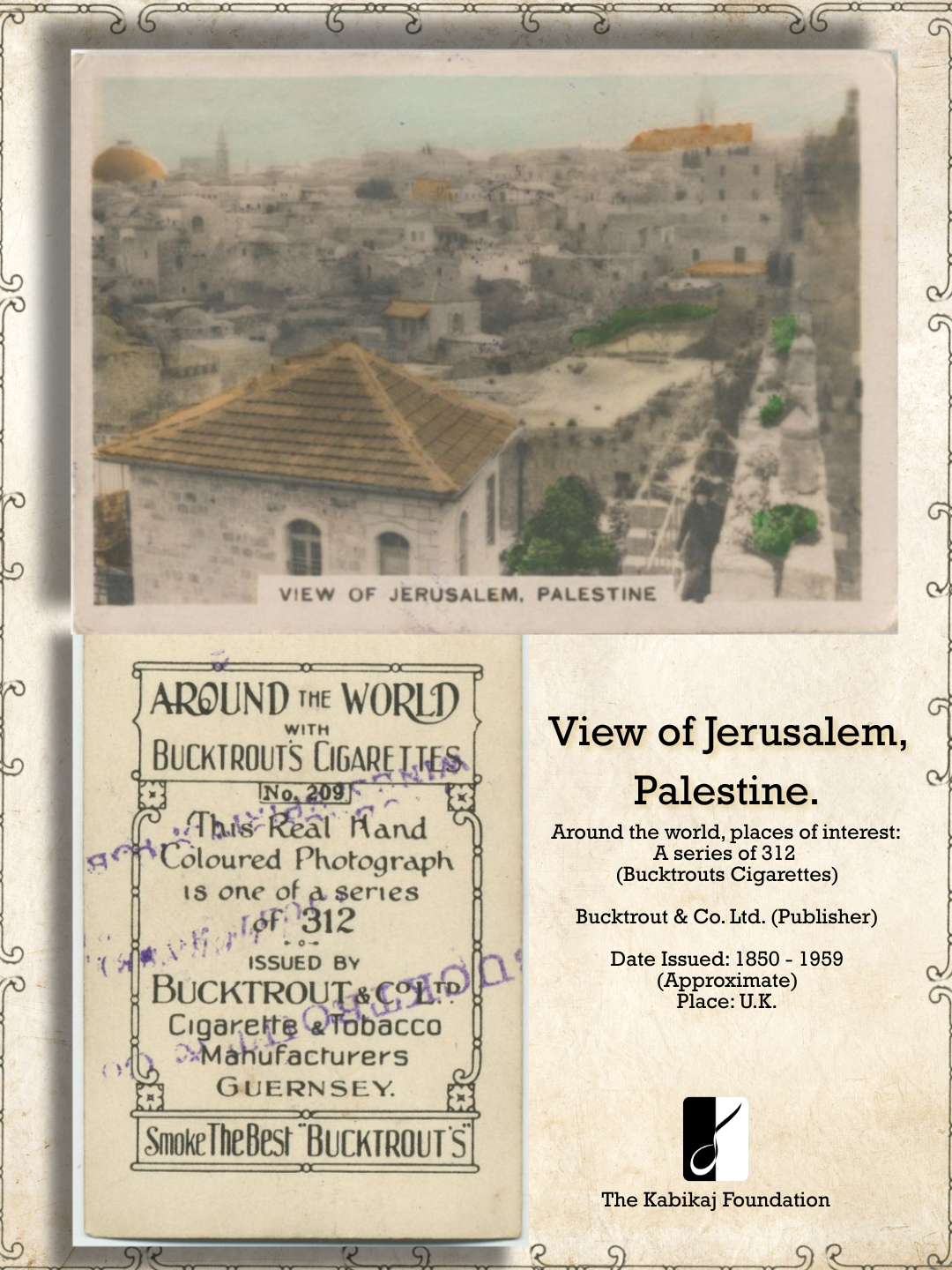
George Arents Collection, The New York Public Library. “View of Jerusalem, Palestine.” The New York Public Library Digital Collections. 1850 – 1959. Jerusalem, Palestine — Featured in Bucktrout’s “Around the World” cigarette series (mid-19th to 20th century).
Jerusalem was then under Ottoman rule, governed by the Mutasarrifate of Jerusalem, an autonomous district established in 1841 and formally recognized in 1872. This era marked significant administrative shifts and the early emergence of Zionist settlement.
At the time, communities were centered around their sacred sites: Muslims near the Haram ash-Sharif (northeast), Christians by the Church of the Holy Sepulchre (northwest), Jews above the Western Wall (southeast), and Armenians near Bab an-Nabi Dawud (southwest). Though not rigidly separated, these locations formed the basis of the city’s four quarters during the British Mandate (1917–1948) — a period that witnessed the intensification of Zionist occupation.
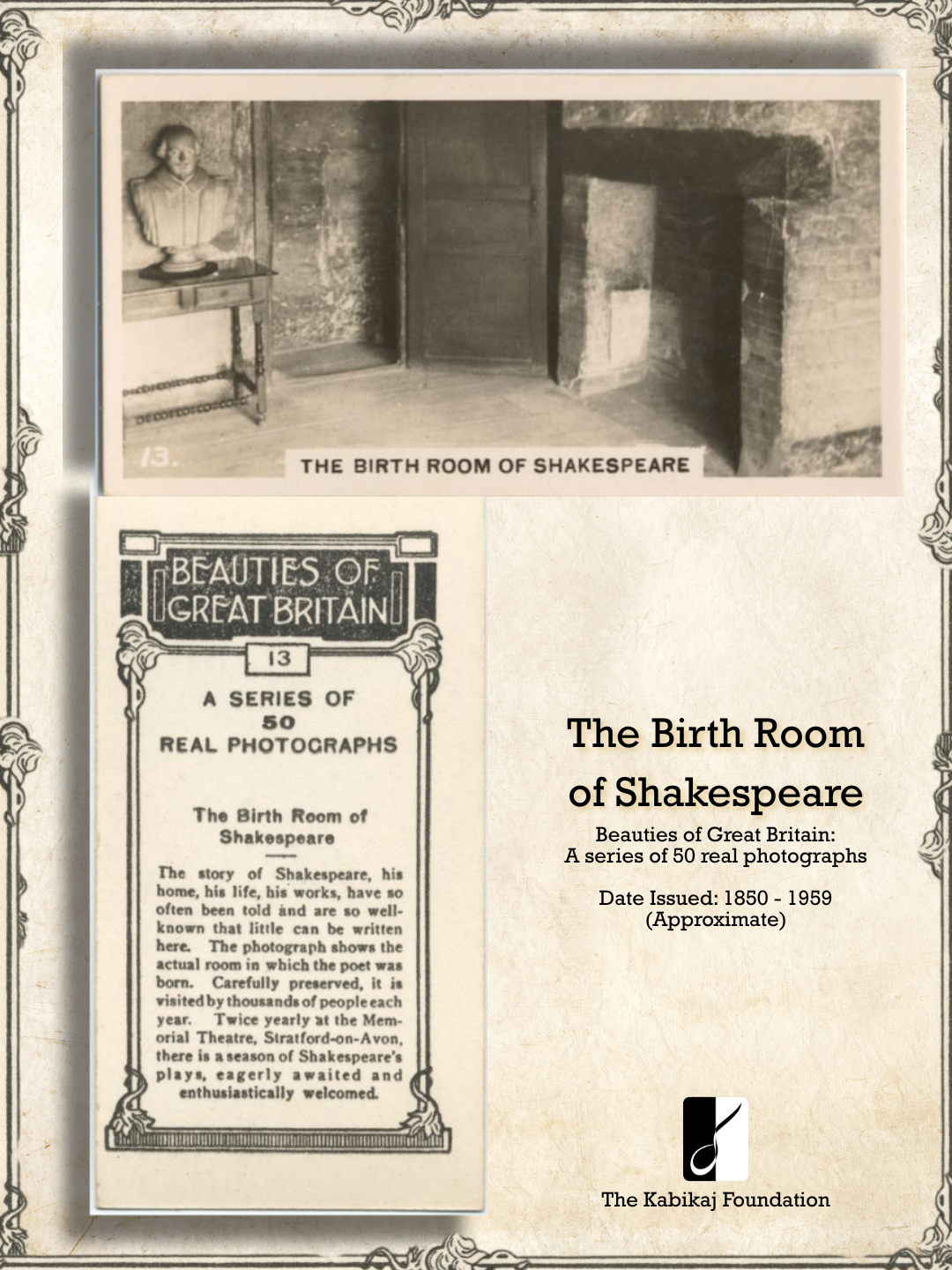
George Arents Collection, The New York Public Library. “The Birth Room of Shakespeare.” The New York Public Library Digital Collections. 1850 – 1959. The brand of the cigaratte is unknown. But this is from the series “Beauties of Great Britain : A series of 50 real photographs” which featured various places from the then Great Britain.
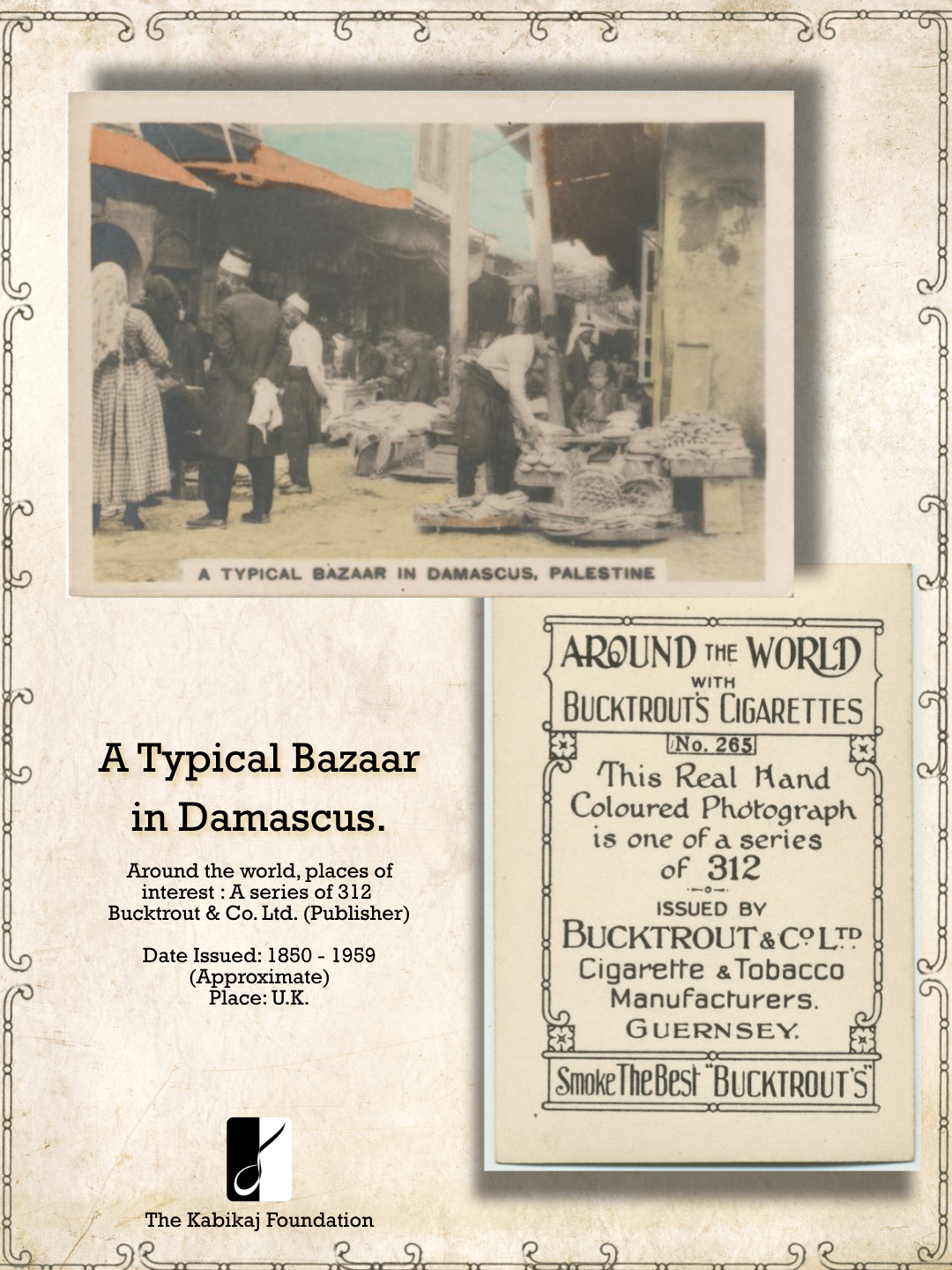
George Arents Collection, The New York Public Library. “A Typical Bazaar in Damascus, Palestine.” The New York Public Library Digital Collections. 1850 – 1959. Bucktrout, based in Guernsey, featured cities like Damascus in its mid-19th to 20th-century “Around the World” cigarette series. Damascus, a historic center of Arab and Islamic civilization, was under Ottoman rule until World War I, after which it came under the French Mandate for Syria and Lebanon. Palestine and Damascus were part of the broader cultural region known as Bilad al-Sham (Greater Syria).
Despite political upheavals—from Ottoman governance to French control and modern conflicts—Damascus remains a symbol of enduring cultural and religious significance in the Arab and Muslim world, with a strong historical significance.
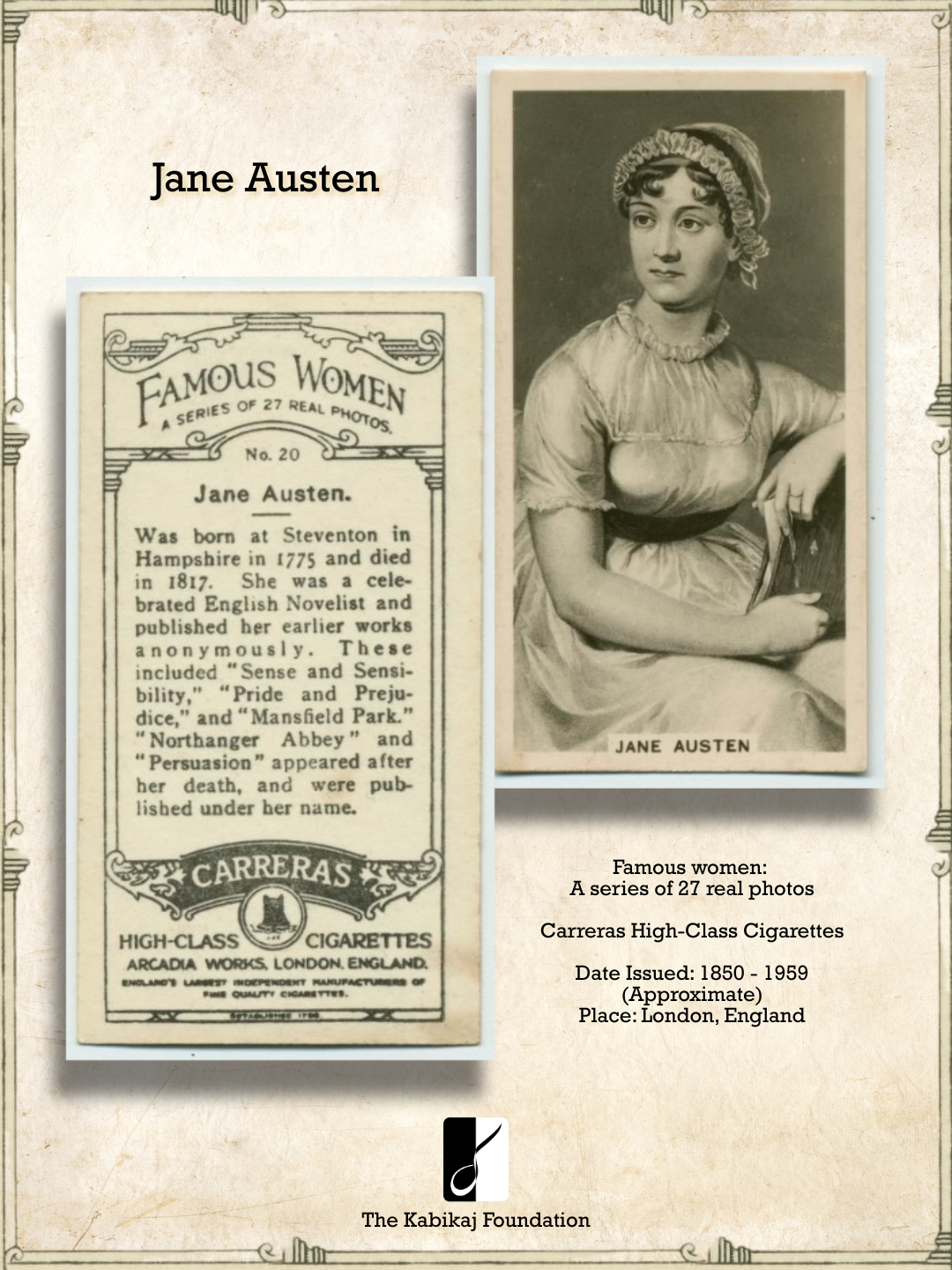
George Arents Collection, The New York Public Library. “Jane Austen, No. 20” The New York Public Library Digital Collections. 1850 – 1959. The House of Carreras was a prominent London-based tobacco business founded in the 19th century by Don José Carreras Ferrer, a Spanish nobleman. The company remained independent until its 1958 merger with Rothmans of Pall Mall, and in 1972, the Carreras name became the foundation for Rothmans International—a consolidation of European tobacco interests.
Carreras’s Regent Street store became a destination for visiting royalty, and by 1866, the business had earned Royal Warrants from both the Prince of Wales and the Duke of Saxe-Coburg-Gotha. In 1874, it was also granted a Royal Warrant by King Alfonso XII of Spain. Handwritten ledgers from this period reveal that the company counted nobility, statesmen, literary figures, and high-ranking military officers among its clientele.
One notable customer was J. M. Barrie, author of My Lady Nicotine (1890), who referred to a tobacco blend he called Arcadia Mixture. It was later discovered that Barrie’s preferred tobacco was actually Craven Mixture, sold by Carreras at their Wardour Street location. In January 1897, Barrie confirmed the blends were the same, and Carreras subsequently leveraged his endorsement in advertising—leading to a sharp rise in both domestic and international sales of Craven Mixture.
During and after World War I, rising demand for cigarettes led Carreras to expand operations. Outgrowing its City Road Arcadia factory, the company opened the Arcadia Works in Mornington Crescent, Camden, in 1928. This new Art Deco facility, officially named Greater London House, is renowned for its Egyptian Revival architecture, designed by M. E. and O. H. Collins and A. G. Porri. Built between 1926–28 on the former communal garden of Mornington Crescent, the building—funded in part by major shareholder Bernhard Baron, a Russian-Jewish inventor and philanthropist—is 550 feet (168 metres) long and clad primarily in white.
Meanwhile, Jane Austen (16 December 1775 – 18 July 1817), the celebrated English novelist, offered a vivid depiction of Bath—a city where parts of her novels Northanger Abbey and Persuasion are set. In a letter to her sister Cassandra, dated 5–6 May 1801, Austen described the view from Kingsdown:“The first view of Bath in fine weather does not answer my expectations; I think I see more distinctly through rain. — The Sun was got behind everything, and the appearance of the place from the top of Kingsdown, was all vapour, shadow, smoke & confusion.”
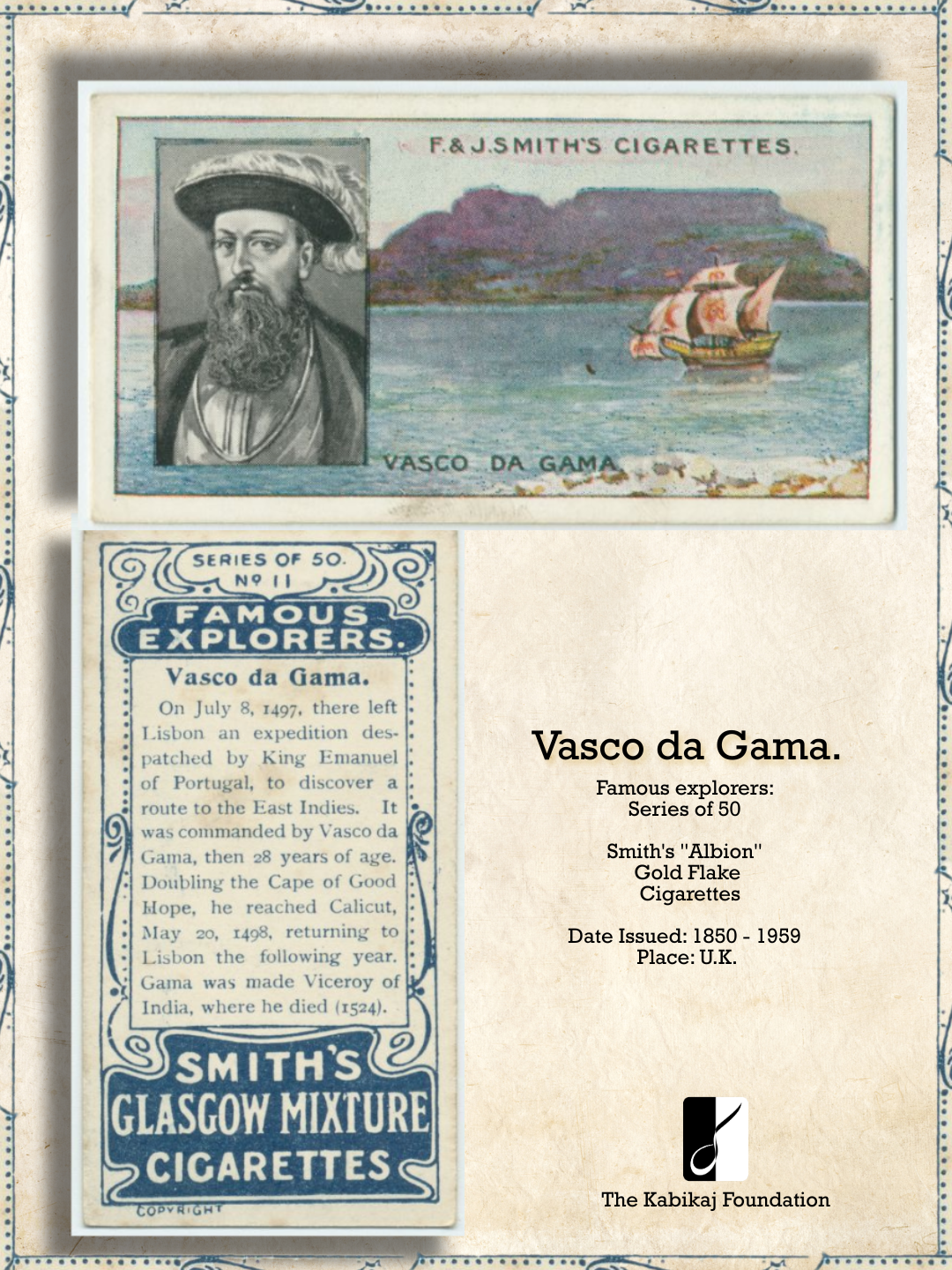
George Arents Collection, The New York Public Library. “Vasco da Gama.” The New York Public Library Digital Collections. 1875 – 1940. This cigarette card, from the Famous Explorers series by Smith’s Albion Gold Flake Cigarettes, features Vasco da Gama — the legendary Portuguese navigator whose pioneering 1497–1499 voyage first linked Europe and Asia via an ocean route around Africa’s Cape of Good Hope. His landing at Kozhikode (Calicut) in India in 1498 opened the sea-based spice trade, fueling Portugal’s rise as a global imperial power.
Issued by F. & J. Smith, a firm founded in 1858 and later part of the Imperial Tobacco Company (1901), the card comes from a series celebrating key figures of the Age of Discovery. Other explorers featured in the set include Marco Polo, William Dampier, Matthew Flinders, Samuel de Champlain, and more
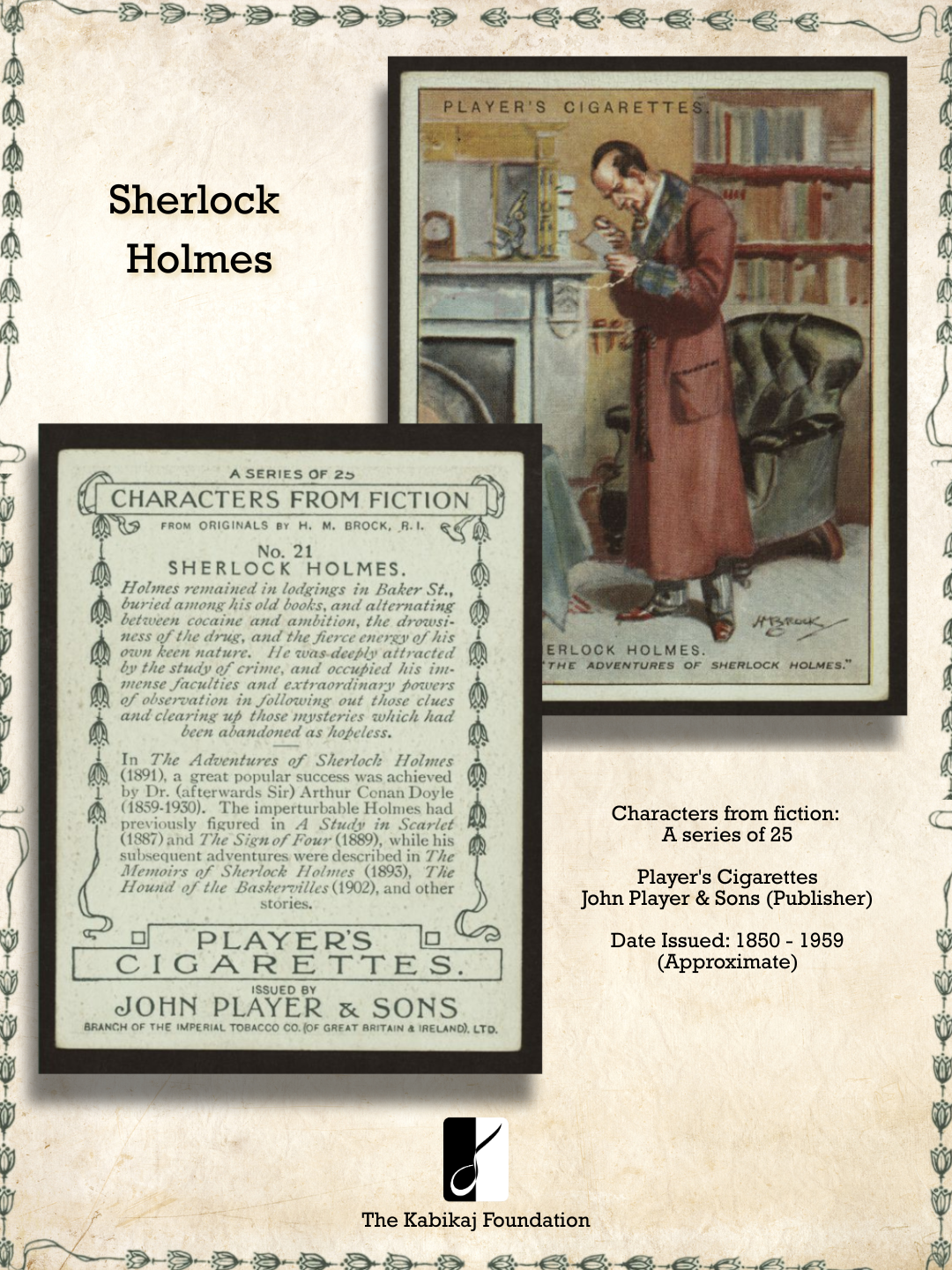
George Arents Collection, The New York Public Library. “Sherlock Holmes.” The New York Public Library Digital Collections. 1850 – 1959. You’ve probably heard of a numismatist: one who collects coins, or a philatelist: one who collects postage stamps; or at least a bibliophile: a lover and collector of books. People collect all sorts of things — mollusc shells, postcards, tokens, matchbox labels, receipts, fossils, and even teddy bears. Among these curious collectors is a special kind known as cartophilists — collectors of cards (and in our context – cigarette cards).
Cigarette Cards? What’s That?
Let’s dig into a bit of history.
Cigarette cards are trading cards originally issued by tobacco manufacturers to stiffen cigarette packaging. Their origins go back to the late 19th century America, when blank cards known as stiffeners were placed in soft paper packets to prevent cigarettes from being crushed or bent. Soon enough, the idea, of using these cards for advertising by printing pictures and text on them to promote brands, lit up!
Early cards featured sepia photographs or woodburytypes of popular actresses, politicians, and other celebrities. The size of each card was dictated by the cigarette packet it accompanied. Some of the earliest examples were even printed on silk attached to paper backings (which was later discontinued to save paper, post WWII). Occasionally, card-like coupons with special offers were included as well.For many, these cards became a window to the world, offering glimpses of distant countries, exotic animals, soldiers, medals, and cultures. At that time, cigarette cards carried knowledge and imagery on countless subjects to millions of people. Today, these cards can be (and they are) studied as pieces of historical archives – for example, sports and military historians still study them for details on uniform design and historical accuracy.
Lighting Up the Market
Cigarette cards first appeared in the United States when the tobacco company Allen & Ginter began issuing them as early as 1879, featuring actresses, baseball players, Native American chiefs, boxers, national flags, and wild animals — some of the earliest examples ever made. Other companies, such as Goodwin & Co., soon followed, and the trend spread from the U.S. to the United Kingdom and beyond.
In 1888, W.D. & H.O. Wills became the first British manufacturer to include cards for advertising, and its “Kings & Queens” set of 1897 was the first to feature short notes on the back, offering background information about each monarch. Around 1900, other firms like John Player & Sons and Ogden’s Cigarettes released their own sets, covering a wide range of subjects — weapons, transport, racehorses, and sportsmen.
The Golden Age of Cigarette Cards
By the early 1900s, cigarette cards had gained an almost fanatical following. Over 300 manufacturers issued thousands of themed, full-colour sets — typically 25 to 50 cards each — designed to attract collectors and build brand loyalty. Production halted in 1917 due to World War I material shortages but resumed in 1922, ushering in the Golden Age of cigarette cards during the 1920s and 1930s. These sets covered every imaginable topic — from nature and geography to art and aviation — and reflected the era’s moods and anxieties. On the eve of World War II, cards like “Air Raid Precautions” appeared, while others depicting aircraft specifications were banned for security reasons. In 1940, the British government prohibited cigarette cards entirely, calling them “a waste of vital raw materials,” and post-war rationing ensured that their golden age would never return.
In the early days, the only way to collect cigarette cards was by pulling them from tobacco packets or swapping them with friends. Some vintage postcards even depict humorous scenes of eager collectors pestering others for their cards. The first known cigarette card dealer was Mr. G. A. Johnson of Netherton, Wishaw (North Lanarkshire, Scotland), who issued a four-page sales list in 1916, labelled “Number 6” — though issues 1–5 have never been found. A decade later, in 1927, Mr. Bagnall founded the British Cigarette Card Company, soon renamed The London Cigarette Card Company to avoid confusion with The British Cigarette Company. Its first Catalogue of Prices appeared in 1929, followed by a magazine called Cigarette Card News in 1933 — a publication that still exists today under the name Card Collectors News. Around the same time, organized collecting took root: the Dublin Cigarette Card Club was founded in 1933, followed two years later by The Cameric Cigarette Card Club in London, established by Derek Campbell Burnett and Arthur Eric Cherry. Their first annual general meeting was held on October 8, 1938, and that same year, the Cartophilic Society of The Great Britain was formed.
Legacy
The passion for collecting grew so immense that some individuals built collections of astonishing scale. The largest ever assembled belonged to Edward Wharton-Tigar, whose vast holdings were bequeathed to the British Museum after his death in 1995, and are recognised by the Guinness Book of Records as the world’s largest collection. Among individual cards, none is more famous — or valuable — than the T206 Honus Wagner card, featuring one of the greatest baseball players of the early 20th century. This card has repeatedly shattered auction records, selling in 2016 for $3,120,000. Ironically, Honus Wagner himself was a non-smoker.
What began as a simple stiffener for cigarette packs became, in time, a pocket-sized chronicle of the world. For collectors and historians alike, these little cards continue to tell stories.
-
Raam Daas رام داس
Further Readings:
1. Shareef, Muhammad Jamaal. Dakan meiN Urdu Shayeri Wali Se Pehle. Edited by Muhammad Ali Asar. Hyderabad: Idara-e-Adabiyat-e-Urdu, 2004. -
Tukka Raam تکا رام
Further Readings:
1. Shareef, Muhammad Jamaal. Dakan meiN Urdu Shayeri Wali Se Pehle. Edited by Muhammad Ali Asar. Hyderabad: Idara-e-Adabiyat-e-Urdu, 2004. -
Baaya Baai بایا بائی
Her name was Baaya Baai Raam Daasi, and her nom de plume was at time Daasbiya. Around 15 Dakhni nazms of her were discovered amongst her Marathi writings — which also include a lot of Persian vocabulary in them.
داس بیا کہے کچھ نہیں دیکھا
جب دیکھا تب الٹا نتیںFurther Readings:
1. Shareef, Muhammad Jamaal. Dakan meiN Urdu Shayeri Wali Se Pehle. Edited by Muhammad Ali Asar. Hyderabad: Idara-e-Adabiyat-e-Urdu, 2004. -

Daasupant Digambar داسو پنت دگمبر
His name was Dasupant and his nom de plume was Digambar. He was born in 1551/958 Hijri in Bidar during the Bahmani era. His father, Digambar Pant, was a contemporary of Janardhan Pant—the guru of Aiknath. He belonged to the Dat sect. Dasopant (1551–1615) belonged to the Datta sect and was born into a Deshastha Brahmin family in the village of Narayan Peth. He was the son of Digambarpant, an official of the Barid Shahi kingdom of Bidar, responsible for collecting land revenue and handing it over to the rulers. Dasopant wrote mainly in Marathi and was a Sanskrit scholar, with some of his works being commentaries. He also composed songs in Kannada, Telugu, and Hindi. He is said to have written over 500,000 (5 lakh) couplets, only a portion of which have been published. Among his notable works are two commentaries on the Gita—Gitarnava and Gitarthabodhachandrika (also known as Gitartha Chandrika), the latter being a shorter commentary in which he follows the Advaita Siddhanta school of thought. He also authored Grantharaja, considered a precursor to Dasbodh.
Though he primarily composed in Marathi, his kalaam is also found in the Hindi-Urdu of that time. Dr. Shareef, in his book Dakan meiN Urdu Shayeri Wali se Pehle (2004), has mentioned a couple of Dakhni couplets of Digambar.Further Readings:
1. Shareef, Muhammad Jamaal. Dakan meiN Urdu Shayeri Wali Se Pehle. Edited by Muhammad Ali Asar. Hyderabad: Idara-e-Adabiyat-e-Urdu, 2004.
2. Abbott, Justin E. “The Maratha Poet‑Saint Dāsopant Digambar.” Journal of the American Oriental Society 42 (1922): 251–279 -

Aik Naath ایک ناتھ
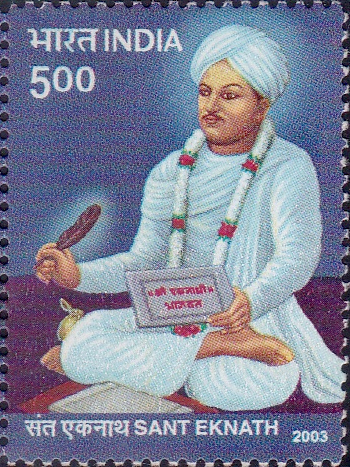
Eknath/AikNaath (c. late 16th century), one of the poets of the Marathi bhakti tradition, lived and composed in a period that overlaps with the late Bahmani and early post-Bahmani Deccan, particularly under the Ahmadnagar Sultanate. A native of Paithan, he was educated at Daulatabad under Swami Janardan, a known devotee of Dattatreya.

Eknath on a 2003 stamp of India. On page 784 for his book, Dr. Shareef mentions a few excerpts of Dakhni kalaam.
Further Readings:
1. Shareef, Muhammad Jamaal. Dakan meiN Urdu Shayeri Wali Se Pehle. Edited by Muhammad Ali Asar. Hyderabad: Idara-e-Adabiyat-e-Urdu, 2004. -
Naam Dev نام دیو
Further Readings:
1. Shareef, Muhammad Jamaal. Dakan meiN Urdu Shayeri Wali Se Pehle. Edited by Muhammad Ali Asar. Hyderabad: Idara-e-Adabiyat-e-Urdu, 2004. -
Saiwak سیوک
Further Readings:
1. Shareef, Muhammad Jamaal. Dakan meiN Urdu Shayeri Wali Se Pehle. Edited by Muhammad Ali Asar. Hyderabad: Idara-e-Adabiyat-e-Urdu, 2004.
2. Hashmi, Naseer-Uddin. Dakan MeiN Urdu. 1st ed., Taraqqi Urdu Bureau, 1985 -
Shihabuddin شہاب الدین
Further Readings:
1. Shareef, Muhammad Jamaal. Dakan meiN Urdu Shayeri Wali Se Pehle. Edited by Muhammad Ali Asar. Hyderabad: Idara-e-Adabiyat-e-Urdu, 2004. -

Ashraf Biyabani اشرف بیابانی
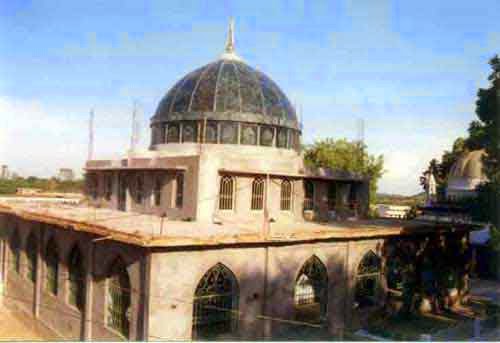
Syed Shah Muhammad Ashraf Biyabani was the son of Syed Shah Ziyauddin Biyabani, and was born on 16th August 1459/865 Hijri in Fuqrabad. He married Hazrath Maryam Bibi Saheba, the daughter of Hazrath Sang-de-Sultan. Hazrath Ashraf Biabani became the first Sajjada Nasheen of the Biabani family. He used to pray and meditate in the forests of Faqrabad and Rauna Prada in the Jalna District, as his father did. A large number of devotees from distant places would come to him for blessings, and he would arrange mass meals (langar) for them. Hazrath Ashraf Biabani passed away in 935 Hijri. A devotee, Mohammad Hussain, constructed a tomb over his grave according to the wish of Hazrath Ziauddin Biabani. The tomb, located very near the grave of Hazrath Ziauddin Biabani (R.A.) at Ambad Shareef, is a unique example of Deccan architecture.
Two of his writings are known by the names of Nuskha e Nausarhar and Qissa e Aakhir uz Zamaan. One manuscript of Nausarhar is preserved in Idara e Adabiyat e Urdu, Hyderabad; and the other is Anjuman Taraqqi Urdu Pakistan – which was compiled and published in 1982 by Dr. Afsar Siddiqui. There is no available manuscript of Qissa e Aakhir uz Zamaan, as of now. The first mathnavi is on the martyrdom of Imam Husain.Further Readings:
1. Shareef, Muhammad Jamaal. Dakan meiN Urdu Shayeri Wali Se Pehle. Edited by Muhammad Ali Asar. Hyderabad: Idara-e-Adabiyat-e-Urdu, 2004. -
Syed Muhammad Akbar Husaini سید محمد اکبر حسینی
Further Readings:
1. Shareef, Muhammad Jamaal. Dakan meiN Urdu Shayeri Wali Se Pehle. Edited by Muhammad Ali Asar. Hyderabad: Idara-e-Adabiyat-e-Urdu, 2004. -

Ya Kabikaj!
by Riasath Ali Asrar
The name of our organization: Kabikaj, does spark some curiosity. People are intrigued, asking about its meaning, its origin, and its pronunciation. The biggest question, though, is of an existential nature: “Why are you named this?” The answer to all these queries lies in the word’s rich history, which is exactly what you and I are about to explore in this piece.

یا کیح and یا کیکح
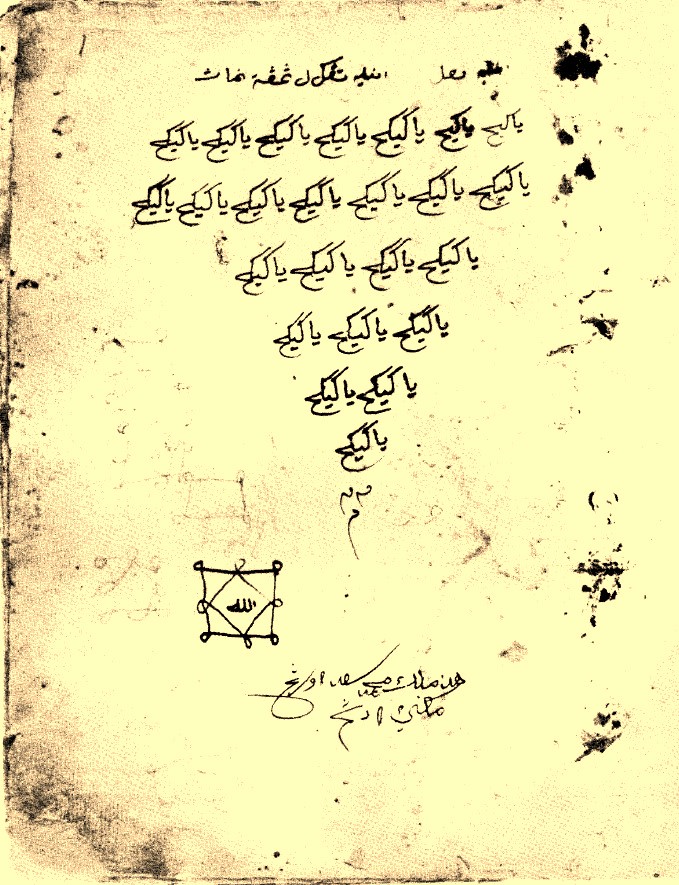
Frontpage of a collection with four texts on Arabic grammar, from Aceh, Indonesia, 19th century.1Within the delicate endleaves of countless centuries-old manuscripts across the vast Islamicate world—from Arabic and Persian to Urdu and Ottoman Turkish texts—one may encounter an intriguing, almost mystical, inscription: “Ya Kabikaj!”.
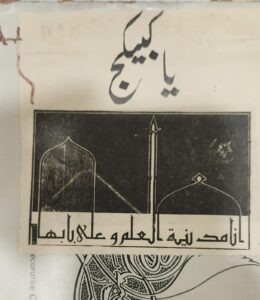
My own curious journey into this tradition began a few years back, while sorting through my dadahazrat Riasat Ali Taaj (1930-1999)’s library. I first encountered a ta’widh2 on the last page of a handwritten personal diary, and a similar inscription in a book of Urdu history. This latter book even mentioned that such an inscription on a book’s first or last page would protect it from all kinds of harm. The connection became clear when, while cataloguing manuscripts at the Abul Kalam Azad Oriental Research Institute, my historian friend Sibghat Khan pointed out the very word “Kabikaj” written on the margins and final folios of other works, we discussed this with Sahebzada Mir Ahmad Ali Khan – a learned member of the institute, whom we dearly call “uncle”. It was then that I realized the word embodies a unique historical approach to conservation, making it an ideal and suitable name for our initiative.The Dual Nature of “Kabikaj”: Spirit and Science:
This seemingly simple phrase, Ya Kabikaj! often tucked away in the margins or final folios, holds layers of meaning hinting at a fascinating blend of botany, folklore, and spiritual belief.
Some say it’s the name of a jinn; others believe it’s an angel that protects the paper when invoked. A more grounded argument suggests it’s a type of plant with chemical properties that repel insects, used as bookmarks, or even in the paper, ink, and covers to preserve documents. The term “Kabikaj” is rich with a duality that speaks to the complex ways in which pre-modern societies understood and interacted with their world. It refers to both a specific plant and a metaphysical entity, each playing a distinct yet a strong possible interconnected role in the safeguarding of written knowledge.

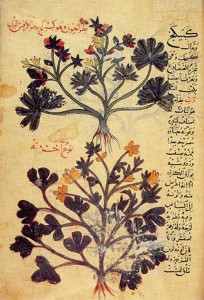
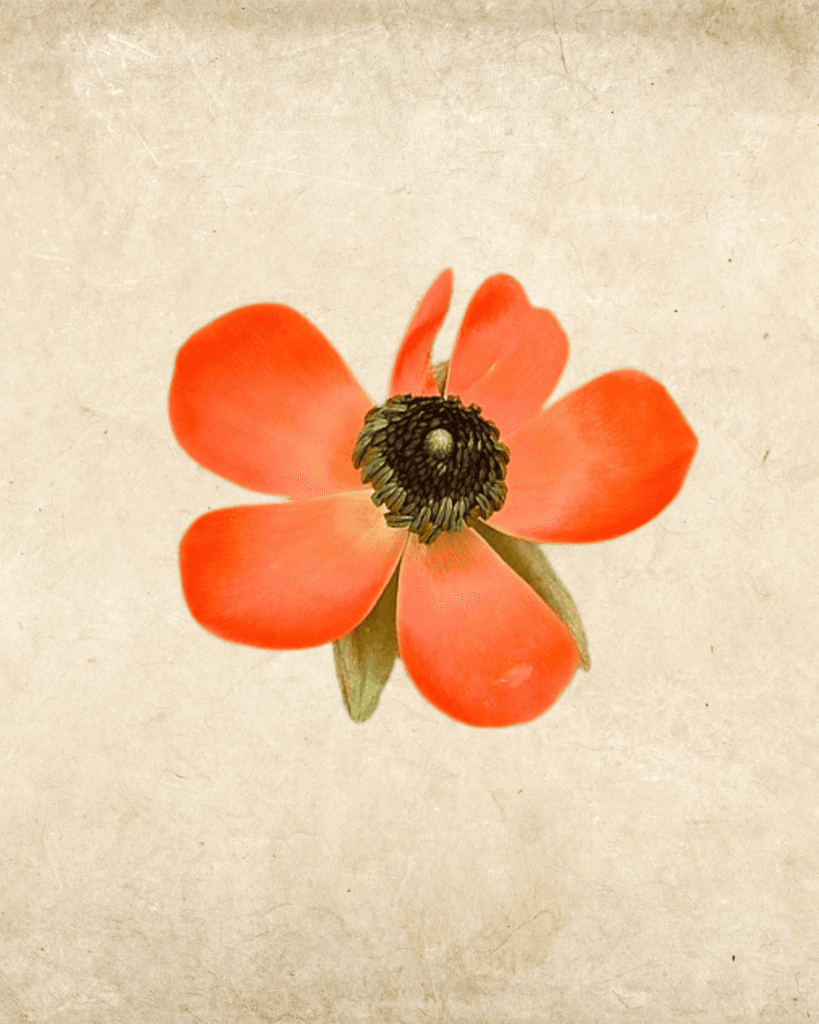
Illustration, mid‑13th century, Kitāb al-adwiyāʾ al-mufradah (Herbal of al‑Ghāfiqī), fol. 277a. Detailed botanical representation of two species labeled “kabīkaj” (possibly Ranunculus asiaticus), Arabic ink and pigment on paper. Exemplar part of the Osler Library of the History of Medicine at McGill University; reproduced on the Rational Sciences in Islam project website.3 Scholarship on “Kabikaj”:
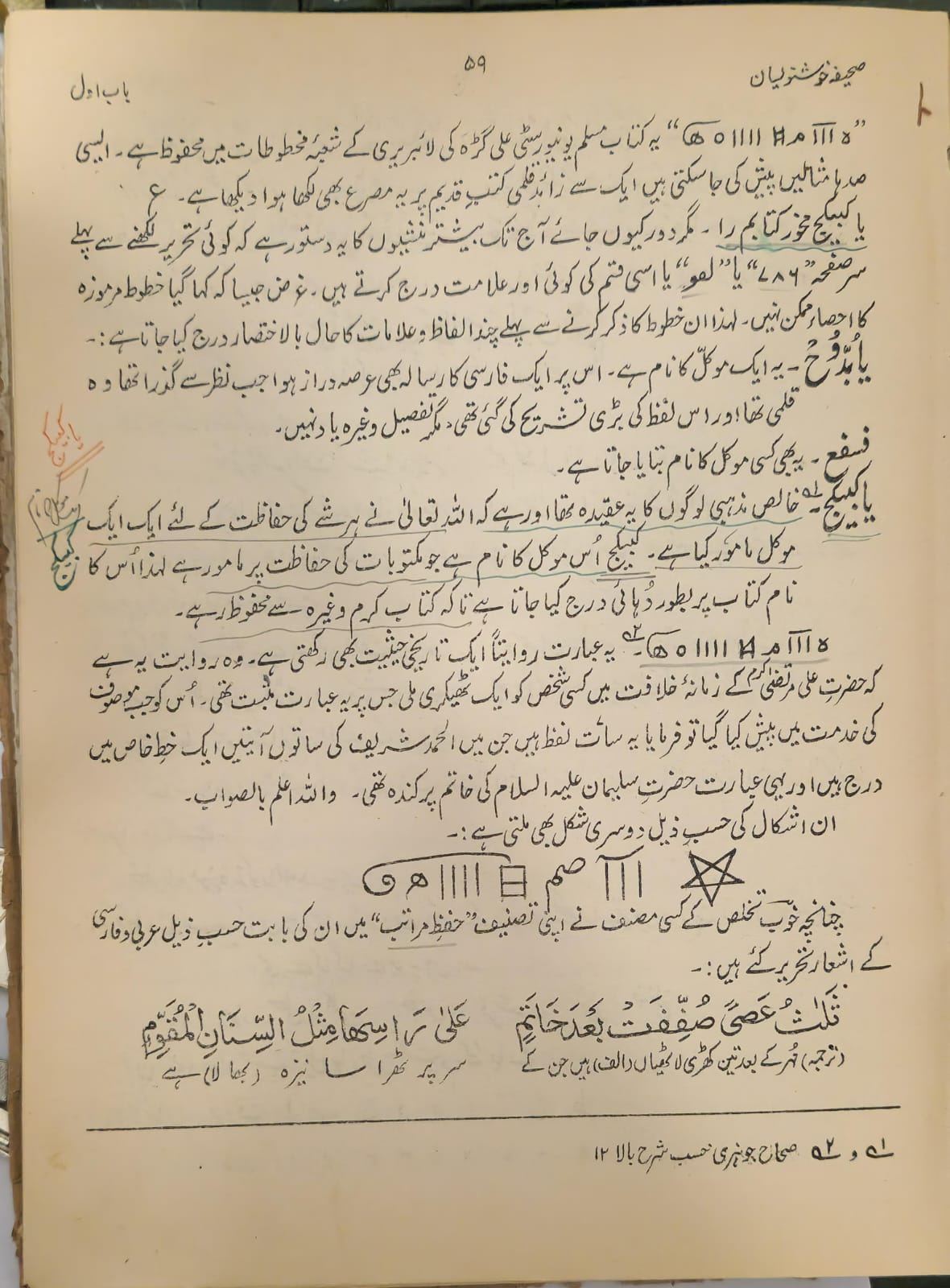
This initial discovery spurred me to explore the topic further. What began with my grandfather’s annotations in calligraphy manuals and a couple of newspaper clippings, soon expanded into a fascinating survey of other works. One of the annotations is in the margins of a calligraphy manual and tazkirah – Saheefa e KhushnaveesaaN4 written by Maulvi Ehtramuddin Ahmad Shaaghil Usmani. Shaaghil Usmani mentions کبیکج along with other symbols and words like فسفع (fasfa’) and بدوح (budduuh) – regarding all the three as names of muwakkils (guardian angels). He mentions that these words under the chapter “khutoot e marmuza” (mysterious words/lines), and refers to a 13th century manuscript Sihah e Jauhari preserved at Aligardh Muslim University, and a couple of other works like Azhrang e Cheen by Munshi Debi Parshad (that cite such words). But Kabikaj is more than just a talismanic charm. A foundational study in this tradition is the codicological work of Adam Gacek, an author and lecturer at McGill University. In his seminal 1987 article, “The Use of ‘kabīkaj’ in Arabic Manuscripts,5” Gacek identified inscriptions spanning from the 16th to the 19th centuries across an immense geographical area, from Indonesia to North Africa. Building on this, James W. Pollock of Indiana University drew parallels between book preservation in 1880s Syria and the 1980s West6. In a more botanical vein, Kamran Mahlooji, Abdoli Mahsima, and Zargaran Arman—scholars of Persian Medicine from Tehran—explored the possibility of using the flower Ranunculus asiaticus L. (a.k.a. the Persian Buttercup”) as a protective in manuscript preservation7. Similarly, Syed Mahmood Mar’ashi, director of the Mar’ashi Library in Iran, detailed the word’s etymology and its relationship to the medical uses of the Ranunculaceae family of plants in his paper in Persian.8

From the annotated copy of صحیفہء خوشنویساں
1963 edition.
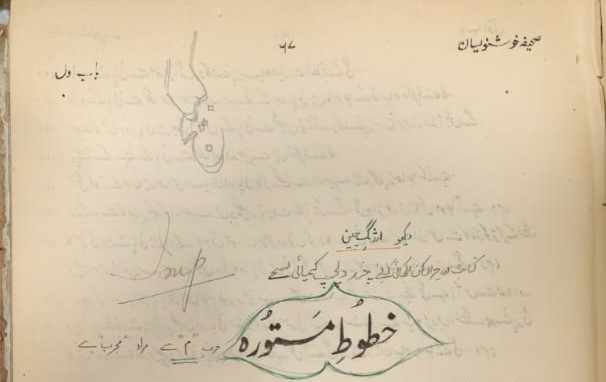
From the annotated copy of صحیفہء خوشنویساں
1963 edition, mentions another reference to Azhrang e Cheen by the same author of “Nazm e Parveen” (next) – Munshi Debi Parshad – late 19th century poet and calligrapher.
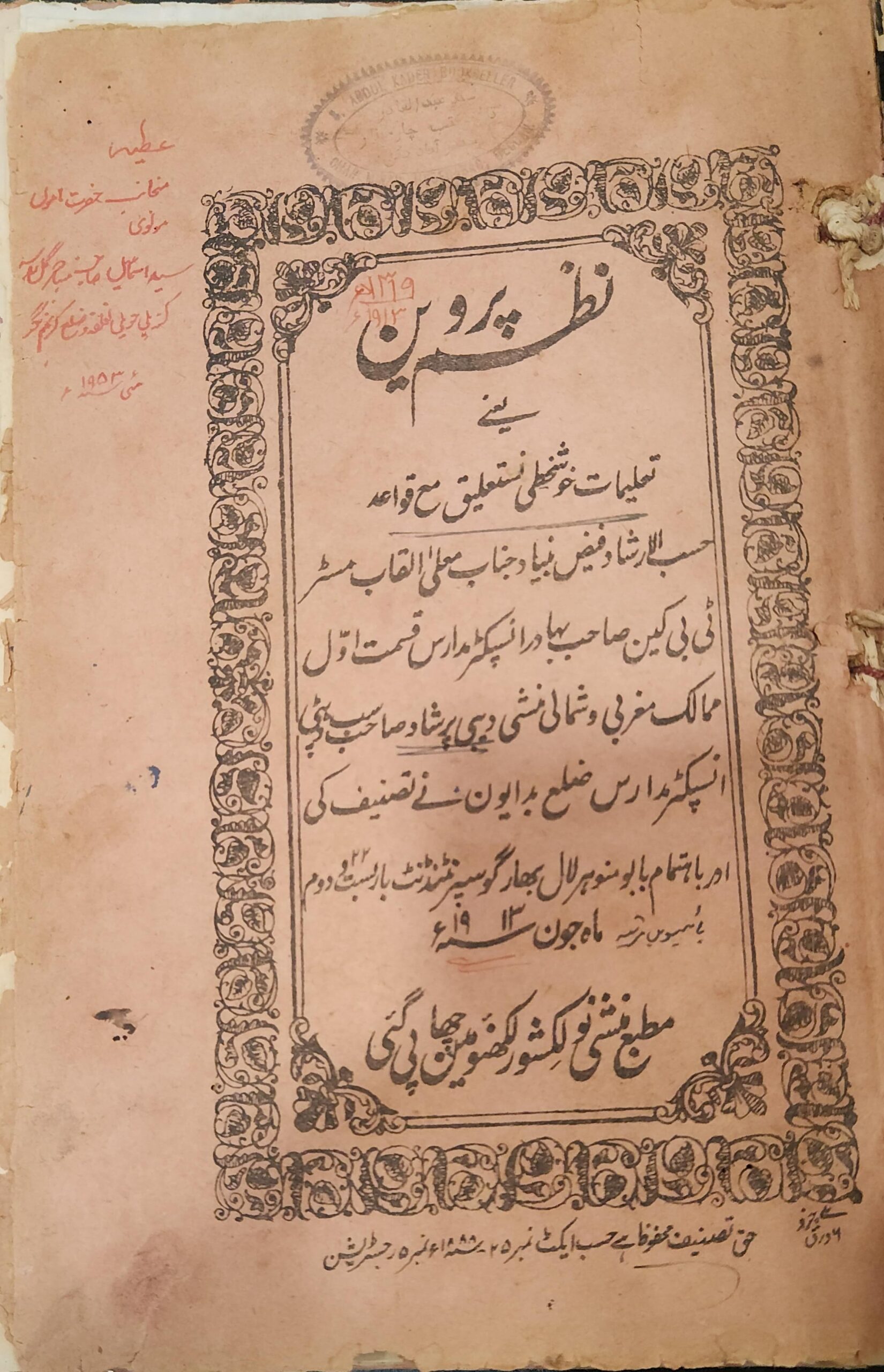
A 1913 Munshi Nawal Kishore Lucknow published manual of calligraphy by Munshi Debi Parshad titled “Nazm e Parween”.
This is one of the copies dadahazrath Riasat Ali Taaj used to teach at Madrasa e Wastania (Middle School), Asifabad Deccan (Telangana) in 1953.
Along with the added cover page to “Nazm e Parveen” (above), he also added ِshajrahs (lineage trees/pedigrees) of various calligraphers, and a few examples of calligraphy – later in the 80s. Use of “Kabikaj”:
I asked Dr. Syed Tanveeruddin Khudanumai – former Head of Persian Department, Osmania University, Hyderabad and an expert in Muslim Occult Sciences – about the usage of this word. He referred me to the voluminous Dehkhoda9 Persian dictionary and some Persian manuscripts from his private collections, and spoke about how the word was written by scholars and laymen alike with a common believe that ‘Kabikaj’ is the name of a Muwakkil (an angel appointed by God over certain functions of the universe) that will protect the pages from being stolen by any human and from being eaten by book-worms, and discussed the occult science behind this belief.
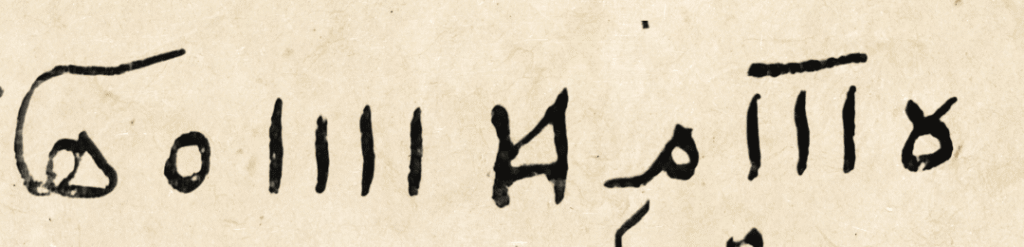
These inscriptions were both decorative and functional, serving a talismanic purpose. Several variants of the word appear across manuscripts—such as kabīkaj, kabrkaj, kabkai, karkai, kaykataj, and even the corrupted kavkataj in Maghribi manuscripts—highlighting a fluid orthography influenced by pronunciation, dialect, and scribal interpretation. Although there is no standard recorded methodology of composing this invocation (as is usually the case with ta’widh), looking at various manuscripts, the way seems to be to usually write “Ya Kabikaj” (O Kabikaj!). Sometimes the word will be repeated 2 to 7 times in a triangular shape (similar to how ‘concrete poems’ or ‘shape poems’ are written), this might even increase to as much as 24 times, and might include other similar invocations like “Ya Kabikaj, ihfaz al-waraq” (O Kabikaj! Protect <this> page/paper), “Ya Kabikaj, Ya Hafiz/Hafeez” (O Kabikaj, O Protector). In some instances, the name paired with descriptive epithets like ḥāfiẓ (“guardian”) or mufahhiḥ (possibly “the one who hisses”, referencing a snake). More complex variations, such as kanīnka.j and aktkanj kaj-kaj, also appear, suggesting either scribal error or intentional mystical distortion10.يا كبيكج يا كبيكج يا كبيكج
يا كبيكج يا كبيكج
يا كبيكجAnother form is of specific talismans written as magic-boxes with a combination of different Arabic alphabets and numbers (derived from the Abjad11 system). The former is found to be casually written on manuscripts of books, while the later is found to be written on manuscripts of firmans, family trees and property documents indicating the importance of such documents.
Mir Mubashir Ali Khan – custodian of his ancestral archives in Hyderabad, that include royal firmans from late Mughal and early Qutub Shahi dynasties’ eras – presented one such family document from 16th century that has the seal of Mughal emperors Akbar, Jahangir and Aurangzeb, that has a written-box (in the style of a ta’widh) in red-ink which is said to be made up of grinded red cinnabar dye, that can not be approached by termites. Cloths dyed in cinnabar were also used to cover these documents, which would keep them safe from termites.
While discussing this with our family and team member Dr. Ayesha Nishath – a pharmacologist from Nottingham University, UK, and a student of traditional calligraphy from Idara e Adabiyat e Urdu, Hyderabad – she shared some anecdotes of encountering certain types of papers and inks that were made from animal skins and specific plants, that when touched with bare-hands or smelt closely would cause irritations to the eyes and difficulties in breathing. These were used for secret communication purposes or for subjects that were known to be “harmful in nature if dealt without supervision”. Talking about the antifungal and antibacterial potentials of Ranunculus species – of which the word ‘Kabikaj’ is said to be related to – she suggested the parallels between usage of specific red cinnabar dyed inks to draw borders on manuscripts, and usage of Ranunculus species (commonly known as Persian Buttercup) as borders of gardens to keep them protected from rabbits and deers in various parts of the world. Due to their bitter taste and toxic sap, which contains protoanemonin—an irritant that can cause blistering and gastrointestinal distress in animals, this natural defense makes them generally unappealing to them. While formal horticultural sources rarely list ranunculus specifically as rabbit/deer-resistant, their acrid, toxic properties likely discourage them. As a result, some gardeners plant ranunculus along garden borders in hopes of deterring browsing animals, particularly deer and rabbits. Though this practice is more anecdotal than widely documented in professional landscaping guides, it does allude to the plant’s potential as a natural deterrent. This too indicates to the possibility of dried buttercup leaves that were placed between pages to deter pests in humid climates and possibly o0ver time, the plant’s name itself took on symbolic protective power. A few books from our collections do include “butter papers” that were included while the books were re-bound by dadahazrath (often to include more pages for notes and customised hardcovers). Butter papers are semi-transparent, water-proof papers that are resistant to moisture – usually used for wrapping butter, but occasionally found in between pages for the same properties and purposes.


Parallel and Similar Traditions:


Speaking with Vishwas – a student of advanced Sanskrit studies, India – he notes that while any such invocations are rarely found in the north-Indian traditions, certain south-Indian manuscripts do mention Hindu deities that are believed to protect the manuscripts. Sri Lankan symbols or images of the Sinhalese “Fire Demons” are hung in the corners of libraries to appease the incendiary demons and to avert fire, lightning and cataclysm, according to Sinhalese mythology. Since fire and acid decomposition (also known as “slow fires”) are a special problem for libraries because of the concentration of paper products, the “Fire Demons” are also included when used to assuage these destroyers of libraries and books. Similarly, for the ancient Egyptians – the dung beetle and an artefact “scarab” based on dung beetle was the protector for written materials, and in some cases, protector of the mummies. Like St. Lawrence, St. Jerome and Catherine of Alexandria in certain Christian traditions, ancient Babylonian traditions also mention “Nabu” as the heavenly patron of books who invented writing. The ancient Chinese-deity “Wei T’O”, also found in some Buddhist traditions, is said to be the patron god of libraries and books, and examples of appeals are found in Chinese manuscripts. The major deity in Mayan Indians and Latin American traditions – Quetzalcoatl – is said to be the discoverer of writing, and a single feather or plume at the beginning or at the end of a document would indicate a dedication to the “Feathered Serpent”, which degenerated over time to a single fringed line – with or without the belief – that the paper will be protected due to this.
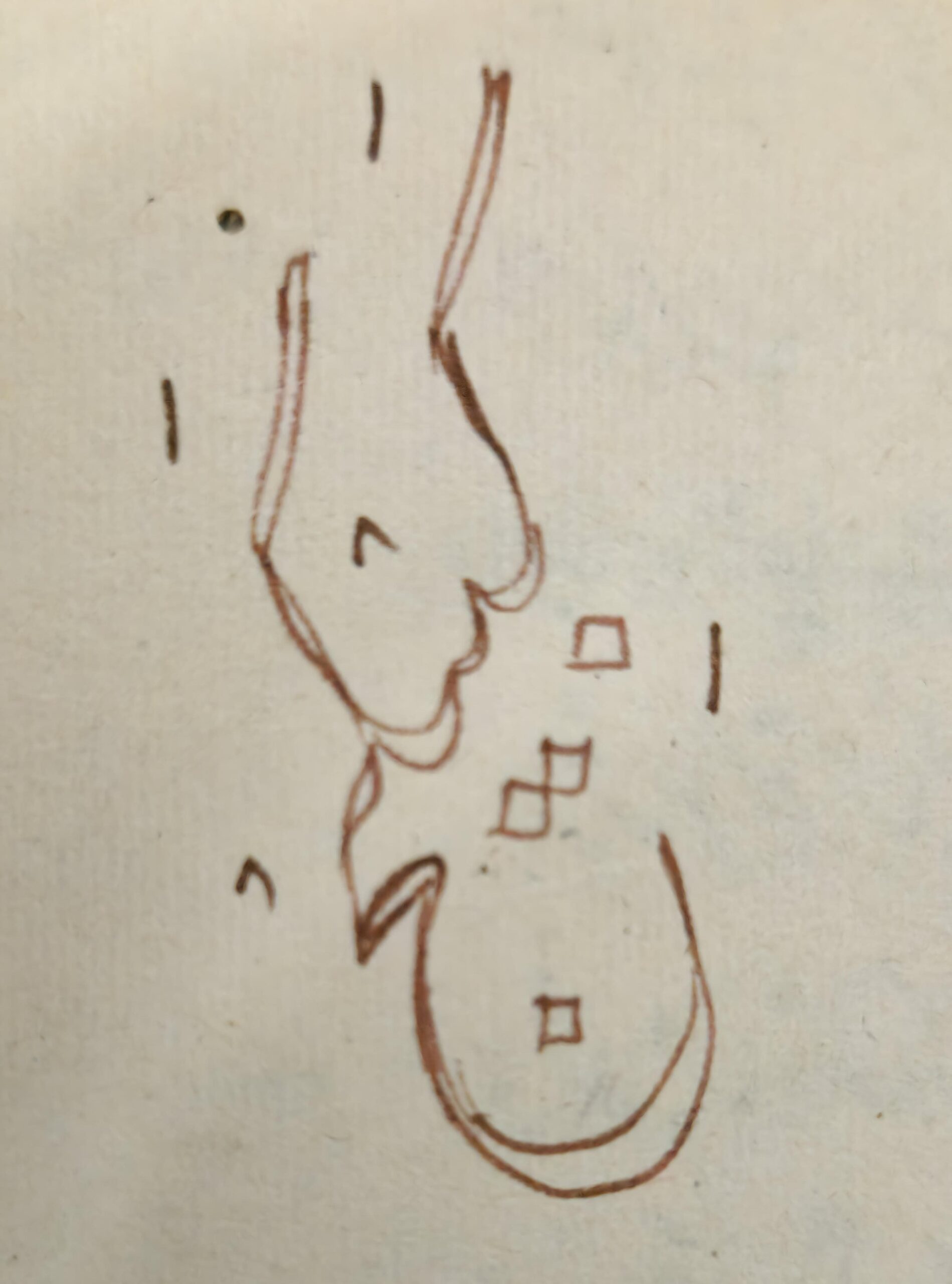
In the calligraphy manuals mentioned previously, and in some works on paleography certain symbols and mysterious words like فسفع fasfa’ and بدوح budduuh (mentioned previously) are discussed. About one such symbol is even ascribed to the Prophet and King Sulaiman (Solomon), and to Imam Ali bin Abi Talib (cousin of the Prophet ﷺ and fourth caliph of Islam). This symbol has been mentioned by a 16th century poet from Ahmedabad – Khub Muhammad Chishti – in his work حفظ مراتب Hifz e Maratib using Arabic and Persian couplets.
ثلچ عزصی صففت بعد خاتم ؛ علی راسیھا مثل السنان المرقوم
و میم طمیس ابتر ثم سلم ؛ تشتیر الی الخیرات و لیس بسلم
و اربعہ مثل الانامل صففت ؛ وھاء شفیق ثم واو منعکس
کانیوب حجام و لیس بمججمصفرہء سہ الف کشیدہ مدبر سر ؛ میم کجکول، نردبان، بدودر
پا چہار الف کشیدہ ھا و وا دم سر ؛ این جملہء بود، نام خدائ اکبرShagil Usmani translated the meaning into these Urdu couplets;
چھ کونٹی ایک شکل ہے پھر تین الف پر مد | دو میم ہیں ملے ہوے سیڑھی کا پھر نشان
پھر چار انگلیاں ہیں کھڑی اور دو چشمی ہے | پھر واو دم ہے، جس کی مثال خم کماںWhile many talismanic charms are used solely for protection, the case of Kabikaj is particularly distinct in the way that it is linked not only to metaphysical properties but also to a tangible-material entity (such as the flower Persian Buttercup) for protection, and specifically in our case, for book preservation. The botanical Indian equivalent of the Kabikaj plant is the Azadirachta Indica or neem, whose leaves are kept between manuscript folios to protect the paper.12 This is still practiced commonly in the subcontinent.
“Kabikaj” – that once was a common tradition with seemingly rich combinations of different subjects dealing with occult, botanical, medicinal sciences, and paper-preservation techniques – is now getting erased from texts as well as memories. A great potential for research lies in this single word – that can be explored not just for its history and metaphysicality, but also for the different methods that were used to preserve manuscripts in the past – and open another door for the on-going preservation-methods.

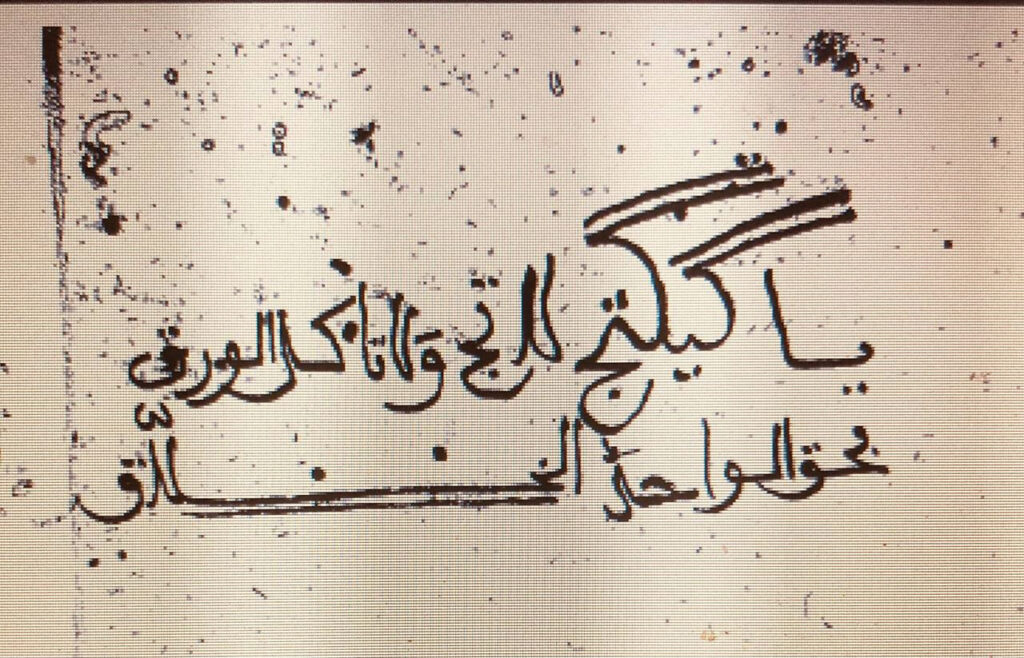
يا كبيكج لا تجِ ولا تأكل الورق بحق الواحد الخلاق
“O Kabikaj! Do not come and do not eat <this> page, for the sake of The One The Creator”
Bughyah Al-Raghib fi Syarh Nursyidah Mursyidah Al-Thalib Al-Ajami Al-Shanshuri. Manuscript, 999 H (c. 1590 G). Dar al-Kutub al-Dhahirah, MS 1099.13NOTE: There is still some room for more research on this practice, and I will be updating if and when I find something new.
Footnotes:
- Gacek, Adam. “The Use of ‘kabīkaj’ in Arabic Manuscripts.” Manuscripts of the Middle East 2 (1986): 49–53. ↩︎
- Ta’widh تعويذ is from the Arabic word awwadha, which means “to fortify someone with an amulet or incantation” – commonly translated as ‘amulet’ in English – which is drawn or written through various traditionally passed on processes – and worn as lockets or inscribed on certain places (including doors, papers and other things). ↩︎
- a. al-Ghāfiqī. Kitāb al-adwiyāʾ al-mufradah (The Book of Simple Drugs), fol. 277a. Mid‑13th century manuscript. Osler Library of the History of Medicine, McGill University, Montreal. Reproduced in the Rational Sciences in Islam project, McGill University. Accessed August 5, 2025. https://islamsci.mcgill.ca/RASI/index.html
b. Gacek, Adam. “Arabic Calligraphy and the ‘Herbal’ of al-Ghâfiqî.” Fontanus: From the Collections of McGill University 2 (1989): 49–51.
c. “The Herbarium of al-Ghafiqi, named after the illustrious 12th century Islamist scholar versed in botany and pharmacology, Abù Ja’far Ahmad ibn Muhammad al-Ghàfiqi, brings together 475 entries including 367 color illustrations accompanied by calligraphy Arabic. The manuscript was acquired in 1912 by the famous professor of medicine at McGill University, Sir William Osler from an admirer, Dr. M. Sa’eed of Hamadan (Iran)” (translated from the French). https://www.sciencepresse.qc.ca/actualite/2010/10/12/lumiere-herbier-al-ghafiqi
↩︎ - Ahmad, Ehtramuddin Shaaghil Usmani. Saheefa-e-Khushnaveesaan (صحیفہ ء خوشنویساں), Aligarh: Anjuman Taraqqi Urdu, 1963.
2nd ed. New Delhi: Taraqqi Urdu Bureau, 1987. Printed by Super Printer South, Anarkali, Delhi. ↩︎ - Gacek, Adam. “The Use of ‘kabīkaj’ in Arabic Manuscripts.” Manuscripts of the Middle East 2 (1986): 49–53. ↩︎
- Pollock, James W. “KABI:KAJ TO BOOK POUCHES: LIBRARY PRESERVATION MAGIC AND TECHNIQUE IN SYRIA OF THE 1880’S AND THE 1980’S WEST.” MELA Notes, no. 44 (1988): 8–10. http://www.jstor.org/stable/29785407.
↩︎ - Mahlooji, Kamran, Abdoli, Mahsima, and Zargaran, Arman. “Gabigaj: A Persian Herb for Protecting Manuscripts against Fungies and Insects from Safavid Era (1501–1722 AD).” Research on History of Medicine 9, no. 1 (February 2020): 63–68 https://rhm.sums.ac.ir/article_46469_c2f0837990dee4d072aeb5cdf7b1b540.pdf ↩︎
- Marʿāshī Najafi, Seyyed Mahmoud. “کبیکج در نسخههای خطی [Kabīkaj in Manuscripts].” میراث شهاب [Mirāth-e Shahāb], no. 26 (2010): 123–132. https://www.noormags.ir/view/fa/articlepage/1235878/ ↩︎
- https://dehkhoda.ut.ac.ir/fa/dictionary/detail/256324?title=%DA%A9%D8%A8%DB%8C%DA%A9%D8%AC ↩︎
- Gacek, Adam. “The Use of ‘kabīkaj’ in Arabic Manuscripts.” Manuscripts of the Middle East 2 (1986): 49–53. ↩︎
- The abjad system is an alphabetic numeral system in which the 28 letters of the Arabic alphabet are assigned numerical values, and is used for different purposes. For an introduction and overview of this, see: Farooqi, Mehr Afshan. “The Secret of Letters: Chronograms in Urdu Literary Culture.” Edebiyat 13, no. 2 (November 2003): 147–158. ↩︎
- Akkerman, ‘The Bohra Manuscript Treasury as a Sacred Site of Philology’, 195. ↩︎
- Halimi Zuhdy, “Menelisik Asal dan Makna كبيكج di Pesantren,” Pesantren.ID (blog entry hosted at halimizuhdy.com), published (n.d.), accessed August 5, 2025, http://www.halimizuhdy.com/2022/09/menelisik‑asal‑dan‑makna‑di‑pesantren.html. ↩︎
Riasath Ali Asrar is the founder of The Kabikaj Foundation. Through Kabikaj, he engages in the teaching of literature and is actively involved in the world of books —researching them and supporting others in their scholarly pursuits.

-

The Poison Belt in Urdu: Early 20th Century Cosmopolitanism in Hyderabad and World Literature in Urdu
by Maleeha Fatima and Riasath Ali Asrar
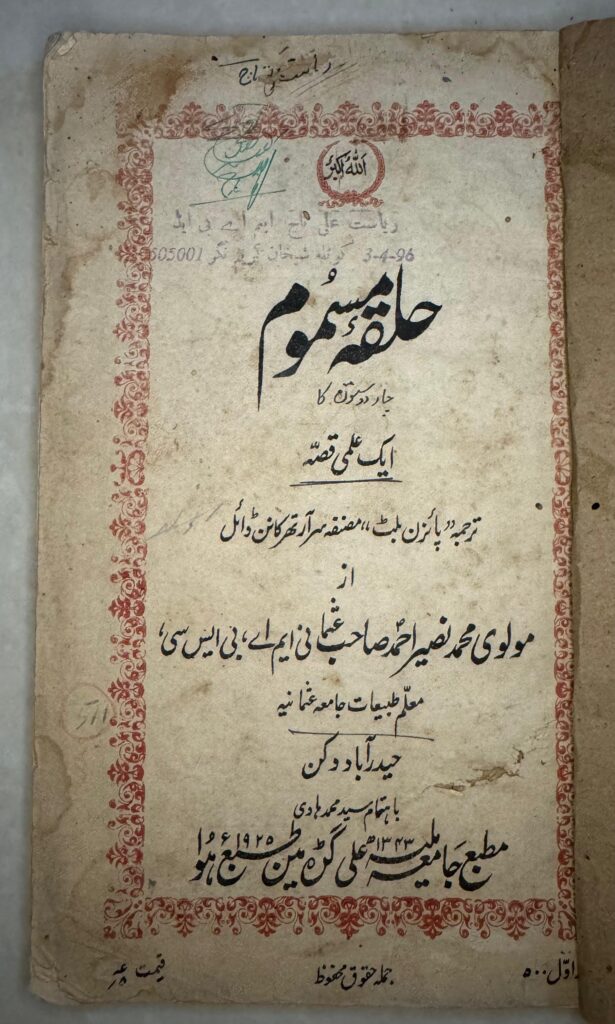
The vibrant nature of Hyderabad’s Urdu literature in the first half of the 20th century can be highlighted through the examples of two books from our ‘Riasat Ali Taaj Collections’ – Halqa e Masmoom (1925) and Faust (1931) – both being Urdu translations of ‘The Poison Belt’ (1913) by Sir Arthur Conan Doyle (d. 1930) and ‘Faust: Der Tragoedie erster Teil’ (1808) by the 19th century German poet Johann Wolfgang von Goethe.
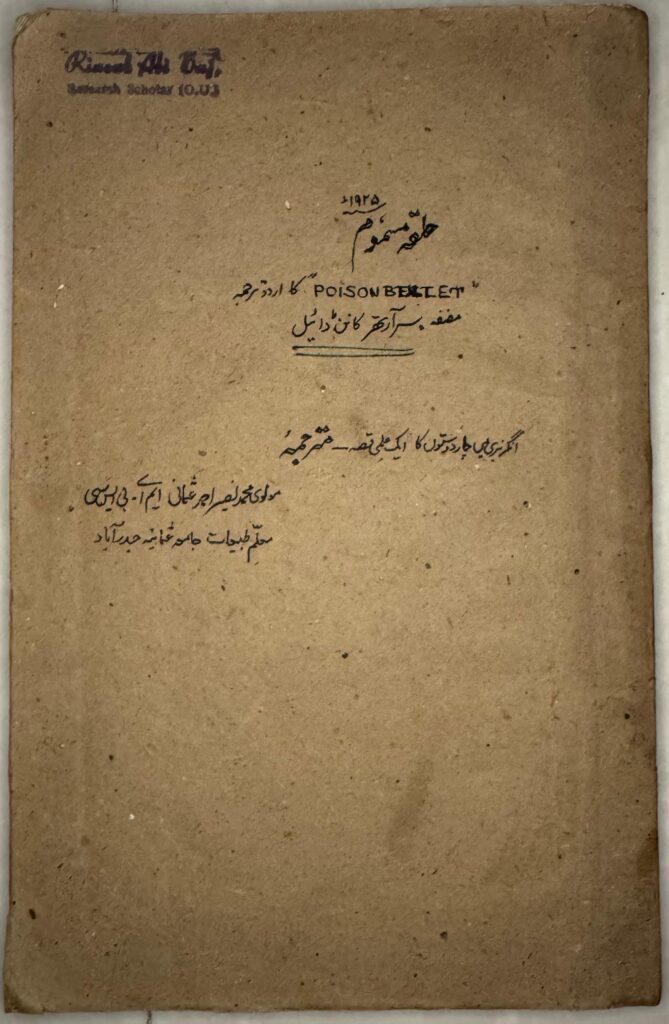
Halqa e Masmoom, translated by Maulvi Muhammad Naseer Ahmad saheb Osmani, is a tangible artifact of a thriving cosmopolitanism that reached deep into the literary life of the princely state. Known across the world as the creator of Sherlock Holmes, Conan Doyle also wrote several lesser-known works of science fiction, including The Poison Belt, which imagined a catastrophic cosmic event threatening life on Earth. What makes Halqa e Masmoom so striking is not only its content, but also what it signifies – the presence of a diverse and literate Urdu-reading public in Hyderabad that was engaged with a wide range of literary genres. Its existence reflects the complex intersections between empire, education, and the flourishing of vernacular literary production in the region.


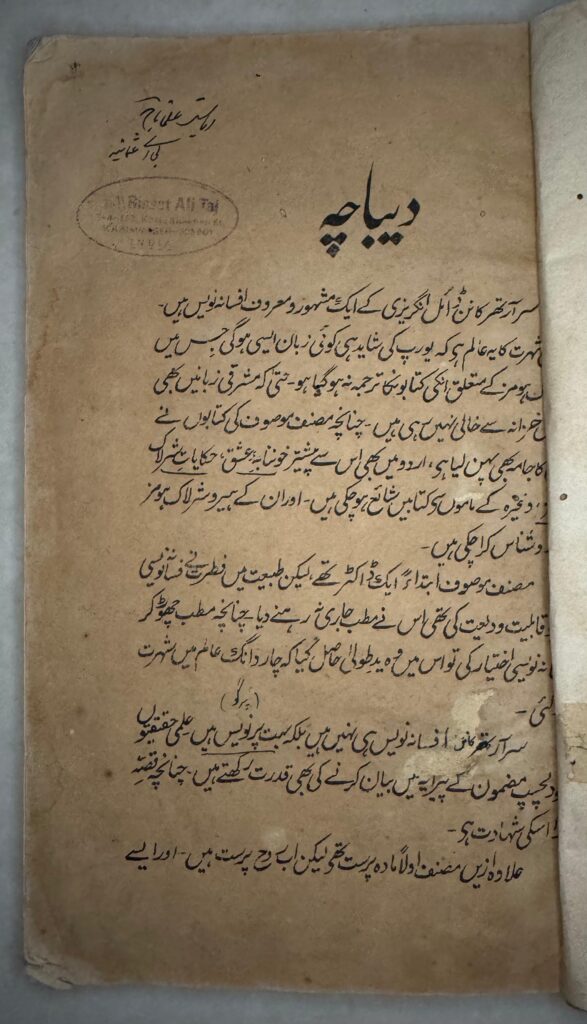
On the cover page, the title of the book is subtitled in Urdu as “چار دوستوں کا ایک علمی قصّہ chaar dostoN ka ek ilmi qissa” (A wise/knowledgeable tale of four friends), which is followed by the translator’s name. ‘Osmani’ in his name indicates him being a graduate of Jamia Osmania (Osmania University) – a practice common in the subcontinent to add a form of demonym or gentilic, showing affiliation to and taking pride in the alma mater. While ‘Maulvi’ (generally meaning a qualified graduate of Islamic sciences) in his name indicates his training in the Islamic sciences, it is followed by a line of credentials (M.A. and B.Sc.) and his designation as ‘معلم طبیعات (mu’allim e tabi’aat)’- which shows that he was teaching Physics at the university. This signaled both scholarly authority and modern Western framework of education in the Urdu institution Osmania University – markers of colonial Urdu public sphere in Hyderabad. In the preface, the translator writes a note on the fame and importance of this work and the author, mentioning a few works that have already been translated in Urdu. The paratextual emphasis on “ترجمہ tarjuma (translation): ‘Poison Belt, authored by Sir Arthur Conan Doyle” on the first page, and the “اعلان” (announcement) of “قابل دید کتابیں qaabil e deed kitaabeiN” (worth viewing books) with a list of different titles of the translator, author and the publisher available — reflects a broader pedagogical and cultural project – whether intended or not – the aspiration to educate the public not only in moral and religious terms, but also through exposure to global currents of scientific and literary knowledge.


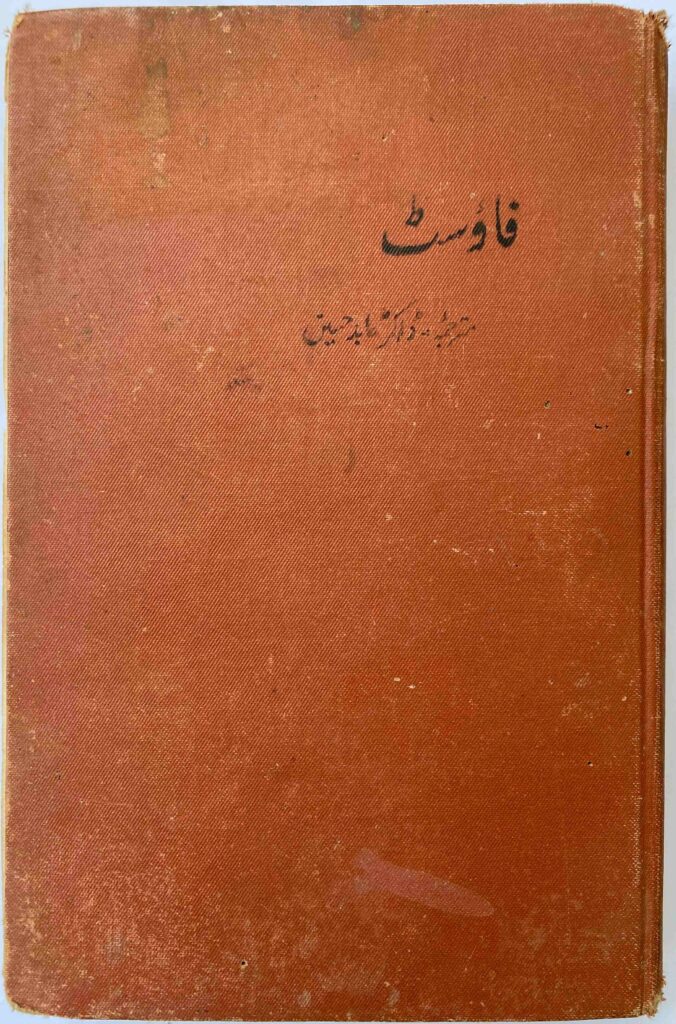
Another such example from the same collection is an Urdu translation of the 19th century German poet Johann Wolfgang von Goethe’s play Faust: Der Tragoedie erster Teil (1808, Faust: The Tragedy’s First Part). Translated by Syed Abid Hussain (d. 1978) who was a scholar and translator working at Aurangabad’s Anjuman Taraqqi Urdu (ATU) during the 1930s.
Established in 1886 (and renamed in 1903), ATU initially had its headquarters in Aligarh, but later moved to Aurangabad within the Hyderabad State in 1913 – under the patronage of the Asaf Jahis. Besides publishing journals and books, supporting research and creative work in Urdu linguistics and literature and contributions such as Dictionary of Scientific Terms (1935) – also in our collections – has supported scholars for books like the one mentioned above.
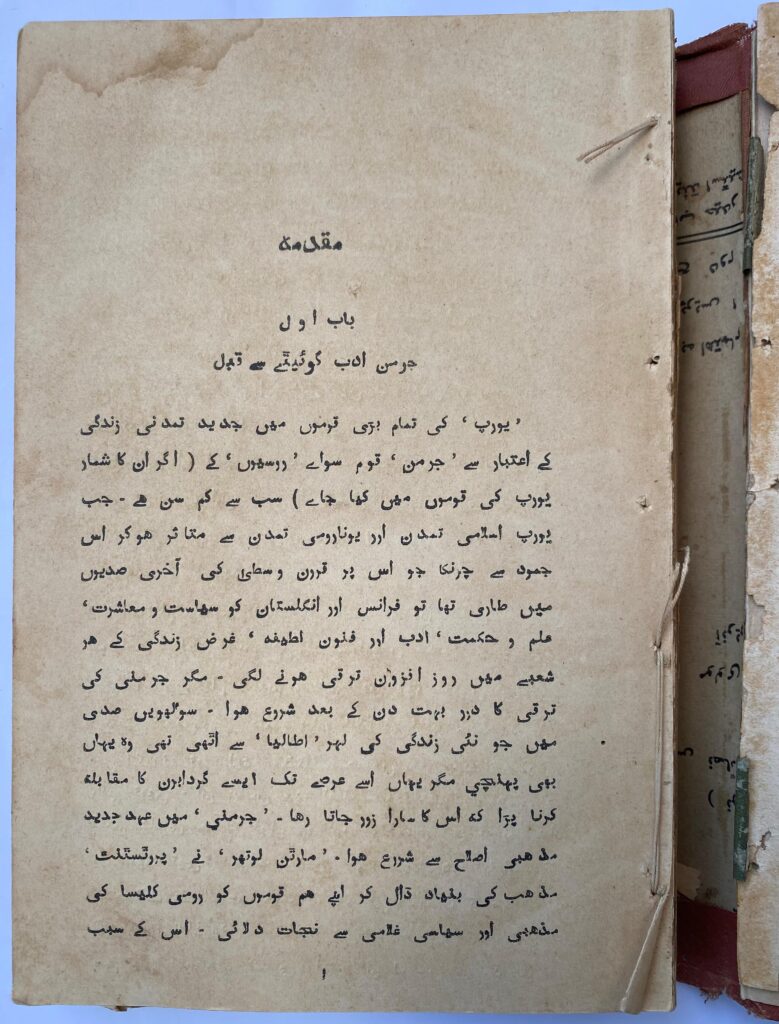
Not only did Syed Abid Husain translated the play, but also wrote over 100 pages of a مقدمہ ‘muqaddimah’ (preface) divided in six parts – sketching German Literature’s history, introducing Goethe’s life and works, and the importance of his works, critiquing the German play, explaining and referring to important parts of the text amongst other discussions.
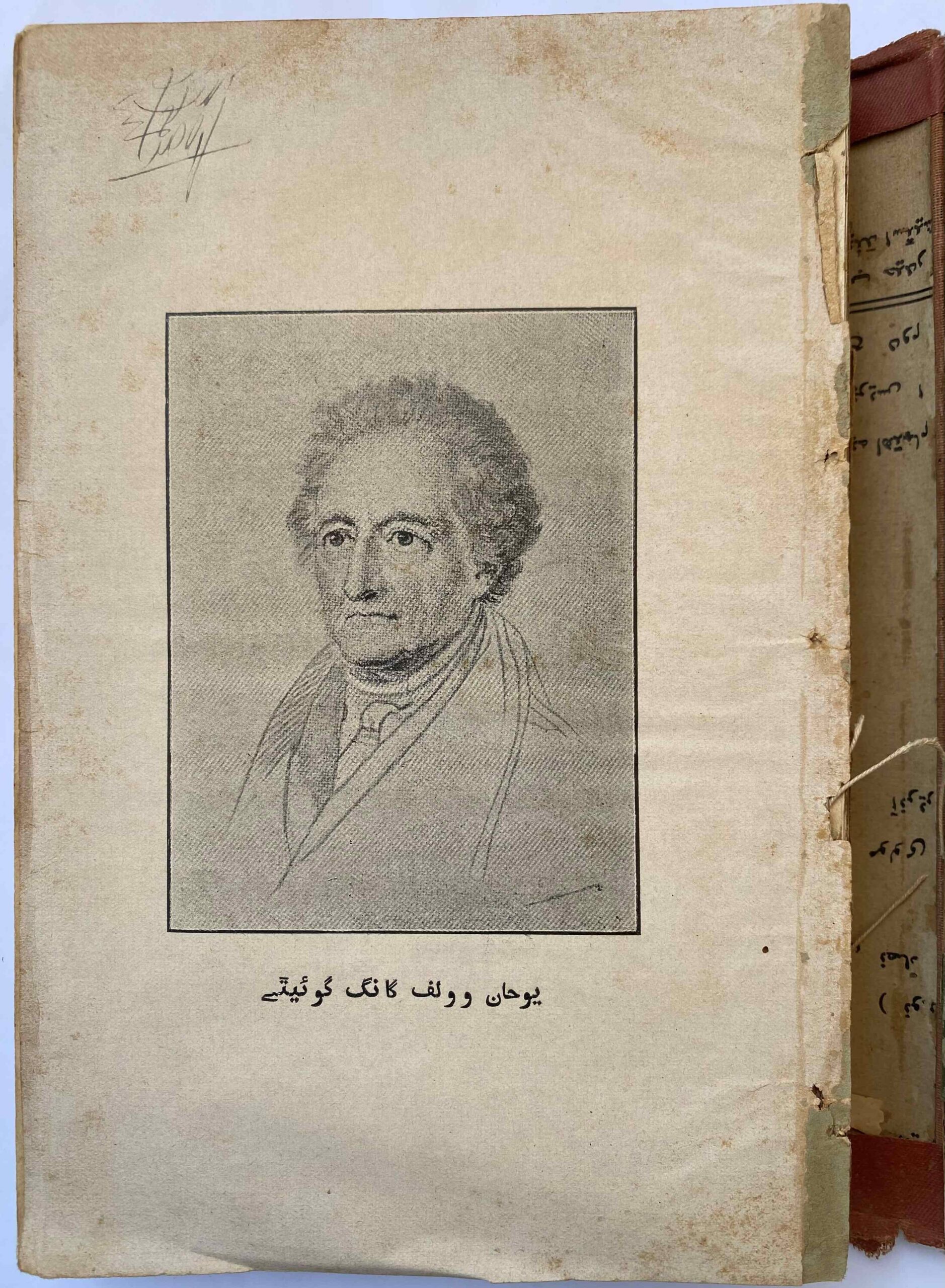
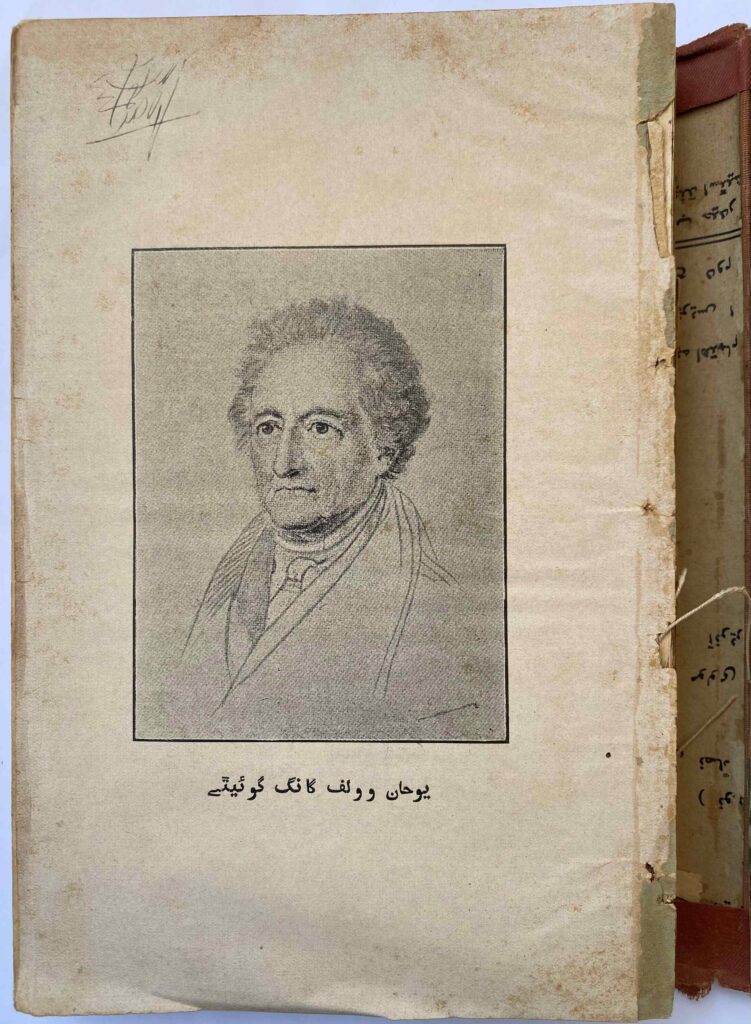
The book is also notably a good example of the quality of print in those times — the paper being high quality with Urdu text typed in the naskh script in the style of Fraktur – the German type print (blackletter typeface that was widely used in Germany and German-speaking regions until the 20th century). The first folios of this edition also includes a sketch of Goethe, with his name written below in Urdu.
As Venkat Mani contends that the “worlding” of literature is facilitated through “information transfer,” a process significantly shaped by the infrastructure of print culture. In this context, publishers, booksellers, literate readers, and public libraries together play a crucial role in making ‘world literature’ accessible, especially when works are translated, printed affordably, and made available to wider audiences. The Urdu translations of The Poison Belt & Faust, thus, becomes part of this wider ecosystem of circulation and reception, emblematic of how literary cosmopolitanism was mediated through local languages and institutions in the erstwhile state of Hyderabad. The presence of such translations in Hyderabad speaks volumes about the erstwhile state’s openness to global ideas and its active engagement with the literary currents of the wider world. It also reflects the ways in which imperial networks, modern education, and local literary traditions intersected in unique ways within Hyderabad in this period. That a novel about planetary catastrophe – originally written in English, or a German rhymed verse magnum opus (considered by many to be one of the greatest work of German literature) could find new life in Urdu in the heart of the Deccan region, underscores how deeply cosmopolitan the region’s literary culture had become. Through examples like Halqa e Masmoon and Faust, we see not only the reach of authors like Conan Doyle and Goethe, but also the vibrancy and adaptability of Urdu as a medium for translating and reinterpreting the world. These books are more than translations – they are a material trace of a dynamic moment in the history of Hyderabad as well as Urdu literature.
Urdu in Hyderabad during the Early 20th Century
While local Indic and neighboring Persian literature, with its unique blend of Indo-Persian traditions, remained prevalent in the Deccan, by the late 19th century, English popular literature had become widely accessible. During this period, authors like George W. M. Reynolds, Edward Bulwer-Lytton, and H. Rider Haggard, along with poets like Goethe, gained significant readership. Some of these works were less popular, while others were not only widely read but also translated into Urdu in various forms.
There are several ongoing conversations, both within academic circles and in the public domain, about the historical relationship between the erstwhile state of Hyderabad, and the Urdu language. Some of these discussions tend to adopt reductive perspectives. A common argument suggests that Urdu in the erstwhile princely state was primarily an expression of elite, jagirdar (landlord) culture, owing to its limited accessibility among the general population. While it is true that Urdu literacy was not widespread in early 20th-century Hyderabad, this limitation must be understood within the broader context of low literacy rates across the erstwhile state as a whole.According to the Census of India 1921, Volume XXI: Hyderabad State, Part I – Report, approximately 3.3 percent of the population in the Hyderabad city of the erstwhile princely state of Hyderabad was recorded as literate. Moreover, around the first two decades of the early 20th century, the literacy rate in Urdu was less than 2 percent. These figures reflect the broader socio-economic and educational disparities of the period, highlighting the limited access to formal education in the region at the time.
Recognizing the class-based barriers to education at the time is important, but it should not lead to the mistaken conclusion that Urdu itself was inherently elitist or disconnected from the wider social fabric. In fact, the spoken language of the majority of people in Hyderabad city was a form of Dakhni Urdu, which coexisted with formal registers and reflected the linguistic diversity of everyday life. The academic sphere during the time of the Nizam was equally engaged with Dakhni, recognizing its literary and cultural significance. Scholars, such as Riasath Ali Taj whose collection this copy is from, undertook important projects to recover and document neglected or nearly forgotten works of classical Dakhni literature. These efforts went beyond the translation and production of global texts – they signaled a commitment to preserving and revitalizing local vernacular traditions. Far from being overlooked, Dakhni was actively curated and studied within academic circles, underscoring the linguistic plurality and intellectual richness of the period.
Decline in Urdu ScholarshipHyderabad, under the rule of the Asaf Jahi Nizams, was one of the wealthiest and most culturally vibrant princely states in colonial India. Unlike Bombay or Calcutta, which were shaped directly by British governance, Hyderabad maintained a degree of autonomy and developed a parallel modernity that merged Islamic scholarship, Indo-Persian courtly traditions, and global curiosity. The translation of detective fiction into Urdu, particularly lesser-known works, indicates not merely the penetration of Western narratives but their creative adaptation for South Asian readers. Translations like these were not simply acts of cultural borrowing; they were active interventions within a dynamic and evolving intellectual environment. The reading public of Hyderabad – comprising civil servants, students, clerks, and reformers – sought out new genres and ideas, especially those that offered both cognitive stimulation and moral depth. The widespread publication and circulation of such translations further suggest that access to these texts was not deliberately restricted to elite audiences. These were often small, affordable booklets intended for mass readership, making world literature available to readers across class boundaries. In this way, Hyderabad’s Urdu print culture functioned as a democratic force, opening up avenues for literary engagement, critical thinking, and imaginative exploration within the vernacular sphere.
However, this vibrant landscape underwent a profound transformation in 1948, when the Indian Union annexed the Hyderabad state. The political and administrative reorganization that followed brought about significant changes across socioeconomic and cultural institutions. One of the more enduring consequences was the gradual decline of Urdu. Once a language of both state and cultural life, Urdu increasingly became associated primarily with madarsa education (something that itself gained a negative perception), narrowing its perceived relevance and reach. In a broader context, the decline of Urdu literacy in Hyderabad reflects not just a linguistic shift but a profound transformation in cultural priorities and socio-economic conditions.
While Urdu once flourished as both a literary and administrative language in the region – particularly gaining momentum in the early decades of the 20th century – its upward trajectory was abruptly halted by a combination of policy decisions, shifting demographics, and changing educational frameworks. Today, a century later, the presence of Urdu in Hyderabad’s literary and public spheres is a faint echo of its former prominence. What we witness now is a paradox: although the older class-based barriers that once restricted access to Urdu no longer persist, there is a marked absence of robust literary production in the language. The belletristic tendency to celebrate (or even fetishize) Urdu for its aesthetic elegance often masks a deeper disengagement with its intellectual and critical traditions. Much of the limited literature that is produced today emerges outside the conventions of the Urdu script or literary heritage, often catering to niche or commercialized markets. The result is a landscape where demand for serious Urdu writing is perceived as negligible, further contributing to the erosion of its public and literary life. This decline, while gradual, signals a broader cultural amnesia about the role Urdu once played in shaping Hyderabad’s identity.
Our forthcoming work at the foundation builds on this legacy by revisiting Urdu’s place in World Literature. Through the study of translations, marginal texts, unpublished manuscripts, lesser-known periodicals from the Deccan, and researching the various print presses and publishing houses – we aim to highlight the region’s vibrant participation in global literary circuits. Upcoming writings will explore how Urdu readers and writers in Hyderabad, Deccan engaged with the world, often on their own terms, negotiating colonial modernity while preserving and reimagining their own literary forms. In doing so, we hope to recover Hyderabad and Urdu’s rightful place in a truly plural and decentralized map of world literature.

Maleeha Fatima is an academic whose current research seeks to reconstruct the social fabric of
modern Hyderabad prior to 1948 by integrating postcolonial theory, material culture analysis, and
quantitative historical methods. At Kabikaj, she contributes as an academic consultant for various
projects, particularly through her expertise in material culture analysisRiasath Ali Asrar is an Urdu poet and founder of The Kabikaj Foundation.