Further Readings:
1. Shareef, Muhammad Jamaal. Dakan meiN Urdu Shayeri Wali Se Pehle. Edited by Muhammad Ali Asar. Hyderabad: Idara-e-Adabiyat-e-Urdu, 2004.
Category: Dakhni-Pedia
-
Raam Daas رام داس
-
Tukka Raam تکا رام
Further Readings:
1. Shareef, Muhammad Jamaal. Dakan meiN Urdu Shayeri Wali Se Pehle. Edited by Muhammad Ali Asar. Hyderabad: Idara-e-Adabiyat-e-Urdu, 2004. -
Baaya Baai بایا بائی
Her name was Baaya Baai Raam Daasi, and her nom de plume was at time Daasbiya. Around 15 Dakhni nazms of her were discovered amongst her Marathi writings — which also include a lot of Persian vocabulary in them.
داس بیا کہے کچھ نہیں دیکھا
جب دیکھا تب الٹا نتیںFurther Readings:
1. Shareef, Muhammad Jamaal. Dakan meiN Urdu Shayeri Wali Se Pehle. Edited by Muhammad Ali Asar. Hyderabad: Idara-e-Adabiyat-e-Urdu, 2004. -
Daasupant Digambar داسو پنت دگمبر
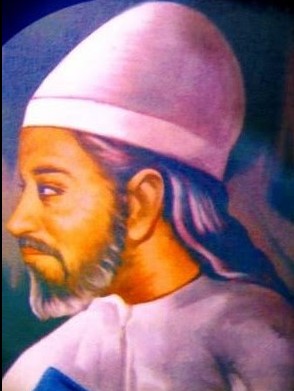
His name was Dasupant and his nom de plume was Digambar. He was born in 1551/958 Hijri in Bidar during the Bahmani era. His father, Digambar Pant, was a contemporary of Janardhan Pant—the guru of Aiknath. He belonged to the Dat sect. Dasopant (1551–1615) belonged to the Datta sect and was born into a Deshastha Brahmin family in the village of Narayan Peth. He was the son of Digambarpant, an official of the Barid Shahi kingdom of Bidar, responsible for collecting land revenue and handing it over to the rulers. Dasopant wrote mainly in Marathi and was a Sanskrit scholar, with some of his works being commentaries. He also composed songs in Kannada, Telugu, and Hindi. He is said to have written over 500,000 (5 lakh) couplets, only a portion of which have been published. Among his notable works are two commentaries on the Gita—Gitarnava and Gitarthabodhachandrika (also known as Gitartha Chandrika), the latter being a shorter commentary in which he follows the Advaita Siddhanta school of thought. He also authored Grantharaja, considered a precursor to Dasbodh.
Though he primarily composed in Marathi, his kalaam is also found in the Hindi-Urdu of that time. Dr. Shareef, in his book Dakan meiN Urdu Shayeri Wali se Pehle (2004), has mentioned a couple of Dakhni couplets of Digambar.Further Readings:
1. Shareef, Muhammad Jamaal. Dakan meiN Urdu Shayeri Wali Se Pehle. Edited by Muhammad Ali Asar. Hyderabad: Idara-e-Adabiyat-e-Urdu, 2004.
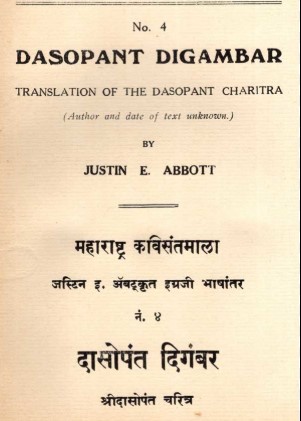
2. Abbott, Justin E. “The Maratha Poet‑Saint Dāsopant Digambar.” Journal of the American Oriental Society 42 (1922): 251–279 -
Aik Naath ایک ناتھ
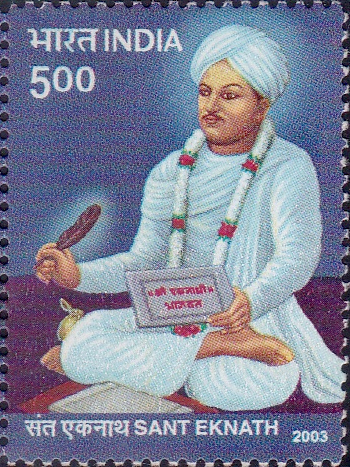
Eknath/AikNaath (c. late 16th century), one of the poets of the Marathi bhakti tradition, lived and composed in a period that overlaps with the late Bahmani and early post-Bahmani Deccan, particularly under the Ahmadnagar Sultanate. A native of Paithan, he was educated at Daulatabad under Swami Janardan, a known devotee of Dattatreya.
Eknath on a 2003 stamp of India. On page 784 for his book, Dr. Shareef mentions a few excerpts of Dakhni kalaam.
Further Readings:
1. Shareef, Muhammad Jamaal. Dakan meiN Urdu Shayeri Wali Se Pehle. Edited by Muhammad Ali Asar. Hyderabad: Idara-e-Adabiyat-e-Urdu, 2004. -
Naam Dev نام دیو
Further Readings:
1. Shareef, Muhammad Jamaal. Dakan meiN Urdu Shayeri Wali Se Pehle. Edited by Muhammad Ali Asar. Hyderabad: Idara-e-Adabiyat-e-Urdu, 2004. -
Saiwak سیوک
Further Readings:
1. Shareef, Muhammad Jamaal. Dakan meiN Urdu Shayeri Wali Se Pehle. Edited by Muhammad Ali Asar. Hyderabad: Idara-e-Adabiyat-e-Urdu, 2004.
2. Hashmi, Naseer-Uddin. Dakan MeiN Urdu. 1st ed., Taraqqi Urdu Bureau, 1985 -
Shihabuddin شہاب الدین
Further Readings:
1. Shareef, Muhammad Jamaal. Dakan meiN Urdu Shayeri Wali Se Pehle. Edited by Muhammad Ali Asar. Hyderabad: Idara-e-Adabiyat-e-Urdu, 2004. -
Ashraf Biyabani اشرف بیابانی
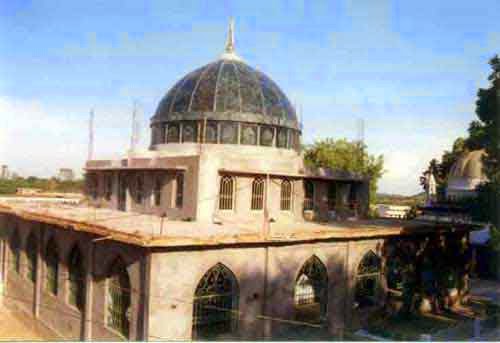
Syed Shah Muhammad Ashraf Biyabani was the son of Syed Shah Ziyauddin Biyabani, and was born on 16th August 1459/865 Hijri in Fuqrabad. He married Hazrath Maryam Bibi Saheba, the daughter of Hazrath Sang-de-Sultan. Hazrath Ashraf Biabani became the first Sajjada Nasheen of the Biabani family. He used to pray and meditate in the forests of Faqrabad and Rauna Prada in the Jalna District, as his father did. A large number of devotees from distant places would come to him for blessings, and he would arrange mass meals (langar) for them. Hazrath Ashraf Biabani passed away in 935 Hijri. A devotee, Mohammad Hussain, constructed a tomb over his grave according to the wish of Hazrath Ziauddin Biabani. The tomb, located very near the grave of Hazrath Ziauddin Biabani (R.A.) at Ambad Shareef, is a unique example of Deccan architecture.
Two of his writings are known by the names of Nuskha e Nausarhar and Qissa e Aakhir uz Zamaan. One manuscript of Nausarhar is preserved in Idara e Adabiyat e Urdu, Hyderabad; and the other is Anjuman Taraqqi Urdu Pakistan – which was compiled and published in 1982 by Dr. Afsar Siddiqui. There is no available manuscript of Qissa e Aakhir uz Zamaan, as of now. The first mathnavi is on the martyrdom of Imam Husain.Further Readings:
1. Shareef, Muhammad Jamaal. Dakan meiN Urdu Shayeri Wali Se Pehle. Edited by Muhammad Ali Asar. Hyderabad: Idara-e-Adabiyat-e-Urdu, 2004. -
Syed Muhammad Akbar Husaini سید محمد اکبر حسینی
Further Readings:
1. Shareef, Muhammad Jamaal. Dakan meiN Urdu Shayeri Wali Se Pehle. Edited by Muhammad Ali Asar. Hyderabad: Idara-e-Adabiyat-e-Urdu, 2004. -
Abdul Jaleel عبد الجلیل
According to Naseeruddin Hashmi, Abdul Jaleel, known by his pen name Jaleel, was a distinguished poet of marsiya in Hyderabad during the early 11th century AH/17th century CE. Very little is known about his life, with the only recorded fact being his practice of composing marsiyas during the month of Muharram, which he would recite in the Ashoor Khana and at the Majalis of Sayed us Shuhada. Jaleel had two brothers, but no further details about his family have been documented. His marsiyas were characterized by their length and structural similarity to ghazals. Notably, a musaddas marsiya attributed to him exists, suggesting that Jaleel may have been the originator of the musaddas form for marsiyas. A manuscript of his marsiyas is housed in the Library of the Salar Jung Museum in Hyderabad. His work adhered to the stylistic conventions of both the Qutb Shahi and Mughal periods, maintaining a consistent and recognisable pattern throughout his compositions.
(This entry is based on Naseeruddin Hashmi’s work on Dakhni poets. Further research on this poet is still ongoing, with some speculation that he may be the same person as Abdul Jaleel Bilgrami.)Further Readings:
1. Hashmi, Naseer-Uddin. Dakan MeiN Urdu. 1st ed., Taraqqi Urdu Bureau, 1985. -
Firaaqi فراقی
Firaaqi, whose name was Syed Muhammad, belonged to a family of Sufis from Bijapur during the final years of the Adil Shahi dynasty. He later travelled to Aurangabad and eventually settled in Vellore. Firaaqi authored a mathnavi titled Mirat ul Hashr.
Further Readings:
1. Hashmi, Naseer-Uddin. Dakan MeiN Urdu. 1st ed., Taraqqi Urdu Bureau, 1985
2. Compiled by Prof. Mohiuddin Qadri Zore. Urdu Shah’paare. 1st ed., Urdu Academy A.P, 2009.
3. Hakeem Syed Shamsullah Qadri. Urdu-e-Qadeem: Urdu Zaban Ki Tareekh. 3rd ed., Matba Tej Kumar, 1967.
4. Shareef, Muhammad Jamaal. Dakan meiN Urdu Shayeri Wali Se Pehle. Edited by Muhammad Ali Asar. Hyderabad: Idara-e-Adabiyat-e-Urdu, 2004. -
Abdul Muhammad Tareen عبدل محمد ترین
Abdul Muhammad Tareen is credited with writing a mathnavi titled Shamail un Nabi on the life of Prophet Muhammad in the early 11th century. While little is known about the poet’s life, the mathnavi itself suggests that it was translated into Dakhni from Pashto. The mathnavi focuses on the noble characteristics of the Prophet Muhammad. According to Naseeruddin Hashmi, a manuscript of this work is preserved in both the Salar Jung Library and the Asafiya Library.
It is worth noting that ‘Tareen’ may also refer to a Pashtun tribe residing in southern Afghanistan and the western regions of modern-day Pakistan.
Further Reading:
1. Hashmi, Naseer-Uddin. Dakan MeiN Urdu. 1st ed., Taraqqi Urdu Bureau, 1985. -
Aaftaabi آفتابی
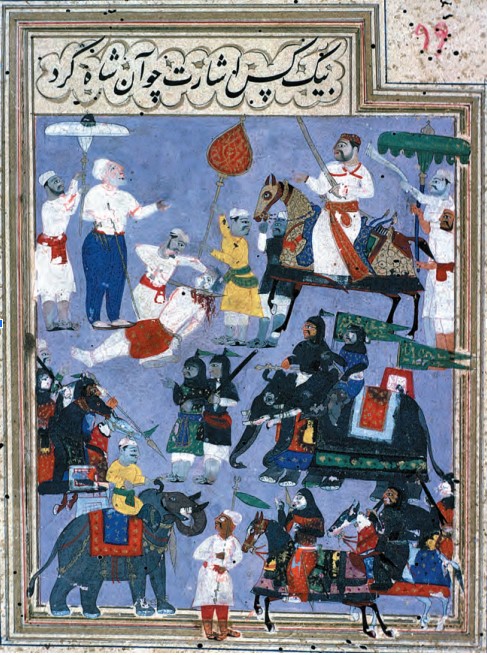
Aaftabi was a 16th-century court poet in the Nizam Shahi dynasty (1490–1636), serving under Sultan Husain Nizam Shah of the Ahmadnagar Sultanate. He is best known for his mathnavi titled Kitab-i Tarif-i Husain Shah Padshah-i Dakan (The Chronicle of Husain Shah, King of the Deccan), also referred to as Tarif-i Husain Shahi or Tarif-i Husain Shah.
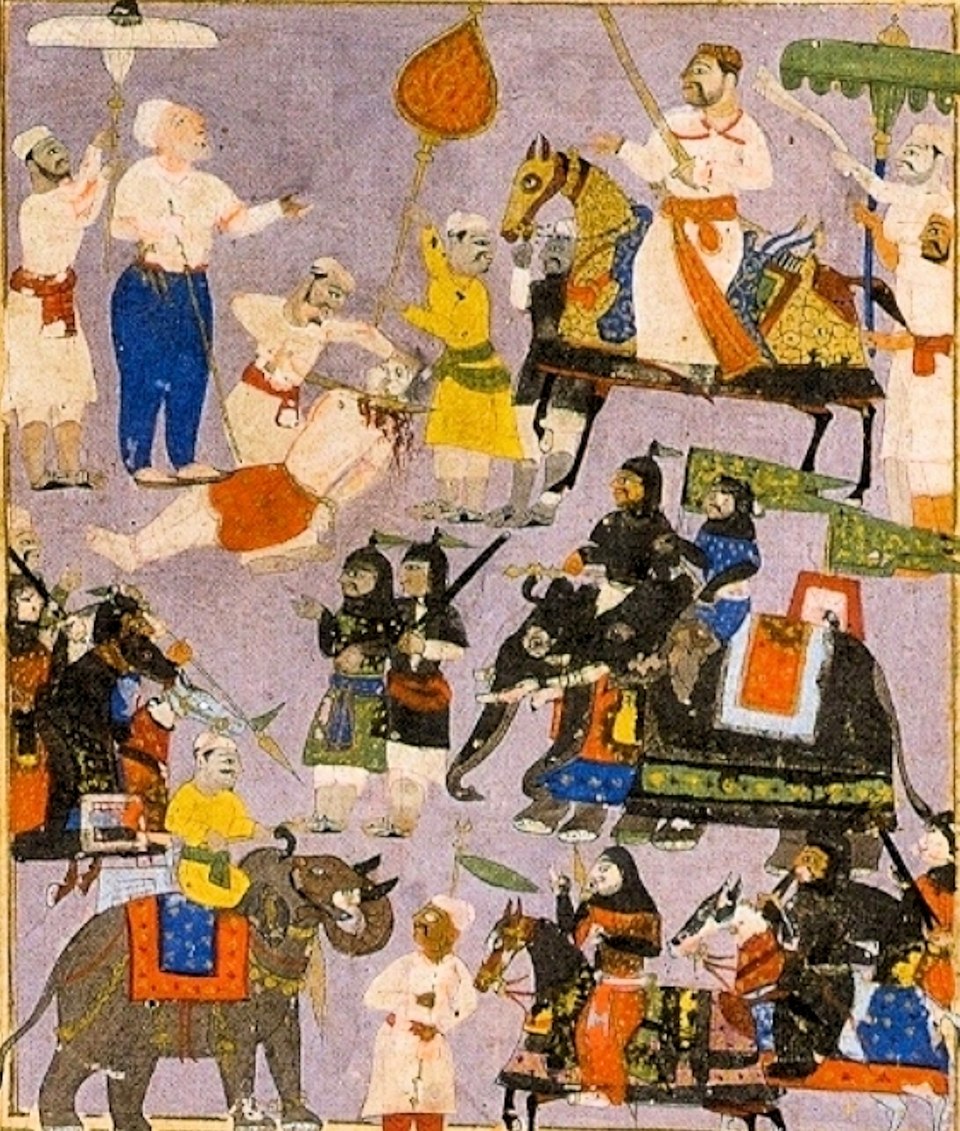
Hussain Nizam Shah I (riding a horse) orders the decapitation of Ramaraya (reigned 1542-65), the defeated ruler of Vijaianagara.
Folio 46b from the manuscript of Ta’rif-i Husain Shahi (Chronicle of Husain Shah)
Date: Circa 1565-1569
Collection: Bharat Itihas Sanshodhak Mandal, Pune.According to Naseeruddin Hashmi, this mathnavi is composed in the metre and style of Ferdowsi’s Shahnameh (977–1010 CE), and comprises of 370 couplets narrating the battles of Sultan Husain Nizam Shah while extolling the king’s virtues and those of his queen consort, Khunza Humayun.
Aaftabi’s mathnavi prominently features the Sultan’s victory at the Battle of Talikota (1565), an event that significantly shaped the history of the Deccan. The text, accompanied by vivid illustrations, provides the only contemporary poetic description of this decisive battle. Aaftabi’s portrayal of the Vijayanagara ruler Rama Raya, an adversary of Husain Nizam Shah, oscillates between condemnation—labeling him a “useless infidel” (kafir-i nabakar)—and admiration, employing poetic conventions that highlight the grandeur and might of a worthy opponent.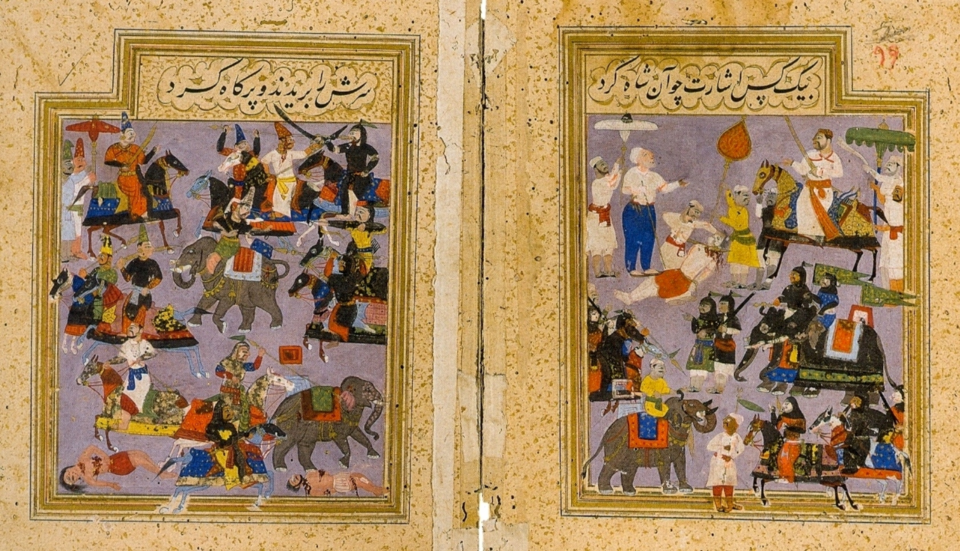
Hussain Nizam Shah I and the coalition of Deccan Sultanates decisively defeat and execute Aliya Rama Raya. Folios 46a and 46b from manuscript Ta’rif-i Husain Shahi (Chronicle of Husain Shah). In folio 46a Battle of Talikota. In folio 46b Husain Shah (riding a horse) orders the decapitation of Ramaraya (reigned 1542-65), the defeated ruler of Vijaianagara.
Date: Circa 1565-1569
Collection: Bharat Itihas Sanshodhak Manda, Pune.Further Readings:
1. Shareef, Muhammad Jamaal. Dakan meiN Urdu Shayeri Wali Se Pehle. Edited by Muhammad Ali Asar. Hyderabad: Idara-e-Adabiyat-e-Urdu, 2004.
2. Tarif-i-Husain Shah, Badshah Dakhan: original text, translation and critical introduction. India, Bharata Itihasa Samshodhaka Mandala, 1987.
3. Eaton, Richard M.. A social history of the Deccan, 1300-1761: eight Indian lives. United Kingdom, Cambridge University Press, 2005.
4. Hashmi, Naseer-Uddin. Dakan MeiN Urdu. 1st ed., Taraqqi Urdu Bureau, 1985 -
Ashraf اشرف
Shaikh Mohammad Ashraf, known by his pen name Ashraf, was a poet of the Nizam Shahi Dynasty, active during the reign of Malik Nizam ul Mulk. Little is known about his life, though it is documented that he was a disciple of Ziya Uddin. Ashraf’s most notable work is the Mathnavi titled Nausarhaar, written during this period. There is debate over his place of origin, with some attributing him to Ahmad Nagar and others to Bijapur; however, the majority of scholars believe he hailed from Ahmad Nagar.
Naseeruddin Hashmi mentions, Nausarhaar is considered the first Mathnavi in Dakhni to address the events of Karbala. The Mathnavi is divided into nine chapters, with the first chapter devoted to Hamd (praise of God), the second explaining the reasons for composing the work, and the subsequent chapters detailing the tragic events of Karbala. In his work, Ashraf reflects on his life, expressing a sense of futility and lamenting that he had not achieved anything of lasting significance.
Further Readings:
1. Hashmi, Naseer-Uddin. Dakan MeiN Urdu. 1st ed., Taraqqi Urdu Bureau, 1985 -
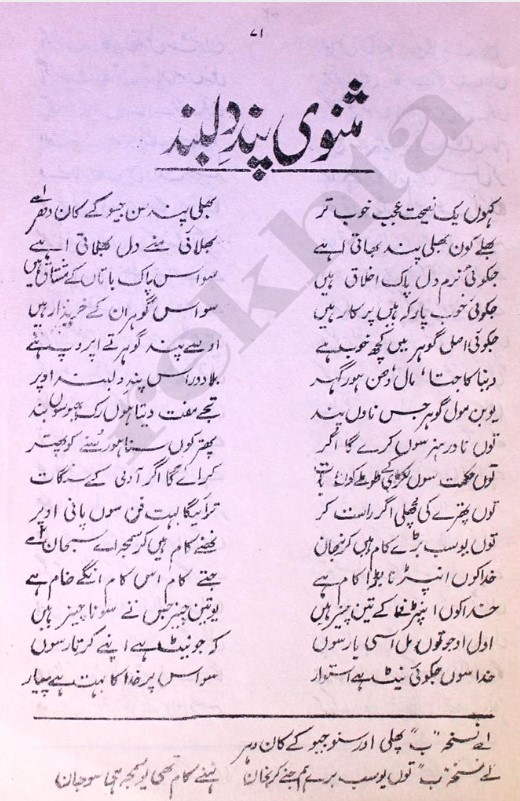
Ayaaghi ایاغی
Ayaghi’s real name was Muhammad Ameen, and he was from Bijapur, associated with the Adil Shahi court during the reign of the eighth Sultan, Ali Adil Shah II (1652–1674). Not much is known about his life, except that a mathnavi titled Najaat Naama and a few ghazals attributed to him are extant. A manuscript of his work is preserved at the Salar Jung Museum Library. Dr. Muhammad Ali Asar compiled the Najaat Naama and published it in: Dakani ki Teen Masnaviyan (1987).
Further Readings:
1. Shareef, Muhammad Jamaal. Dakan meiN Urdu Shayeri Wali Se Pehle. Edited by Muhammad Ali Asar. Hyderabad: Idara-e-Adabiyat-e-Urdu, 2004.
2. Hashmi, Naseer-Uddin. Dakan MeiN Urdu. 1st ed., Taraqqi Urdu Bureau, 1985.
3. Asar, Mohammad Ali, ed. Dakani ki Teen Masnaviyan. 1st ed. Hyderabad, India: Dairah Press, Chatta Bazar, 1987. -
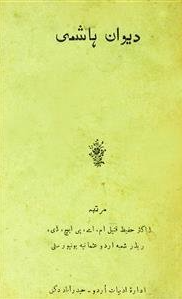
Hashmi ہاشمی
Hashmi, whose name was Miyan Khan, was a poet at the court of Ali Adil Shah II (1656–1672). The author of Basteen-us-Salateen praises him highly. After the Mughal conquest of Bijapur by Aurangzeb (Alamgir), Hashmi migrated to Irkaat, where he composed an eulogy in praise of Zulfiqar Khan, a Mughal subedaar.
Hashmi was associated with the Mahdavia faith, and some sources mention him as a disciple of Hashim Gujarati. Like many poets of his time, little is known about the events of his life. It is believed that he died in 1109 H (1697–1698 CE).
Manuscripts of his mathnavi and deewan are preserved in the Salar Jung Library, and several private collectors also possess copies. In 1099 H (1687–1688 CE), he composed a mathnavi titled Yusuf Zulekha. He is also regarded as one of the early writers of rekhti, a poetic form.
His Deewan has been published by Idara-e-Adabiyat-e-Urdu. Dr. Shareef has written in detail about Hashmi in his Dakan meiN Urdu Shayeri Wali Se Pehle (2004)
.
Note: This entry is based on Hashmi’s Dakan meiN Urdu. More can be written about the poet from various other sources. We will be updating soon; and in the meantime, if you’d like to contribute to this entry — please do!
Further Readings:
1. Shareef, Muhammad Jamaal. Dakan meiN Urdu Shayeri Wali Se Pehle. Edited by Muhammad Ali Asar. Hyderabad: Idara-e-Adabiyat-e-Urdu, 2004.
2. Hashmi, Naseer-Uddin. Dakan MeiN Urdu. 1st ed., Taraqqi Urdu Bureau, 1985 -
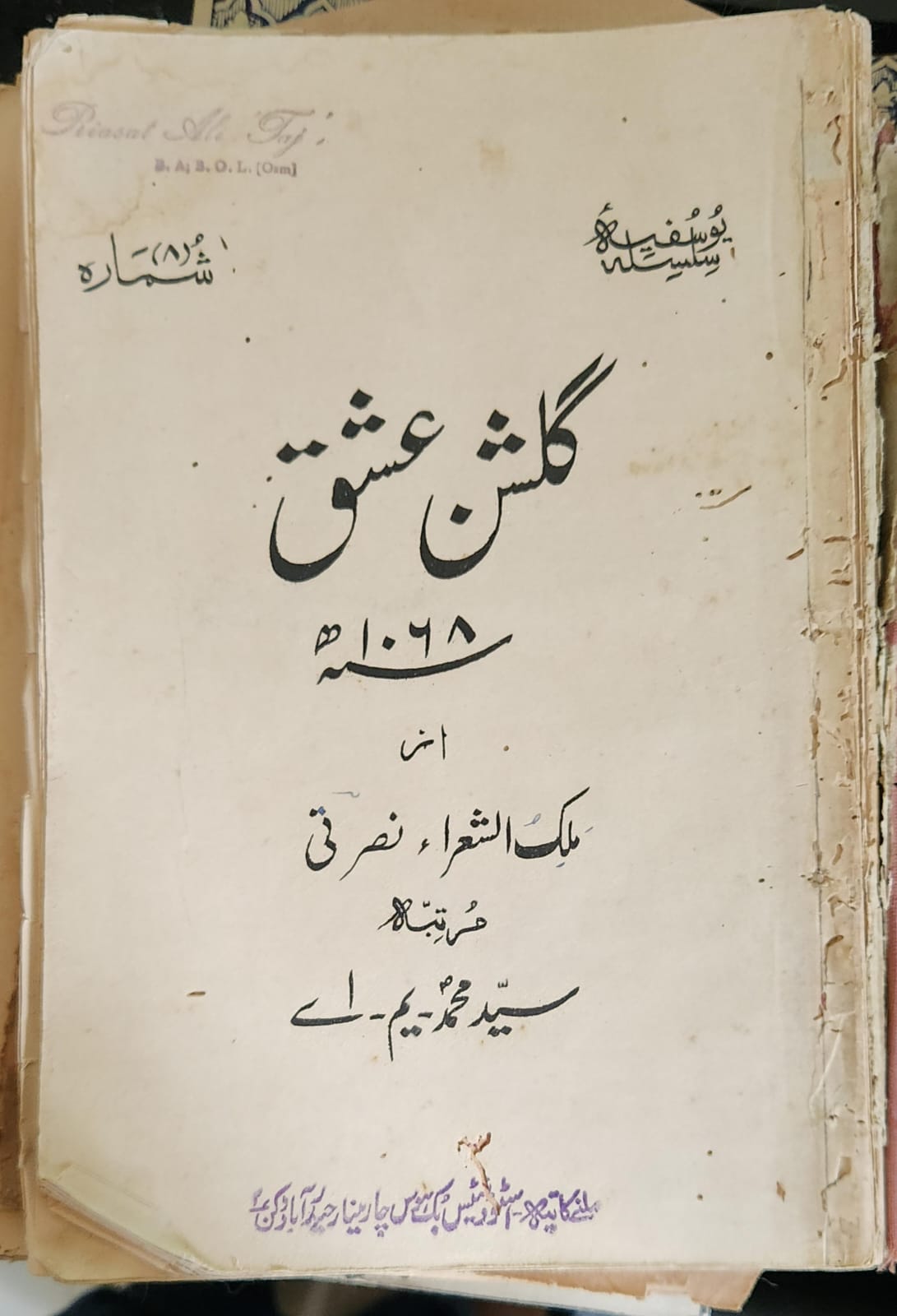
Nusrati
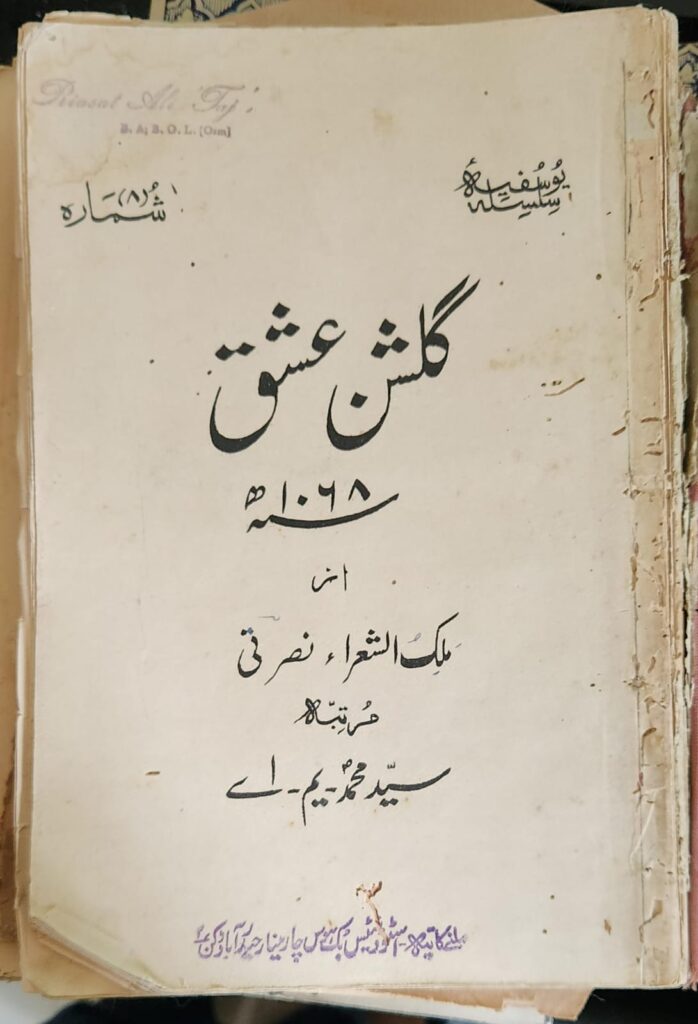
Hz. Riasat Ali Taaj (1930-1999)’s annotated copy of Gulshan e Ishq compiled by Muhammad Akbaruddin Siddiqui and published by Majlis e Isha’at e Dakni Makhtutat. -
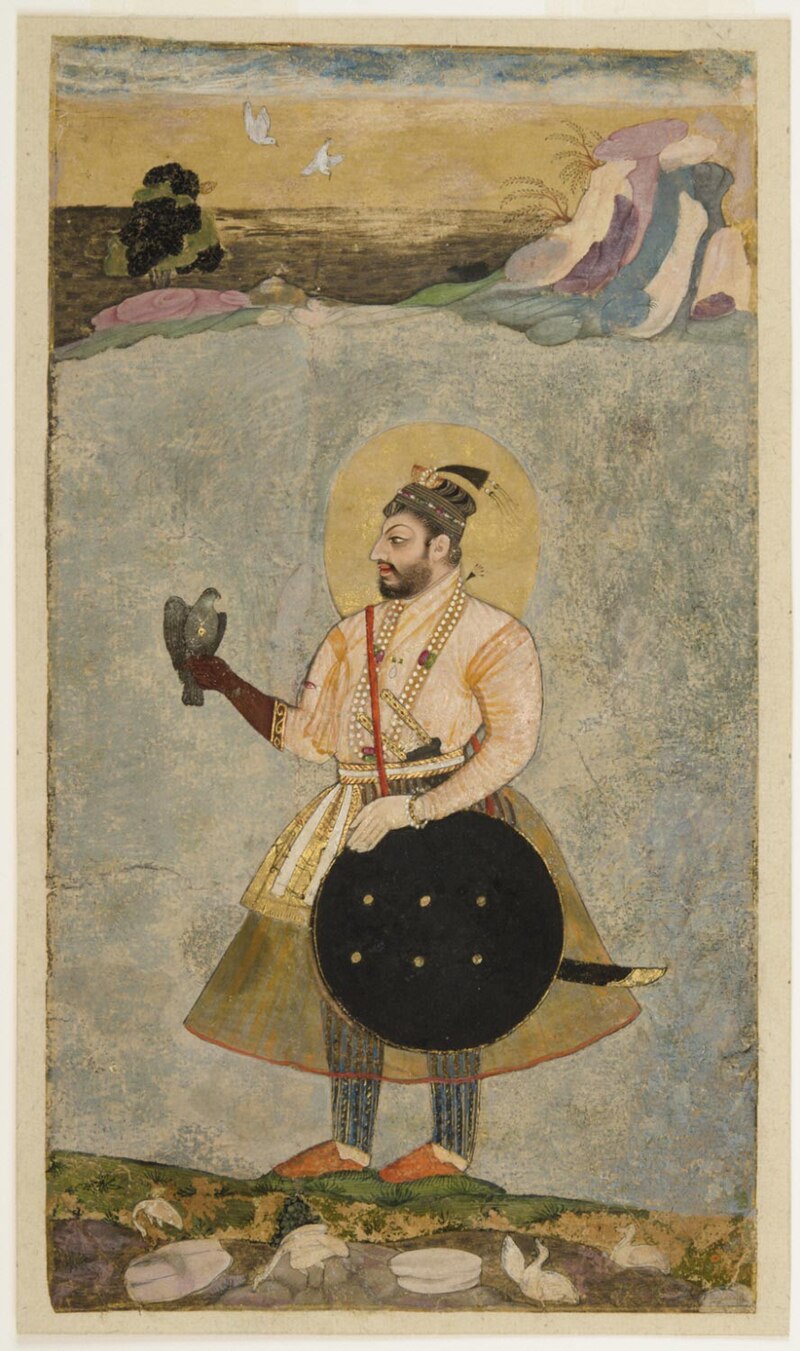
Ali Adil Shah Shahi II علی عادل شاہ شاہی ثانی
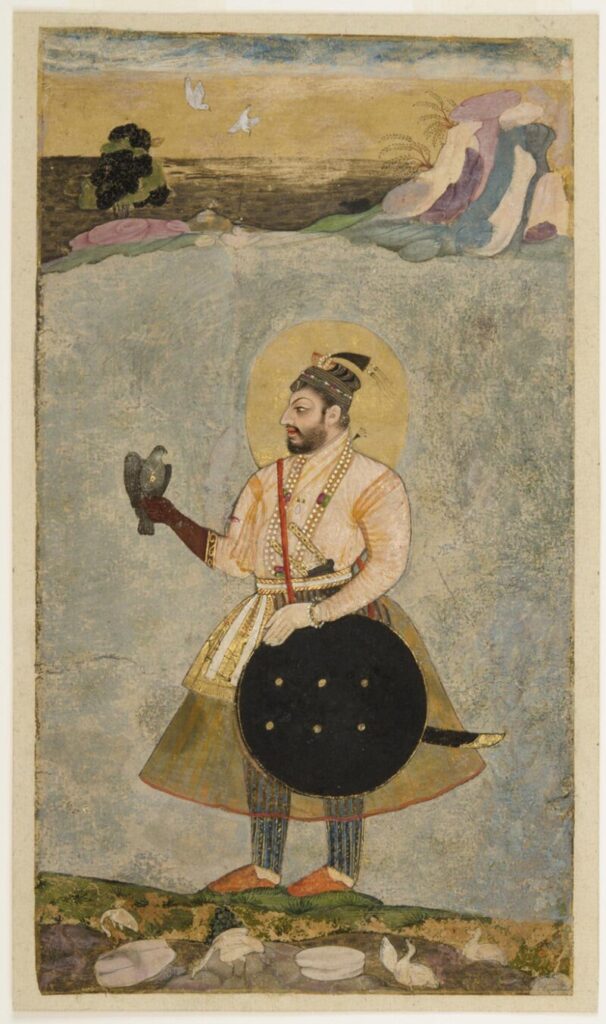
By Unknown artist – http://www.philamuseum.org/collections/permanent/96048.html?mulR=5018, Public Domain, https://commons.wikimedia.org/w/index.php?curid=9500020 Ali Adil Shah II, also known by his pen name Shahi (reigned 1067-1082), was not only a ruler but also a patron of literature and the arts, fostering a vibrant literary culture in Bijapur. He played a pivotal role in the development of Persian and Deccani literature during his reign. Ali Adil Shah II is particularly notable for his mentorship of the poet Nusrati, who was both a student and a guide to the Sultan – and mentioned the Sultan in his mathnavi Gulshan e Ishq. This relationship helped establish poetry as a widely celebrated art form in Bijapur, making it a household name in the region.
Shahi was a versatile poet, contributing to a range of poetic forms, both in complex and simple metres. His works, though largely unavailable in the past, have been compiled in a collection that showcases his mastery. His qasidas reflect his royal stature and highlight his skill in vivid depictions of themes related to power and sovereignty. His ghazals, rich in themes of love and life, further demonstrate his poetic depth. Historians have noted the richness of his language, and the responsibility of compiling his works was entrusted to Abul Muala.
Under Ali Adil Shah II’s patronage, the cultural landscape of Bijapur flourished, with notable advancements in literature, fine arts, and historical writing. His reign saw significant developments in both Persian and Deccani literature. Nusrati, serving as the poet-laureate during this period, contributed greatly to the literary legacy of the Sultan’s court. Ali Adil Shah II was laid to rest in Ali Ka Rouza, near the iconic Bara Kaman in Bijapur, a testament to his lasting influence on the cultural and literary heritage of the Deccan.Note: This entry is based on Hashmi’s Dakan meiN Urdu. More can be written about the Sultan from various other sources. We will be updating soon; and in the meantime, if you’d like to contribute to this entry — please do!
Further Readings:
1. Rifat, Syed Mubarizuddin, editor. Kulliyat-e-Shahi. Anjuman Taraqqi Urdu (Hind), 1962.
2. Sajida, Zeenat, editor. Kulliyat-e-Shahi. Ejaz Printing Press, 1962.
3. Hashmi, Naseer-Uddin. Dakan MeiN Urdu. 1st ed., Taraqqi Urdu Bureau, 1985. -
Ameen امین
The poet known by the pen name Ameen was active during the reign of Ibrahim Adil Shah II (1580-1627) of Bijapur. While the name Ameen was adopted by several poets in both Bijapur and Golconda in subsequent periods, this particular Ameen is associated with the Adil Shahi court.
Ameen is credited with composing a mathnavi titled Behram o Husn Banu بہرام و حسن بانو.Further references to this work are found in the writings of the author of Sheh Paare, who also acknowledges Ameen’s contribution. However, the author of Urdu-e-Qadeem contests the attribution, claiming that the mathnavi was actually written by Ameen Gujrati, a poet from Gujarat, rather than the poet of Bijapur. This is challenged by Dr. Shareef in his book “Dakan meiN Urdu Shayeri, Wali se pehle” (2004).
His incomplete mathnavi was later completed by Daulat, from which we get to know more details about Ameen.Further Readings:
1. Hashmi, Naseer-Uddin. Dakan MeiN Urdu. 1st ed., Taraqqi Urdu Bureau, 1985
2. Compiled by Prof. Mohiuddin Qadri Zore. Urdu Shah’paare. 1st ed., Urdu Academy A.P, 2009.
3. Hakeem Syed Shamsullah Qadri. Urdu-e-Qadeem: Urdu Zaban Ki Tareekh. 3rd ed., Matba Tej Kumar, 1967.
4. Shareef, Muhammad Jamaal. Dakan meiN Urdu Shayeri Wali Se Pehle. Edited by Muhammad Ali Asar. Hyderabad: Idara-e-Adabiyat-e-Urdu, 2004. -
Muqeemi مقیمی
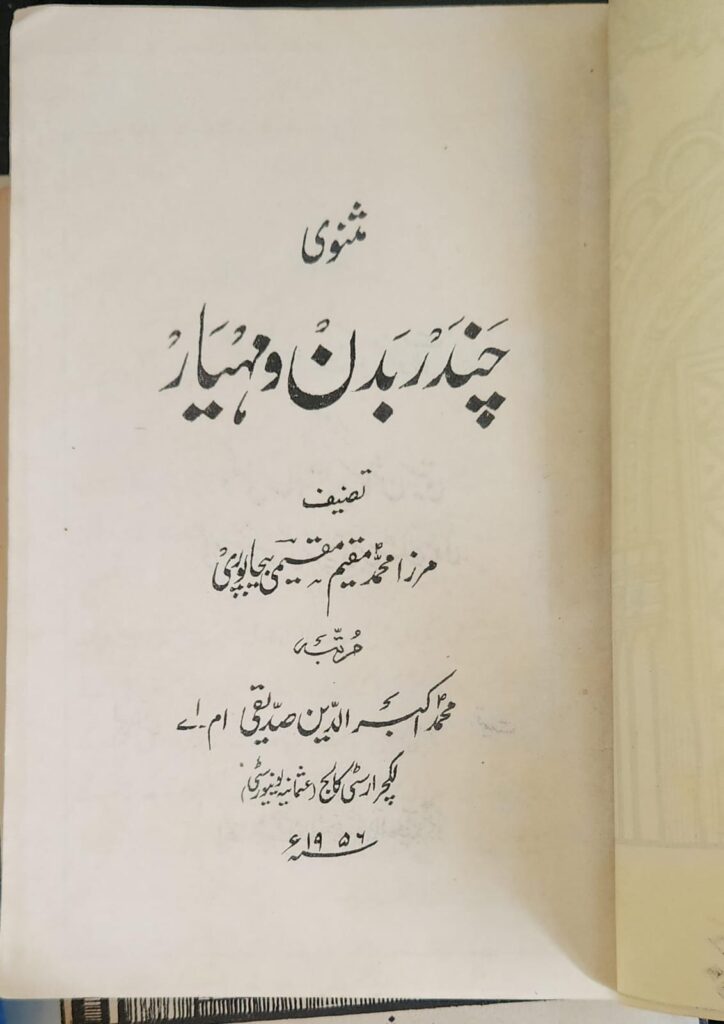
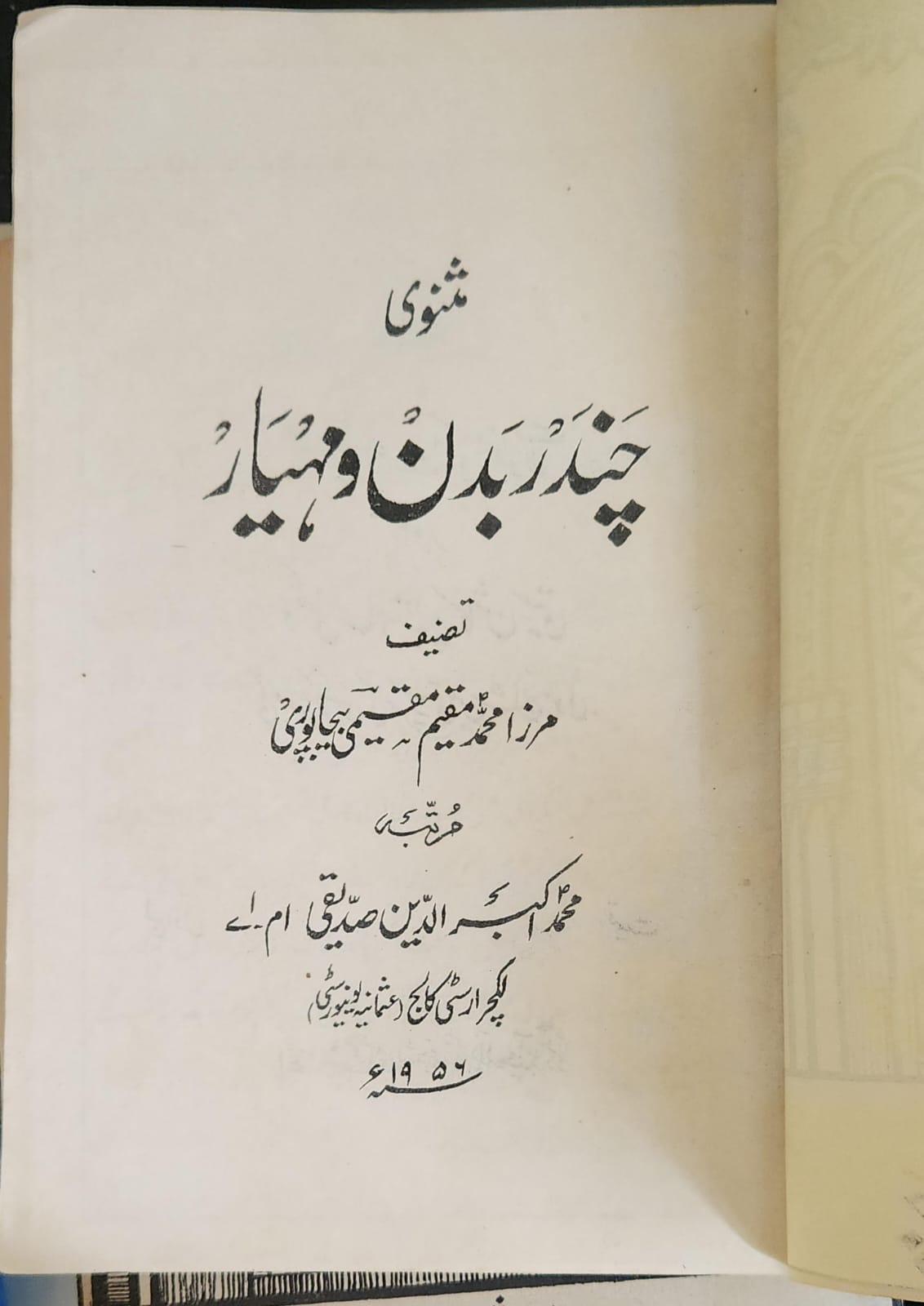
Hz. Riasat Ali Taaj (1930-1999)’s annotated copy of Chandrbadan wa Mahiyar compiled by Muhammad Akbaruddin Siddiqui and published by Majlis e Isha’at e Dakni Makhtutat in 1956. -
Abdul عبدل
Abdul was a poet in the court of Sultan Ibrahim Adil Shah II (1580-1627/988-1037) of the Adil Shahi dynasty.
According to Naseeruddin Hashmi, some sources suggest that his real name was Abdul Ghani. He is best known for his mathnavi ‘Ibrahim Nama’, which was commissioned by Sultan Ibrahim Adil Shah II and completed in 1012H/1603. The Sultan, intrigued by the idea of a unique literary work, summoned Abdul and instructed him to write a book unlike any other, stipulating that the author should be well-versed in Hindi and Dakhni, but not in Arabic. This request led to the creation of Ibrahim Nama.The work begins with hamd, naat, and manqabat, including a manqabat dedicated to Hazrat Banda Nawaz Gesudaraz, followed by the primary subject matter, which focuses on the personal life events of Sultan Ibrahim Adil Shah II. Although not a comprehensive biography, Ibrahim Nama provides significant insights into the Sultan’s private life, making it an important literary document.
One of the distinctive features of Ibrahim Nama is its linguistic composition, which blends the old Dehlvi dialect of Delhi with Dakhni, reflecting a fusion of Hindi and Persian literary traditions. This mixture is noted by Masud Husain Khan, who describes the language of Ibrahim Nama as an amalgamation of these regional dialects. The work is regarded as the first literary masterpiece of the “School of Bijapur”.
Dr. Jamaal Shareef credits Prof. Bhagwat Dayal Varma as the first person to introduce this mathnavi, who came across a manuscript of it in the library of Parti Nidhi in the Awandh princely state. He mentions the scribe’s name as Syed Abdul Raheem bin Syed Yusuf. Another manuscript of this mathnavi was found by Dr. Zore in the collections of Salar Jung.
Abdul is also believed to have been a contemporary of Muqeemi and Mullah Wajhi of Golconda, another prominent poet of the time. In his Ibrahim Nama, Abdul identifies himself as “Abdul Dehlvi,” indicating his origins from Delhi.
Further Readings:
1. Shareef, Muhammad Jamaal. Dakan meiN Urdu Shayeri Wali Se Pehle. Edited by Muhammad Ali Asar. Hyderabad: Idara-e-Adabiyat-e-Urdu, 2004. (pg. 268)
2. Khan, Masud Husain, editor. Ibrahim Nama. 2nd ed., Karnataka Urdu Academy, 1999
3. Zor, Syed Muhiuddin Qadri, editor. Abdul Ka Ibrahim-Naamah. 1st ed., Idara-e-Adabiyat-e-Urdu, n.d
4. Hashmi, Naseer-Uddin. Dakan MeiN Urdu. 1st ed., Taraqqi Urdu Bureau, 1985. -
Ibrahim Adil Shah
To be updated…
-
Burhanuddin Janam برہان الدین جانم
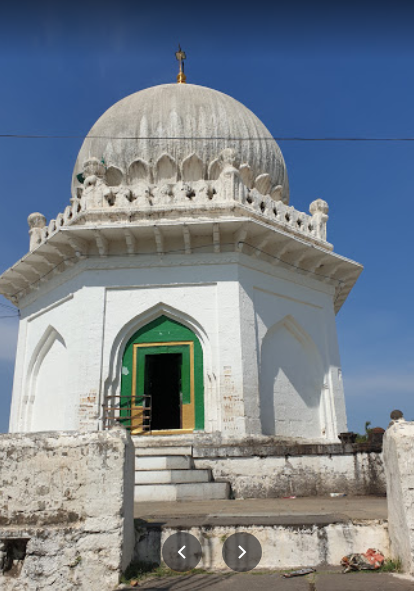
Shah Burhanuddin Janam Chishti was the son and caliph of Shamsul-Ushshaq, the saint Mira Ji of Bijapur. Born in 1543, even before the time of Surdas, he was a serious scholar and saint like his father. He was an eminent writer and prolific contributor to Sufi literature, particularly within the Chishti silsila. His shrine, Dargah Khwaja Syed Burhanuddin Janam Chishti, is located in Vijayapura (Bijapur), Karnataka. Among his notable works are Sukh-Suhela, Irshad Nama, Hujjat-ul-Baqa, Kalimat-ul-Haqaiq, Wasiyat-ul-Hadi, Muftah-ul-Iman, Nuqta-e-Wahid, Nasim-ul-Kalam, Bashrat-ul-Zikr, and Panj Ganj. Irshad Nama, written in 1582–83 A.D., is composed in a highly Sanskritized form of Dakhni and is a catechistic exposition of Chishti philosophy. Later, Kalimat-ul-Haqaiq recapitulated its contents in a more Persianized style. His language is noted to be refined and progressive, and he wrote extensively in both prose and verse, including many distichs scattered across his works. His literary output reflects deep engagement with religious philosophy and technical aspects of Chishti Sufi teachings. One of his disciples, Shah Dawal, authored Kashf-ul-Wajud. His son, Aminuddin Aala, was also a revered Sufi known for his meditative silence and reclusive nature, seldom accepting disciples, though his successors were more open in this regard. Among his few known disciples was Meeranji Khudanuma of Hyderabad.
Note: This entry is based on Hashmi’s Dakan meiN Urdu. More can be written about the saint from various other sources. We will be updating soon; and in the meantime, if you’d like to contribute to this entry — please do!
Further Readings:
1. -
Swami Keshaw Das سوامی کیشو داس
Further Readings:
1. Shareef, Muhammad Jamaal. Dakan meiN Urdu Shayeri Wali Se Pehle. Edited by Muhammad Ali Asar. Hyderabad: Idara-e-Adabiyat-e-Urdu, 2004. -
Afzal افضل
Shah Muhammad Afzal, known by his pen name Afzal, was a poet from Golconda and a Sufi disciple of Meeran Shah Maroof. He is best known for his work Mohi Uddin Nama محی الدین نامی, in which he chronicled the miracles of the famous Sufi saint Shaykh Abdul Qadir Jilani.
According to Dr. Jamaal Shareef, he was active in the period of last two sultans of the Golconda dynasty – Sultan Abdullah Qutub Shah (1625-1672) and Sultan Abul Hasan Taana Shah (1672-1682).
Manuscripts of this book have been discovered in several libraries, including the Salar Jung Library, the Asafiya Library, and in Europe. In addition to his mathnavi, Afzal composed numerous qasidas and claimed the title of Hadi ush Shuara (guide of the poets) in the tradition of qasida composition. His poetic career is linked to the reign of Sultan Abdullah Qutb Shah of Golconda, for whom he wrote a qasida.Graham Bailley has suggested that this Afzal may be the same individual who authored Baarah Maasaa or Bikat Kahaani – a work written in Hindi metres that explores Hindu life and festivals, reflecting a distinctly Indian cultural context. The poem’s depiction of a lonely wife conversing with her companions about her absent husband mirrors a common theme in Hindi poetry.
Afzal is also noted to be a contemporary of Shah Hatim (d. 1781/92), a poet from North India, during the reign of the Mughal Emperor Muhammad Shah.
Scholars dispute about whether these two authors are the same.Further Readings:
1. Bailey, Thomas Grahame. A history of Urdu literature. Oxford, Oxford University Press, 2008.
2. Hashmi, Naseer-Uddin. Dakan MeiN Urdu. 1st ed., Taraqqi Urdu Bureau, 1985. -
Fayez فائز
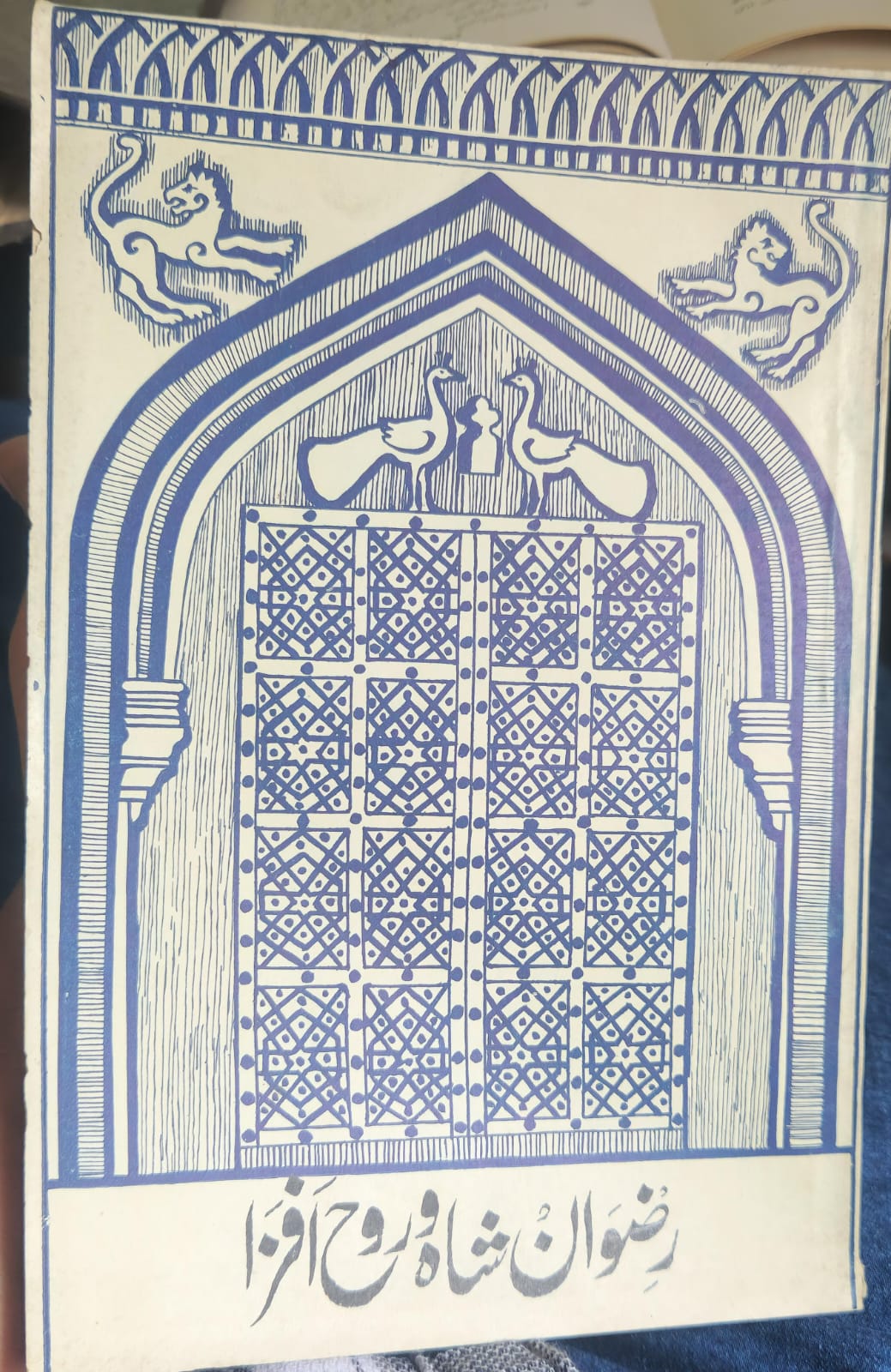
Fayez lived during the reign of the last Qutb Shahi ruler, Abul Hasan Tana Shah (1672–1686) of Golconda. Dr. Muhammad Ali Asar has published a few of his couplets and identified his real name as Muhammad Zamaan. A few years before the fall of the Golconda dynasty, in 1682 (1094 AH), Fayez composed a mathnavi titled Rizwan Shah o Rooh Afza. Originally written as a prose qissa, he later rendered it into verse. As the mathnavi contains no praise of the sultan, it is assumed that Fayez was a contemporary rather than a court poet.
The mathnavi was also compiled by Syed Muhammad, and published by Majlis e Isha’at e Dakni Makhtootat and Dakhni Sahitya Parkashan Sameti in 1952. (available in our collections)
Dr. Shareef has also discovered several marsiyahs by Fayez. Notably, Dr. A. Sprenger (d. 1893, Heidelberg), an Austrian orientalist, referred to him as فائض instead of فائز in his cataloguing.
Further Readings:
1. Hashmi, Naseer-Uddin. Dakan MeiN Urdu. 1st ed., Taraqqi Urdu Bureau, 1985
2. Shareef, Muhammad Jamaal. Dakan meiN Urdu Shayeri Wali Se Pehle. Edited by Muhammad Ali Asar. Hyderabad: Idara-e-Adabiyat-e-Urdu, 2004.
3. -
ibn e Nashati ابن نشاطی
Ibn-e-Nishati was a renowned poet of his time and served at the court of Sultan Abdullah Qutb Shah (1656–1672). Though primarily known for his prose, he gained literary fame through his mathnavi Phulban, which marked his first foray into poetic composition. His full name was Muhammad Mazharuddin, and his father’s name was Shaikh Fakhruddin.
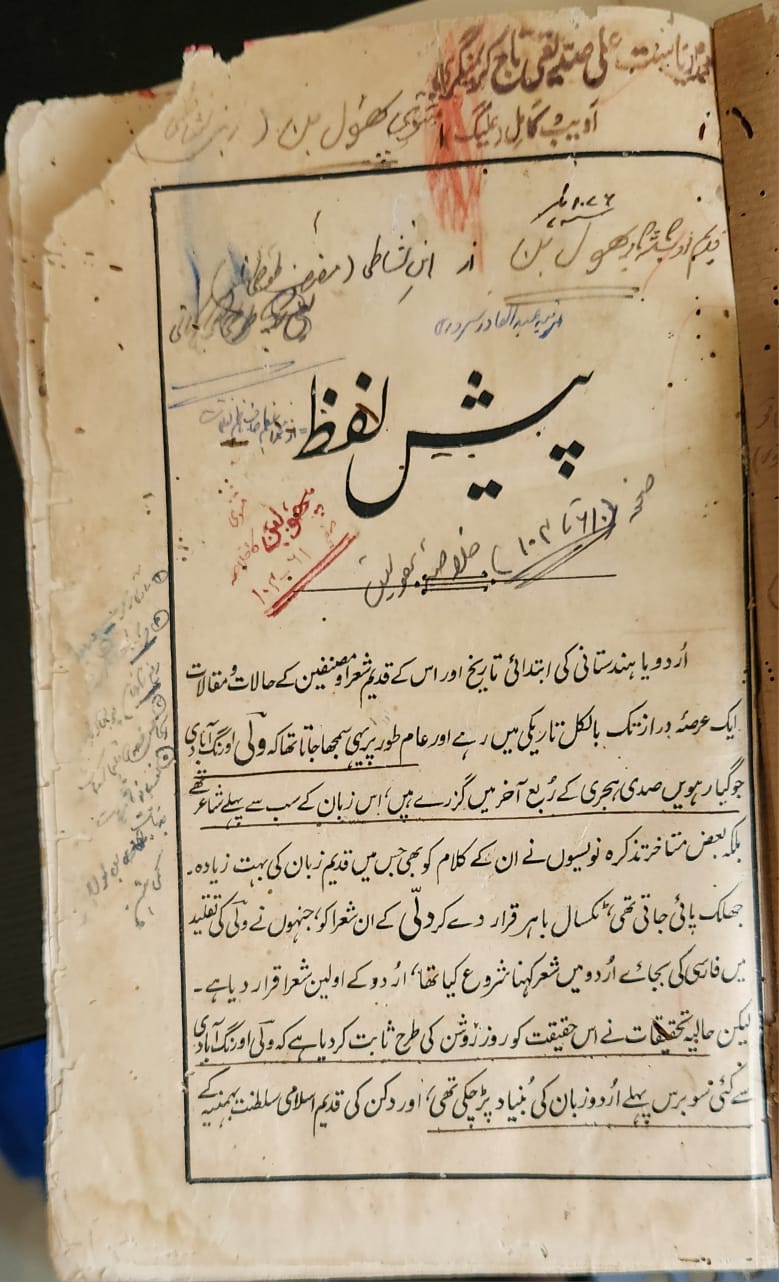
Phulban was compiled by Prof. Sarwari and published by Majlis-e-Isha’at-e-Dakni Makhtutat in 1937, accompanied by a preface and a 100-page introduction. The work was also compiled and published by Shaikh Chand bin Husain under the auspices of Anjuman Taraqqi Urdu, Pakistan.
There has been scholarly debate regarding his sectarian affiliation. While Garcin de Tassy (d. 1878), the French orientalist, and Prof. Sarwari identified him as a Shia, Dr. Jamaal Shareef has argued that Ibn-e-Nishati was a Sunni, citing the presence of manqabats in praise of the caliphs of Islam within his mathnavi.
Hz. Riasat Ali Taaj’s annotated copy of Phulban compiled by Prof. Sarwari and published by Majlis e Isha’at e Dakni Makhtutat in 1937. -
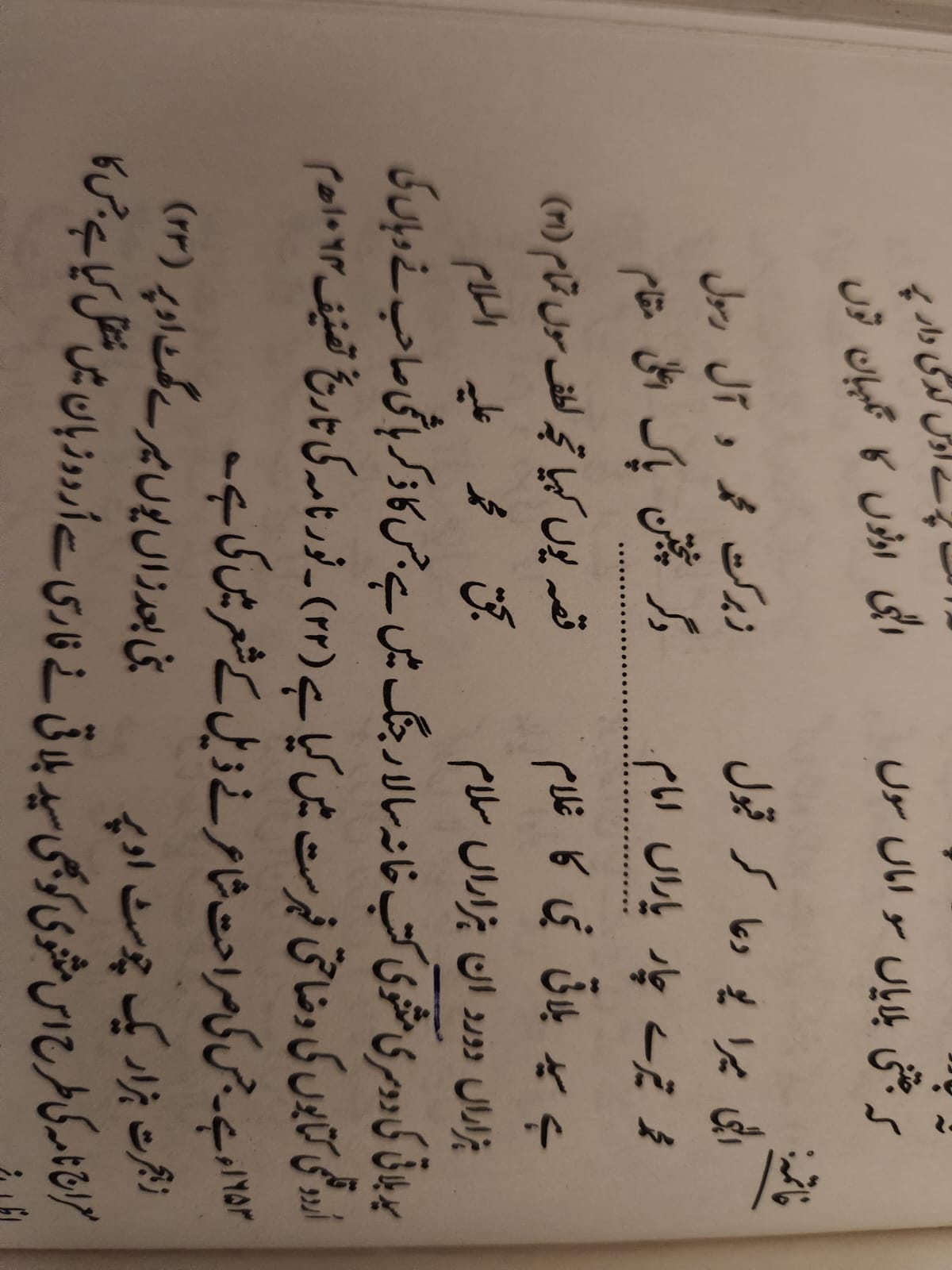
Balaaqi بلاقی
His name was Syed Balaaqi, and was from the Qutub Shahi era – although not related to the royal court.
Two of his mathnavis are known – Mi’raj naama and Noor naama (1653/1964), that were translated from Persian to Dakhni.کیا فارسی کو سو دکھنی غزل
کہ ہر عام ھور خاص سمجھیں سکلFurther Readings:
1. Shareef, Muhammad Jamaal. Dakan meiN Urdu Shayeri Wali Se Pehle. Edited by Muhammad Ali Asar. Hyderabad: Idara-e-Adabiyat-e-Urdu, 2004. (page 558) -
Shaikh Ahmad شیخ احمد
Ahmad was a poet from Golconda.
His work was highly regarded by his contemporaries, with Ibn Nishati, another poet of the time, referring to him as Ustad-e-Sukhan (Master of Speech), acknowledging and praising his contributions to Persian and Urdu poetry. Ahmad is known for two mathnavis: Laila Majnun and Musibat-e-Ahle Bait. The first mathnavi was commissioned by Sultan Abdullah Qutb Shah of Golconda.
The Panjab main Urdu author – Prof. Mahmood Sherwaani references this work, while the manuscript of the second mathnavi is preserved in the Library of the India Office in London. According to Grahame Bailey, Ahmad’s romance titled Laila-Majnun (written around the year 1600), of which 2,000 lines have still survived.
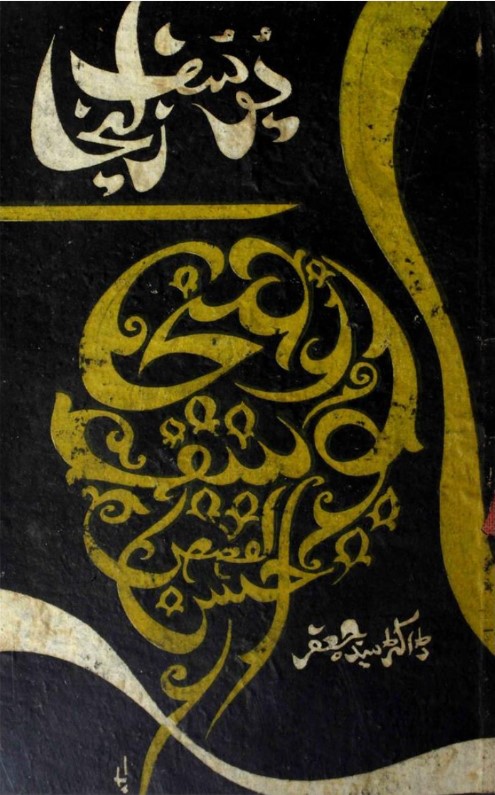
Dr. Jameel Jalibi also found out a mathnavi of around 4000 couplets titled “Yusuf Zulaikha“. Which was later published by Dr. Syeda Ja’afar from Hyderabad – claiming this work to be the first mathnavi of dabistan e Golconda (Golconda School of Poetry). She also mentions his name as Shaikh Ahmad Shareef Gujrati.
From the mathnavi we got to know more about his life and works. Dr. Jalibi mentions that, Muhammad Quli Qutub Shah had written a “nawaazish naama” inviting Ahmad from Gujrat to Hyderabad. He was the murid of Ahmad Shah Wajihuddin Alwi. From the mathnavi we also get to know that Ahmad knew Arabic, Persian, Telegu and Sanskrit; and was interested in grammar, logic, ‘ilm ul kalaam, jurisprudence, medicine and hikmat.Further Readings:
1. Bailey, Thomas Grahame. A history of Urdu literature. Oxford, Oxford University Press, 2008.
2. Hashmi, Naseer-Uddin. Dakan MeiN Urdu. 1st ed., Taraqqi Urdu Bureau, 1985.
3. Jalbi, Jameel. Tareekh e Urdu Adab.
4. Shareef, Muhammad Jamaal. Dakan meiN Urdu Shayeri Wali Se Pehle. Edited by Muhammad Ali Asar. Hyderabad: Idara-e-Adabiyat-e-Urdu, 2004.
5. Sayyada Jafar. Yusuf Zulekha: Dabistan-e-Golkunda Ki Pahli Masnavi. 1st ed. Hyderabad, India: National Fine Printing Press, 1983. -
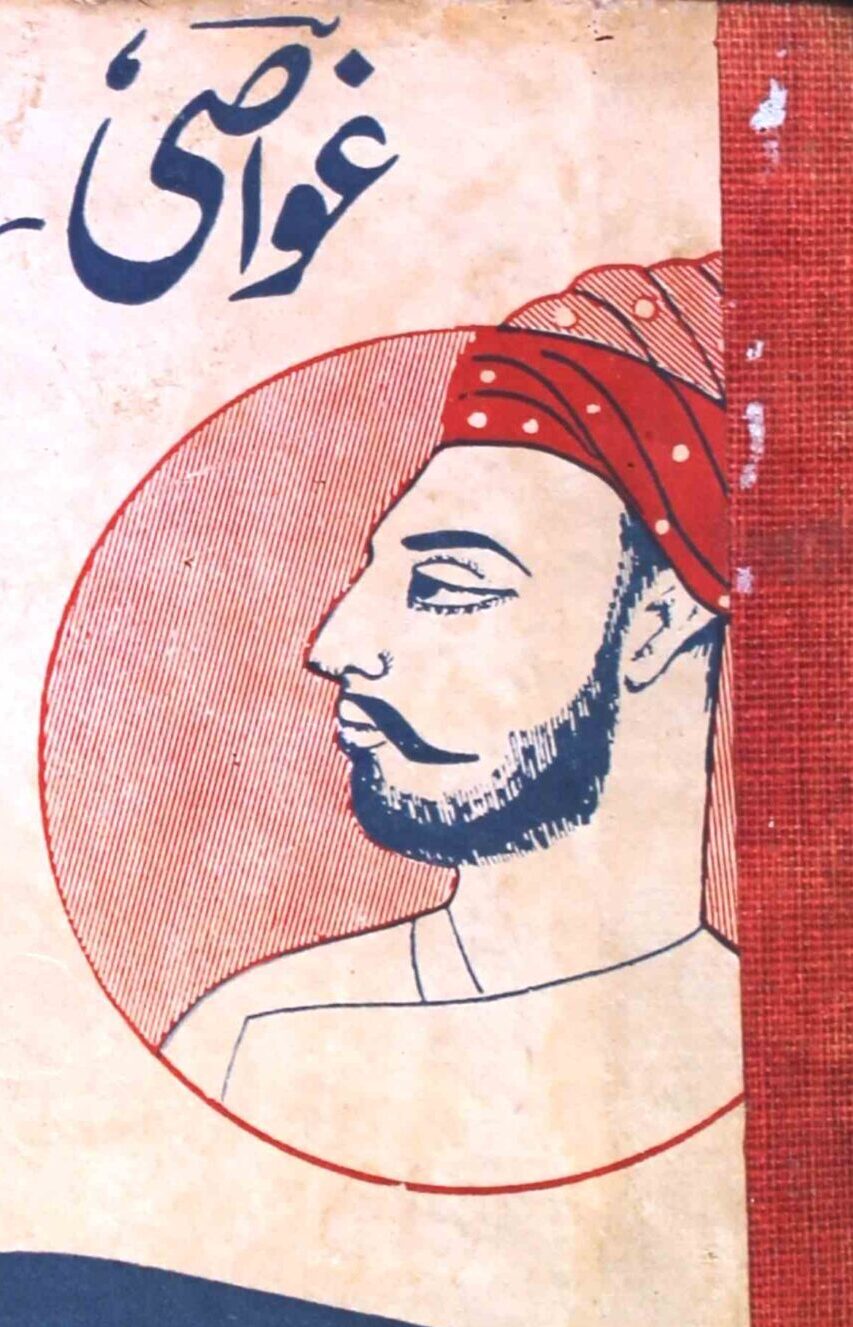
Ghawasi غواصی
Ghawwasi was a prominent poet of the Qutb Shahi dynasty, regarded as the second most renowned poet of the period. His poetry gained recognition during the reign of Sultan Muhammad Qutb Shah, and he rose to prominence in the court of Sultan Abdullah Qutb Shah (1625–1672), where he held an esteemed position. He was also appointed as an ambassador to Bijapur.
Ghawwasi’s mathnavi works were particularly celebrated. His Saif ul Mulk o Badi ul Jamal, completed in 1035 H, was a translation from Persian to Dakhni. Another major work, Tuti Nama, originally authored in Persian by Ziauddin Nakshabi, was translated by Ghawwasi and completed in 1049 H. A third mathnavi, Chanda aur Lokh (also referred to as Mina o Satwanti), translated from Persian in 1035 H, has also been attributed to him.A study of Saif ul Mulk reveals Ghawwasi’s strong self-praise and criticism of other poets, though he does not mention any names explicitly, claiming poetry belonged solely to him. In contrast, Tuti Nama reflects a tone of humility and introspection, where he expresses regret for being a worldly man (dunya-dar). His language is simple, rich in Hindi vocabulary, and devoid of ambiguity, which adds to the appeal and accessibility of his works.
Several manuscripts of Saif ul Mulk and Tuti Nama are preserved in European collections, as well as in the Anjuman Taraqqi-e-Urdu and with Agha Hyder Husain of Nizam College. The third mathnavi, Chanda aur Lokh, remains unpublished; four manuscripts are housed in the State Library, Hyderabad, and four more in the Salar Jung Library. His Kulliyat has been published by Idara-e-Adabiyat-e-Urdu. The Kulliyat, containing his ghazals, qasidas, and marsiyas, is also available at the Asafia Library in Hyderabad.
Some scholars have referred to him as Bahauddin, though this identification remains unverified. Like Wajhi, the exact date of Ghawwasi’s death is unknown, but it is generally believed that he passed away before 1060 H, during the reign of Sultan Abdullah Qutb Shah.
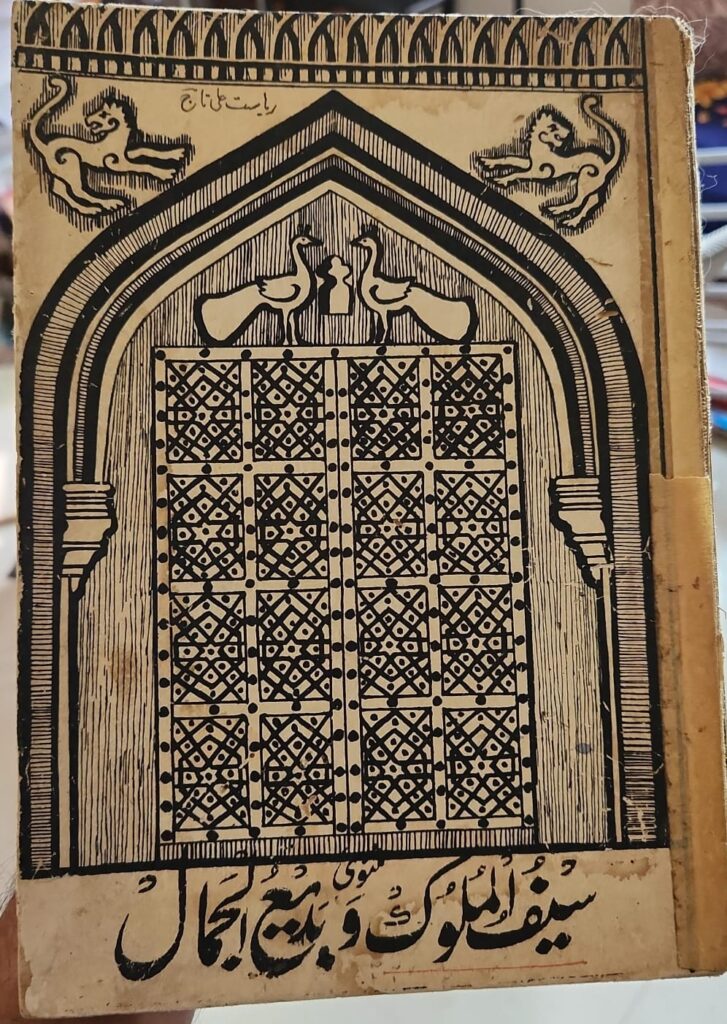
Mathnavi: Sayf al-Mulook wa Badi’ ul-Jamaal (1937) compiled by Mir Sa’adath Ali Razvi 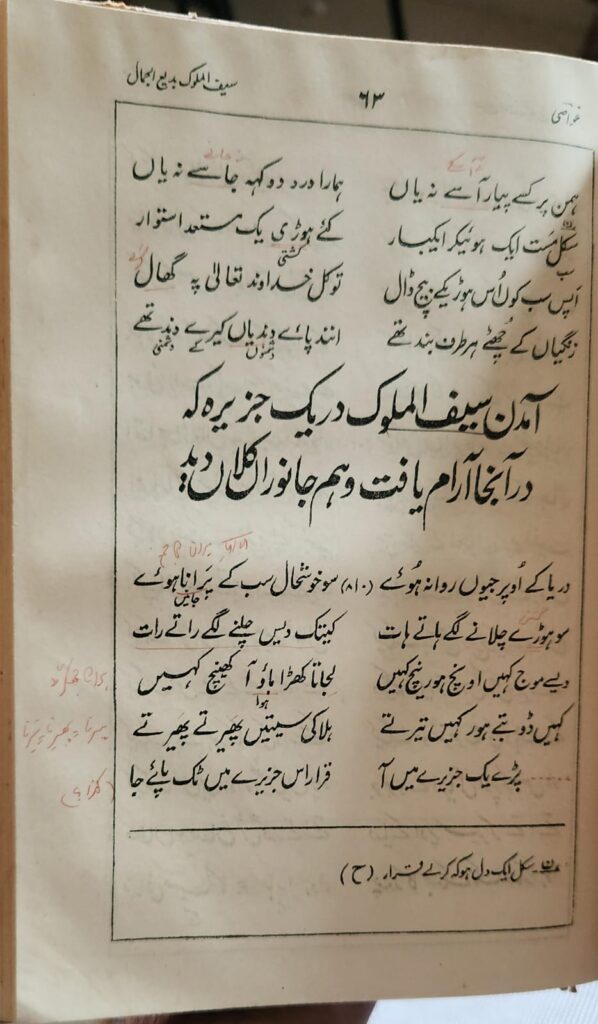
Hz. Riasat Ali Taaj’s annotated copy of Sayf al Mulook wa Badi’ ul Jamaal Note: We have two of Ghawasi’s published mathnavis in our collections.
1. Mathnavi: Sayf al-Mulook wa Badi’ ul-Jamaal (1937) compiled by Mir Sa’adath Ali RazviFurther Readings:
1. Shareef, Muhammad Jamaal. Dakan meiN Urdu Shayeri Wali Se Pehle. Edited by Muhammad Ali Asar. Hyderabad: Idara-e-Adabiyat-e-Urdu, 2004.
2. Hashmi, Naseer-Uddin. Dakan MeiN Urdu. 1st ed., Taraqqi Urdu Bureau, 1985 -
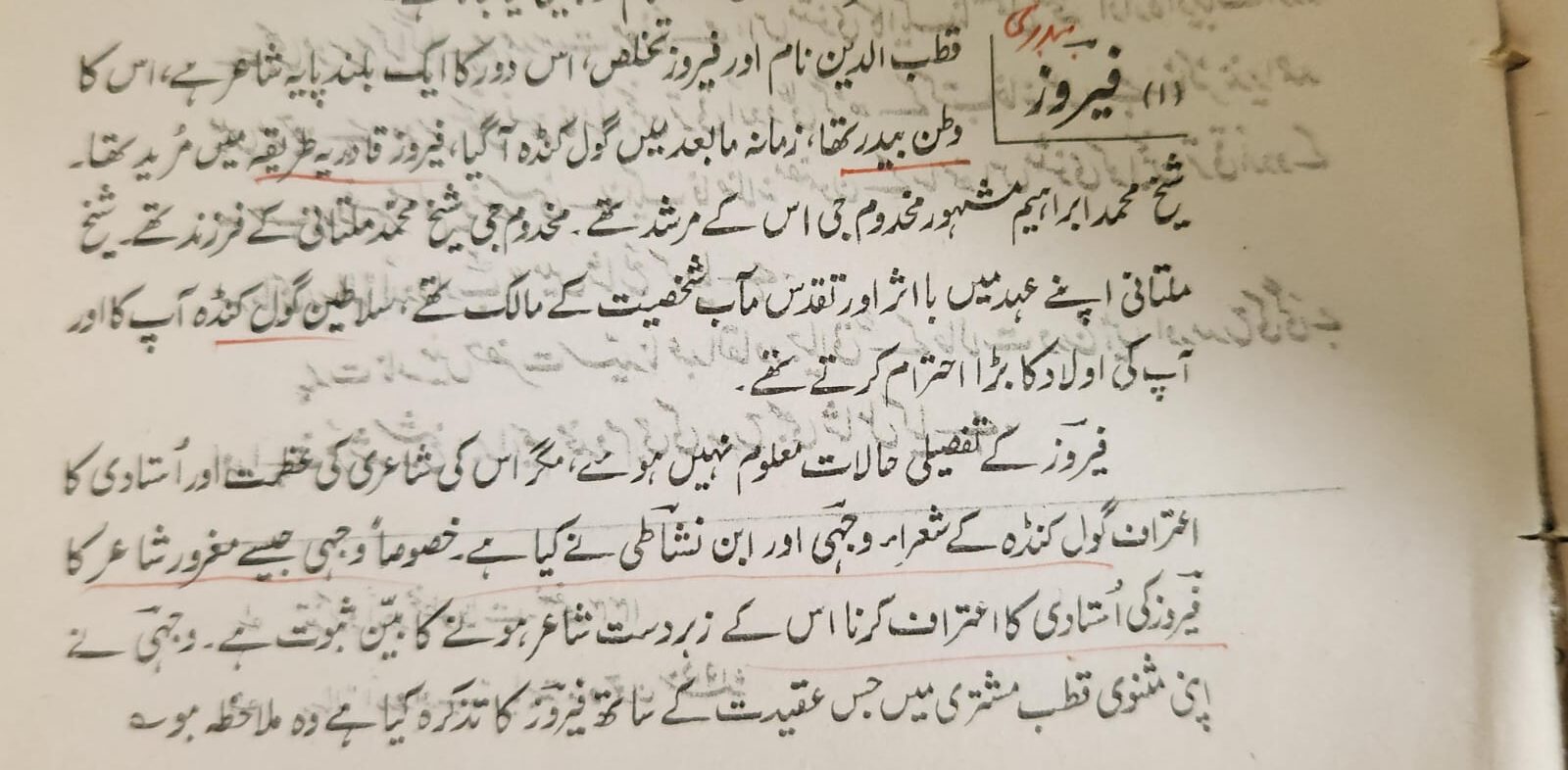
Feroz Bidri فیروز بدری
Feroz, whose name was Qutbuddin Qadri, composed a mathnavi of approximately 121 couplets in praise of Shaykh Abdul Qadir Jilani in 16th-century Bidar. The title of this mathnavi is disputed. While it is commonly referred to as Parat Naama, Dr. Zore has named it Tauseef Naama Meeraan Muhiuddin, Naseeruddin Hashmi has referred to it as Tauseef Naama, and Prof. Sarwari has used the title Parat Naama Muhiuddin. A manuscript copy preserved at the Idara-e-Adabiyat-e-Urdu carries the title Sifat Naama Muhiuddin, a title preferred by Dr. Shareef. Dr. Nazeer also wrote a paper on this mathnavi in 1957. This mathnavi was compiled by Dr. Masud Husain Khan and published in 1965 in Osmania University’s “Qadeem Urdu“.
A few of his Ghazals were also later discovered and published by Dr. Jameel Jalibi in the preface of Diwaan e Hasan Shawqi (1961), and Dr. Jamaal Shareef in Sabras (March, 1968).Feroz was a mureed in the Qadiriyya Sufi silsila of Shaykh Muhammad Ibrahim Mashoor Makhdoom, the son of Shaykh Muhammad Multani—a family held in high esteem by the Qutb Shahi royals. He was from the time of Ibrahim Qutb Shah (1550–1568). According to Tazkirah-e-Awliya-e-Dakan, the Sultan expressed a desire to meet Feroz, but the poet declined any interaction with figures of political power.
He was regarded among the astezah of the poets of his time. This is evident from the mention of Feroz with admiration by Wajhi in Qutb Mushtari (1609) and by Ibn-e-Nishati in Phulban (1665). Wajhi is said to have been a tutee of Feroz, though this claim has been disputed by scholars.
Riasat Ali Taaj’s annotated copy of “Dakan meiN Urdu” (1985). Further Readings:
1. Hashmi, Naseer-Uddin. Dakan MeiN Urdu. 1st ed., Taraqqi Urdu Bureau, 1985
2. Shareef, Muhammad Jamaal. Dakan meiN Urdu Shayeri Wali Se Pehle. Edited by Muhammad Ali Asar. Hyderabad: Idara-e-Adabiyat-e-Urdu, 2004.
3. -
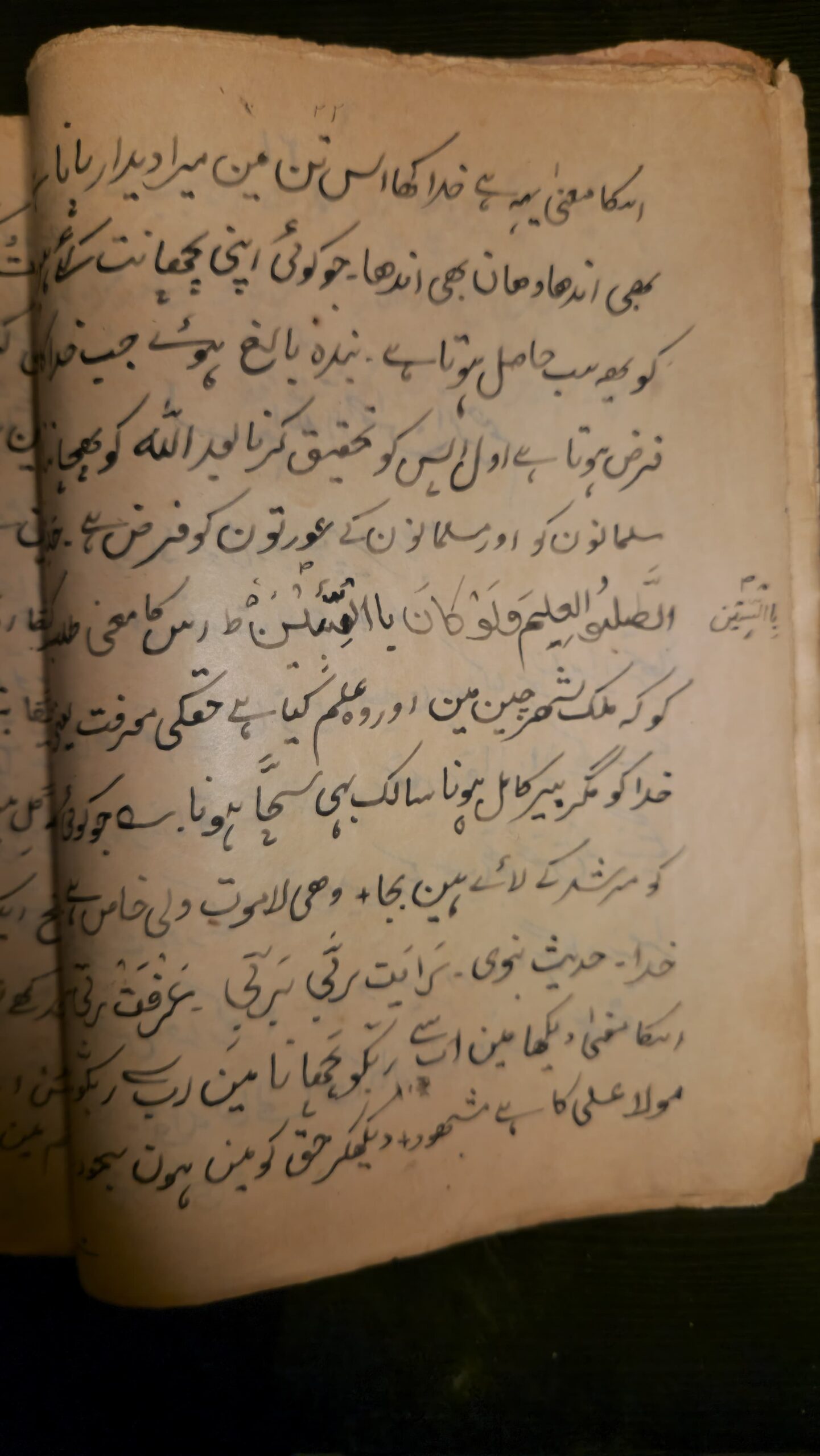
Gesu-daraaz گیسو دراز
Khwāja Bandanawāz Gēsūdarāz (Sayyid Muhammad Husaini), born in Delhi on 4 Rajab 721 AH (30 July 1321 CE), and deceased in Gulbarga on 16 Dhu al-Qaʿda 825 AH (1 November 1422 CE), was a seminal figure in the transmission of Sufi traditions from North India to the Deccan. A descendant of immigrants from Herat, he accompanied his father to Daulatabad in 727/1327, when Sultan Muhammad bin Tughluq temporarily shifted the capital of the Delhi Sultanate. He returned to Delhi in 735/1335–36 and, the following year, became a disciple of the renowned Chishti saint Nasir al-Din Mahmud Chiragh-e-Dehli (d. 768/1367), who later bestowed upon him the title Gēsūdarāz, meaning “long locks.” For decades, Gēsūdarāz remained in Delhi as his master’s spiritual successor. In 1398, at the age of 77, he fled the city due to the imminent invasion by Timur. He first travelled to Gwalior, then through central India to Khambhat in Gujarat, and eventually made his way back to Daulatabad. In 802 AH (1399/1400 CE), at the invitation of Sultan Taj al-Din Firuz Shah Bahmani, he settled in the Bahmani capital of Gulbarga.
Although warmly received at first, Gēsūdarāz’s relationship with the Bahmani court eventually soured. Firuz Shah, a patron of the external sciences, grew critical of the saint’s emphasis on mystical theology. A core tension lay in Gēsūdarāz’s interpretation of Ibn ʿArabi’s works. Though Gēsūdarāz himself adhered to the metaphysical position of waḥdat al-shuhūd (unity of witnessing), distinct from Ibn ʿArabi’s waḥdat al-wujūd (unity of being), he nonetheless engaged deeply with the latter’s writings. When scholars at court raised suspicions over possible heterodoxy, an emissary sent to investigate Gēsūdarāz became his devotee instead. In 1407, due to growing unease at court, he was compelled to move his khānqāh away from the city’s fort. In 1415, further conflict arose when Gēsūdarāz endorsed the sultan’s brother Ahmad as successor rather than Firuz Shah’s son. These disputes were only resolved with Firuz’s death in 1422 and the accession of Sultan Ahmad Bahmani, who then commissioned the construction of a grand mausoleum over Gēsūdarāz’s hospice and tomb, which continues to serve as the principal site of Muslim pilgrimage in the Deccan.
Gēsūdarāz’s influence in the religious, intellectual, and literary life of the Deccan has been profound. A contemporary of major political upheaval and cultural transformation, he authored approximately 195 works in Arabic, Persian, and early Urdu, or Dakhni. His writings cover Sufism, jurisprudence, Hadith, Qur’anic commentary, and metaphysics, and include titles such as Sharḥ-i Tamhīdāt, Ḥazāʾir al-quds, Sharḥ-i ʿAwārif al-maʿārif, Asmār al-asrār, and Anīs al-ʿUshshāq. His corpus also includes commentaries on Suhrawardi and Ibn ʿArabi, which played a key role in diffusing Islamic mystical thought in India. Importantly, Gēsūdarāz was the first Chishti Sufi known to have composed works directly, rather than relying on disciples to record his teachings. He also wrote in Dakhni—a vernacular form of early Urdu spoken in South India—thereby expanding the accessibility of Sufi thought. His Mirāj al-ʿĀshiqīn, composed in Dakhni for a lay audience, exemplifies this outreach. Many verses in Dakhni attributed to him were later compiled under titles such as Chakkī-nāmah and survive in manuscript form, preserved both by scribes and through oral tradition. While attribution remains debated, editors such as Dr. Nazir and compilers like Muhammad Jamāl Sharīf consider some of these verses authentic. Following his death, Gēsūdarāz’s shrine became a center of royal patronage, supported successively by the Bahmanids, ʿĀdilshāhis, Qoṭbshāhis, Mughals, and the Nizāms of Hyderabad. His descendants have continued to administer the endowment supporting a mosque, school, library, and hostel attached to the shrine. His legacy remains foundational to both the spiritual and literary history of South Asian Islam.
Note: Some of his works are preserved in our collections: https://www.instagram.com/p/DJs8zTTzotn/?utm_source=ig_web_copy_link&igsh=MzRlODBiNWFlZA==
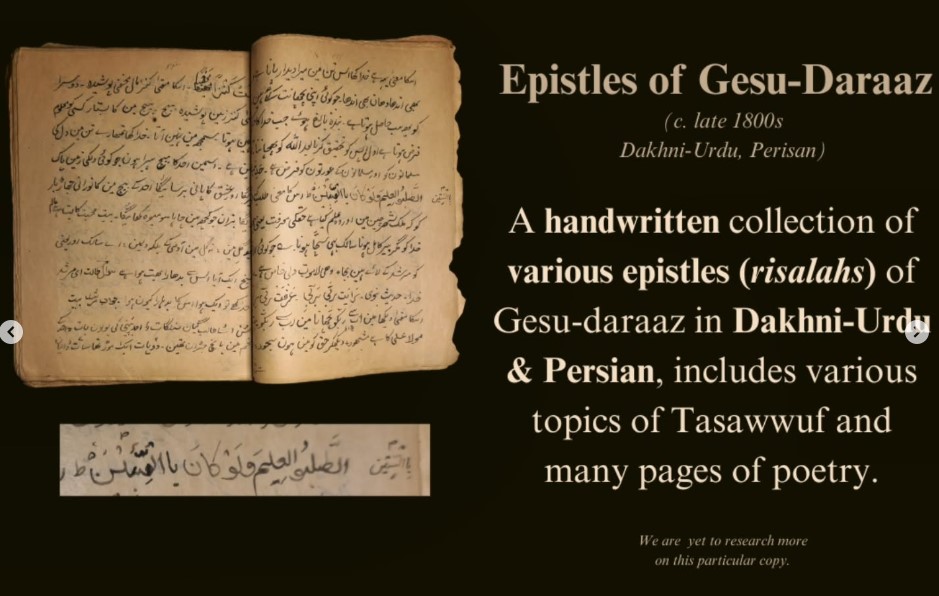
Note: This entry is an incomplete draft. More can be written about the saint from various other sources. We will be updating soon; and in the meantime, if you’d like to contribute to this entry — please do!
Further Readings:
1. Hashmi, Naseer-Uddin. Dakan MeiN Urdu. 1st ed., Taraqqi Urdu Bureau, 1985
2. Compiled by Prof. Mohiuddin Qadri Zore. Urdu Shah’paare. 1st ed., Urdu Academy A.P, 2009.
3. Hakeem Syed Shamsullah Qadri. Urdu-e-Qadeem: Urdu Zaban Ki Tareekh. 3rd ed., Matba Tej Kumar, 1967.
4. Shareef, Muhammad Jamaal. Dakan meiN Urdu Shayeri Wali Se Pehle. Edited by Muhammad Ali Asar. Hyderabad: Idara-e-Adabiyat-e-Urdu, 2004.